
Severe storms in Gaza over 72 hours have killed 14 people, including three children, and destroyed or flooded more than 27,000 tents, officials say. Aid groups report at least 250,000 people affected and warn restricted access to shelter supplies and infrastructure has made the disaster far worse. Israeli authorities say they continue to transfer aid and have coordinated the delivery of tens of thousands of tents and tarpaulins. Implementation gaps in the October truce and remaining security concerns complicate relief efforts.
Severe Storms in Gaza Kill 14, Flood Tens of Thousands of Tents; Aid Access Under Scrutiny

Men walk along a muddy alley at a makeshift camp sheltering displaced Palestinians after heavy rains in the Zeitoun neighbourhood of Gaza City on December 11, 2025. - Omar Al-Qattaa/AFP/Getty Images
Severe storms over the past 72 hours in Gaza have killed 14 people, including three children, Gaza Health Ministry Director General Munir Al-Boursh told CNN. Torrential rain and flooding have devastated makeshift camps and damaged homes across the densely populated enclave.
Many families have lived in tents and temporary shelters for the past two years after the war left large areas in ruins. With limited, weakened infrastructure and inadequate shelter, residents were especially vulnerable to the storms.
Widespread Shelter Damage and Humanitarian Impact
A Hamas-run government media office said more than 27,000 tents were swept away or flooded, and described the situation as a "complex humanitarian disaster" affecting at least 250,000 people. Aid group Oxfam reported people were forced to "wade through sewage, mud and debris with no proper shelter," and warned that restrictions on aid have worsened the crisis.
"The mattress, the blanket, everything, even the clothes, have become soaked with water. … Bring me a mattress. Bring me a tent. I beg you, for God’s sake, help me," said Um Mustafa to CNN, describing how her children's belongings and their last supplies of flour and rice were ruined.
Authorities and residents said tents, temporary shelters and even buildings weakened by bombardment collapsed while families were inside. An eight-month-old baby named Rahaf reportedly died of hypothermia, the family told CNN.
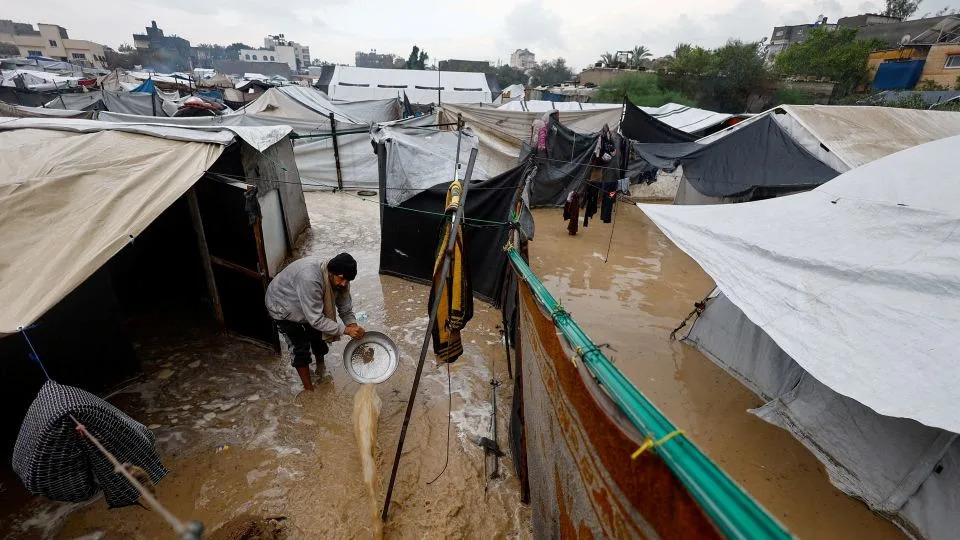
A displaced Palestinian man clears muddy water in a flooded tent camp on a rainy day in Nuseirat, central Gaza Strip, December 12, 2025. - Mahmoud Issa/Reuters
Dispute Over Aid Access
Oxfam accused Israeli authorities of continuing to block basic shelter materials, fuel and water infrastructure, arguing that such restrictions turn severe weather into a preventable humanitarian catastrophe. "When access is denied, storms become deadly. This suffering is being manufactured by policy, not weather," the group said.
The Coordination of Government Activities in the Territories (COGAT), the Israeli agency coordinating aid transfers to Gaza, said it is "committed to" and "fully upholds" its obligations under the October truce agreement. COGAT said hundreds of trucks enter Gaza each day carrying food, water, fuel, medicines and shelter items, and that it helped transfer nearly 270,000 tents and tarpaulins directly to residents in recent months. "We are planning a catered humanitarian response for the upcoming winter," the agency added.
Ceasefire Context and Ongoing Challenges
Israel and Hamas reached a truce in October that halted the two-year war and enabled the release of all living Israeli hostages. However, key elements of the agreement remain contested. Israeli officials have linked further steps to the return of the final deceased hostage and face a standoff with isolated militants in parts of southern Gaza, slowing progress to the truce's next phases.
Humanitarian groups say urgent action is needed to deliver shelter materials, fuel and water repairs before winter conditions deepen the crisis for hundreds of thousands of displaced people.


