
Michaela Benthaus, an ESA aerospace engineer who uses a wheelchair, is set to fly on Blue Origin’s NS-37 suborbital mission and would become the first wheelchair user in space after a chance meeting with former SpaceX executive Hans Koenigsmann. Koenigsmann helped arrange the seat and will accompany her as an in-flight companion; the launch from Van Horn, Texas has been paused due to an "issue with built-in checks." The flight highlights both accessibility advances and remaining practical and financial barriers in commercial space travel.
Former SpaceX Executive Helps Wheelchair User Make History on Blue Origin’s NS-37 Suborbital Flight

European Space Agency engineer Michi Benthaus and Hans Koenigsmann, former executive at SpaceX, are pictured during training at Blue Origin. - Blue Origin
A Blue Origin suborbital mission could make history by carrying an unconventional passenger — an outcome set in motion by a chance encounter with a high-profile former executive of the company’s chief rival.
Michaela Benthaus, an aerospace and mechatronics engineer at the European Space Agency (ESA), is slated to fly on Blue Origin’s NS-37 mission and would become the first person who uses a wheelchair to travel to space. The opportunity began after a conversation in Munich last year between Benthaus and Hans Koenigsmann, a longtime SpaceX executive-turned-industry figure.
How the Flight Came Together
Both German, Benthaus and Koenigsmann were speaking at an event when she admitted she doubted she would ever reach space after a 2018 mountain-biking accident left her with a spinal cord injury and unable to walk. Koenigsmann quietly set about trying to change that, contacting Blue Origin to explore a suborbital seat on New Shepard.
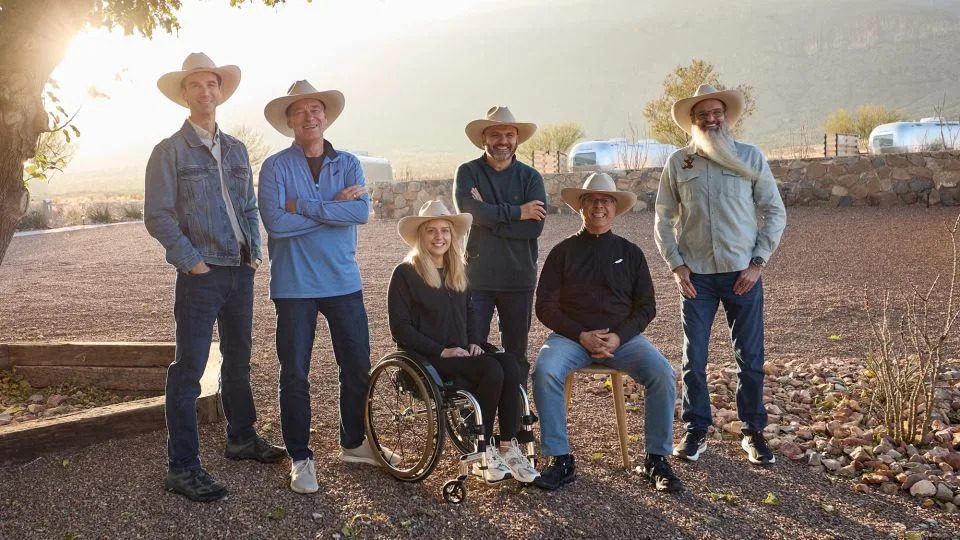
The crew of Blue Origin's NS-37 flight includes former hedge fund partner Joey Hyde, former SpaceX executive Hans Koenigsmann, European Space Agency engineer Michaela Benthaus, entrepreneur Adonis Pouroulis, business executive Neal Milch, and local space enthusiast Jason Stansell. - Blue Origin
“She said she was only thinking about a suborbital flight,” Koenigsmann told CNN. “They responded really, really well to us.”
Koenigsmann and Benthaus are slated to fly together with four other passengers aboard Blue Origin’s New Shepard. To date, New Shepard flights have carried more than 80 people — including founder Jeff Bezos, singer Katy Perry and actor William Shatner — on roughly 10-minute trips that cross the Kármán Line, commonly defined as 100 kilometers (62 miles) above sea level.
Preparations, Safety and Accessibility
The crew had been scheduled to launch from Blue Origin’s complex near Van Horn, Texas, but the company paused the attempt because of an unspecified “issue with built-in checks.” Blue Origin has not published further details or announced a new launch date.
On the brief suborbital flight, Koenigsmann will act as Benthaus’ in-flight companion and will be ready to assist if needed. Benthaus expects to perform many flight procedures herself — she can enter and exit the New Shepard’s roughly 15-foot-wide capsule independently by using a small bench and, for the short period of microgravity near apogee, plans to keep her legs bound together with a strap to prevent them from splaying when passengers rise to float.

Elon Musk and Hans Koenigsmann embrace during a post-flight news conference following the successful launch of SpaceX's CRS-8 mission to resupply the International Space Station in 2016. - Kim Shiflett/NASA
The pair visited Blue Origin’s Texas facilities twice to refine procedures and accommodations. Koenigsmann will also be prepared to help with an emergency evacuation if required; Benthaus described Blue Origin as “super well prepared.”
Why This Matters
Advocates for accessibility have long pointed out that weightlessness can increase freedom of movement for people with some mobility limitations. While no one confined to a wheelchair has yet traveled to space, there have been recent milestones: in 2021, Hayley Arceneaux — a cancer survivor with a titanium prosthesis — spent three days in orbit on a private mission, and this year John McFall, a Paralympian with a prosthetic leg, became the first person with a physical disability to be medically cleared to fly to the International Space Station.
Benthaus said she had wondered whether a spinal cord injury would exclude her from such opportunities. “Maybe having a spinal cord injury is way too disabled,” she told CNN. If the NS-37 flight proceeds as planned, her journey could help dispel doubts for others who use wheelchairs and inspire broader efforts to adapt spaceflight procedures and hardware.
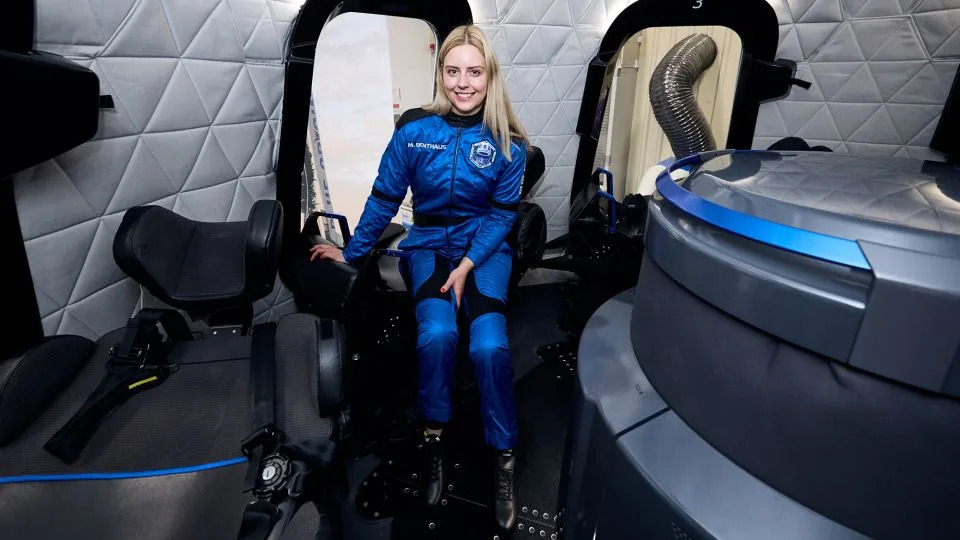
Michaela Benthaus is pictured inside a New Shepard capsule during training. - Blue Origin
She also cautioned that bespoke accommodations can be resource-intensive and may not always be possible. Financial barriers remain significant: while Blue Origin does not publish ticket prices, seats on commercial space tourism flights likely cost hundreds of thousands of dollars, putting them out of reach for most people. Benthaus said she was fortunate to have met Koenigsmann and that he and Blue Origin are supporting her trip. As part of the mission, she is raising funds for Wings for Life, a nonprofit supporting spinal cord injury research.
A Note On Koenigsmann’s Background
Koenigsmann is a well-known figure from SpaceX, having developed avionics for the company’s first rocket, Falcon 1, in the early 2000s and later serving as head of build and flight reliability. He left SpaceX in 2021 after nearly two decades — a split that, according to Walter Isaacson’s biography of Elon Musk, followed disagreements over a 2020 test flight (SN8) and associated accountability.
Koenigsmann said he still respects SpaceX but views this mission as transcending corporate rivalry: “I think the competition is good in general. There should be competition. It shouldn’t always be as personal as it sometimes is.”
Public Reaction And Broader Implications
Benthaus has received overwhelmingly positive responses, including messages of support from people with and without disabilities. A small number of critics questioned why companies should adapt for disabled travelers; she responded that inclusive practices will be crucial as missions lengthen (for example, to Mars), and that people with disabilities can bring resilience and valuable perspectives to crews.
Whether NS-37 launches soon or is delayed further, the planned flight has already highlighted practical, medical and social conversations about who belongs in space and how to make access more equitable.
Fundraising: Benthaus is raising funds for Wings for Life to support spinal cord injury research.


