Several former federal employees who resigned or were pushed out under President Trump are now running as Democrats for U.S. House seats, centering campaigns on protecting government norms and public service. Candidates such as Megan O'Rourke, Ryan Crosswell, John Sullivan, Zach Dembo and Bayly Winder highlight their agency experience and objections to recent policy and personnel changes. Democrats need to flip three House seats to regain control, and organizers say former civil servants make strong recruits — though the hopefuls face tough primaries and challenging districts.
Former Federal Employees Who Quit Over Trump Are Now Running For Congress — Framing Their Campaigns Around Government Integrity

U.S. President Donald Trump delivers an address to the nation from the Diplomatic Reception Room of the White House in Washington, D.C., U.S., December 17, 2025. Doug Mills/Pool via REUTERS REFILE - QUALITY REPEAT
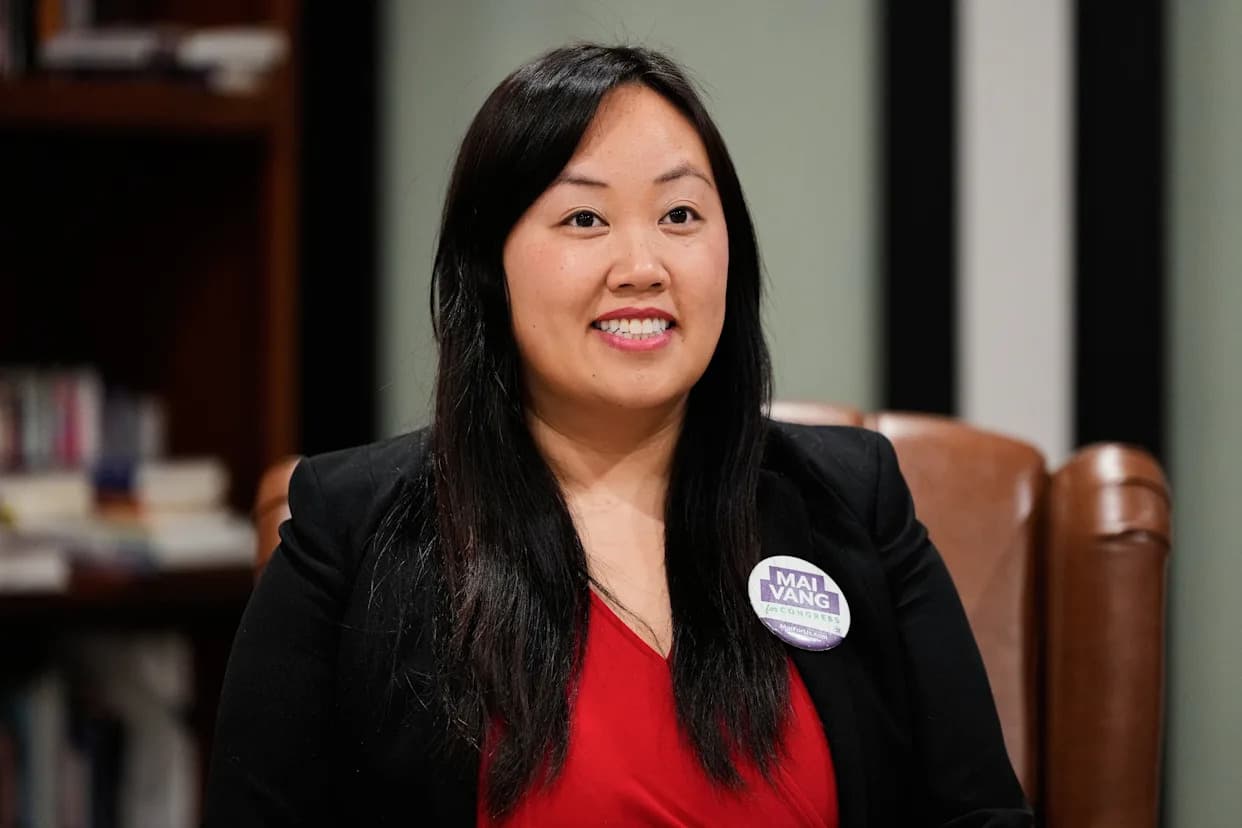
CAPE MAY, New Jersey, Dec 18 (Reuters) — Megan O'Rourke once held what she called her dream job: a senior climate scientist at the U.S. Department of Agriculture who managed grants to make food production healthier and more sustainable. But when the administration began targeting climate-related programs and cutting related funding, she said she could no longer reconcile staying in government with her conscience or the oath to serve the country rather than a single president.
A few months after resigning, O'Rourke launched a Democratic campaign for Congress in New Jersey's 7th District — one of several former federal employees who left or were pushed out of government and are now running for the U.S. House. Their campaigns center on public service, protecting norms within federal agencies and reversing what they describe as politicization under President Donald Trump's second term.
From Agency Desks To The Campaign Trail
O'Rourke is one of more than a half-dozen former civil servants from agencies including Justice, Veterans Affairs, State and Agriculture who have put their professional records and their objections to recent policy and personnel moves at the heart of their campaigns.
Among them are:
- Ryan Crosswell, 45, a former prosecutor who resigned after the Justice Department moved to dismiss corruption charges against New York City Mayor Eric Adams.
- John Sullivan, 41, who left nearly 17 years at the FBI, citing concerns about the bureau's politicization and the disbanding of the bureau's LGBTQ employee resource group.
- Zach Dembo, 40, a former assistant U.S. attorney who said he feared he might be forced to violate his oath to uphold the law.
- Bayly Winder, 34, an ex-official at USAID who carries his old business card on the stump as a reminder of what he says were damaging cuts to the agency.
Electoral Context
Democrats need to flip three Republican-held seats in the next midterm elections to reclaim a House majority — a margin that would allow them to block much of a Trump legislative agenda and pursue oversight of the administration. Several of these former civil servants are running in competitive or swing districts; others are contesting Republican-leaning districts where Democrats have struggled in past cycles.
None of the candidates interviewed by Reuters are guaranteed victory. O'Rourke, Sullivan and Crosswell face vulnerable Republicans in swing districts but must first win competitive Democratic primaries. Dembo and Winder are running in districts that currently lean Republican.
Why Democrats Are Recruiting Former Civil Servants
Democratic organizers say former federal employees make strong candidates because they understand how government works and can credibly argue for restoring institutional norms. Organizations such as Emerge and Run for Something have run targeted training sessions for former federal workers: Emerge held about two dozen sessions drawing hundreds of participants, and Run for Something reported more than 600 former government workers at an open call.
“If you're the kind of person who went to work for the federal government, you did it out of a love of service, or love for your community, or patriotism — you didn't do it for the money,” said Amanda Littman, founder of Run for Something. Their public-service records are central to campaign messaging, offering voters a contrast between experience and outsider status.
Turning Points And Motivations
Several candidates describe an inflection point early in the administration’s second term. Sullivan pointed to the president's clemency actions for people charged or convicted in the January 6, 2021, attack on the U.S. Capitol — more than 1,500 cases by some counts — and the subsequent purges of Justice Department staff who investigated the event. Crosswell said the Justice Department’s decision to drop charges against Mayor Adams — which a judge later said “smacks of a bargain” — prompted a wave of prosecutor resignations, including his own.
Others recount steady erosion of professional norms and what they view as the deliberate politicization of federal agencies. Those concerns, they say, left them with a stark choice: remain in government or step into the political arena to try to protect institutions from within elected office.
“You're either fighting for what you know is right, or you are enabling what you know is wrong,” said Crosswell, a former Marine who chose to run for Congress instead of returning to private practice.
Challenges Ahead
These first-time candidates face a steep learning curve: federal employees are restricted from many political activities while in service, and translating government experience into campaign success requires fundraising, coalition-building and media savvy. They also confront partisan pushback: Republican campaign officials seek to tie them to Democratic administrations and dismiss their critiques of the current administration.
But for now, these former federal workers are betting that voters who value competence, institutional integrity and public-service experience will respond to candidates who left careers in government rather than abandon their stated principles.
(Reporting by Joseph Ax; editing by Paul Thomasch and Suzanne Goldenberg)
Help us improve.