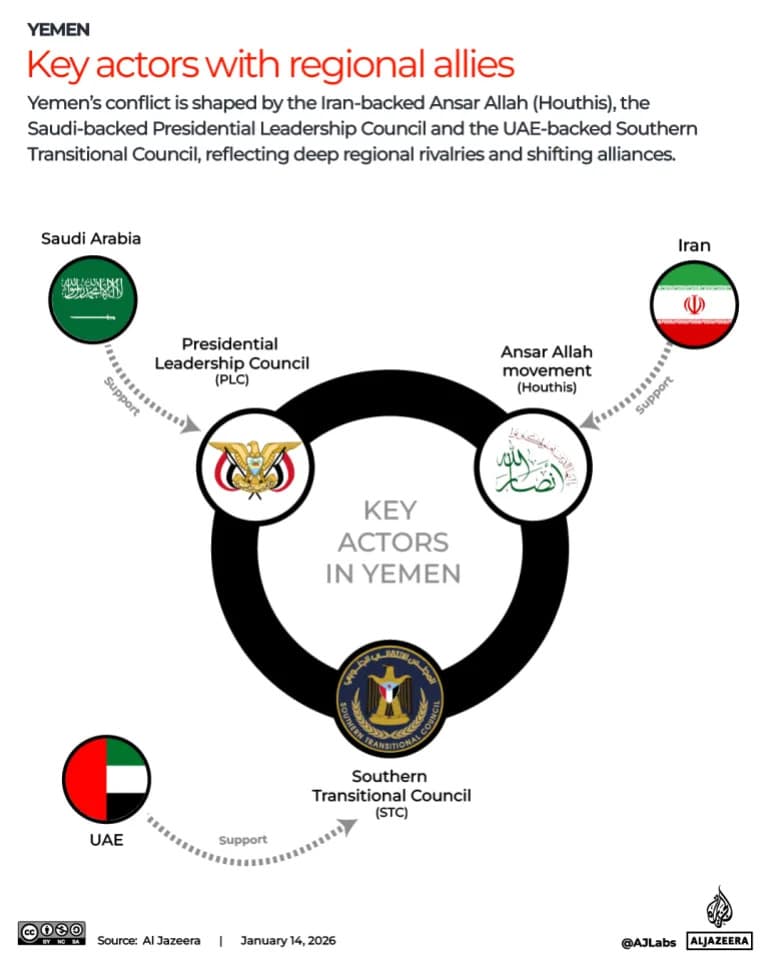
The STC's advances into Hadramout and al-Mahra are deepening Yemen's fragmentation and transforming the conflict into a multi-actor struggle beyond government versus Houthis. President Rashad al-Alimi has warned that the IMF's suspension signals mounting economic risks tied to eastern instability, which could disrupt salaries, fuel and donor support. The author argues that only a three-pillar approach — a redefined federal compact, professional local security under a national framework, and a transparent economic deal on resource management — can reduce fragmentation and avert wider regional spillovers.
Yemen at a Crossroads: How the STC's Eastward Push Is Recasting Power and Risk

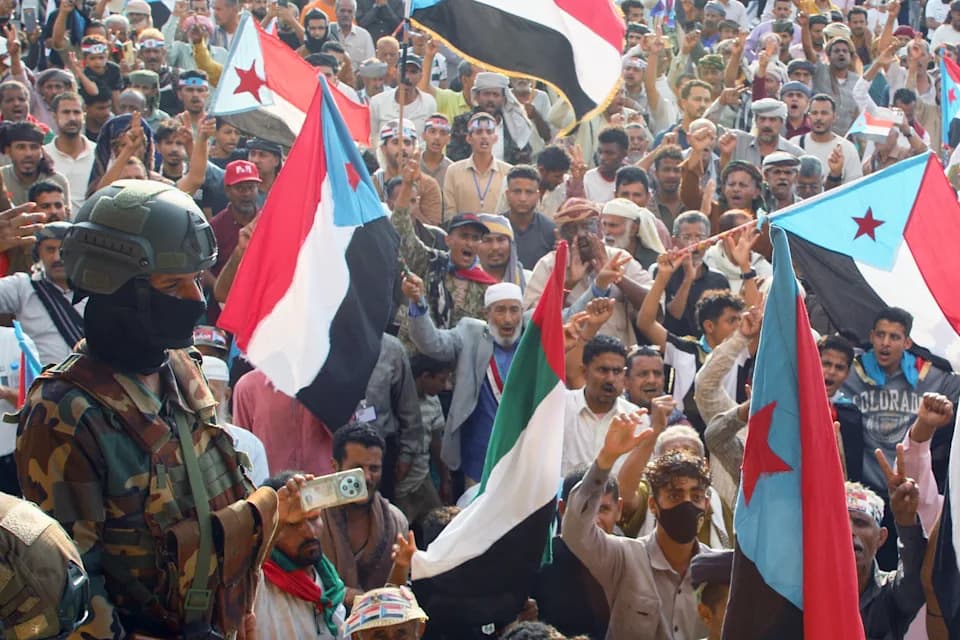
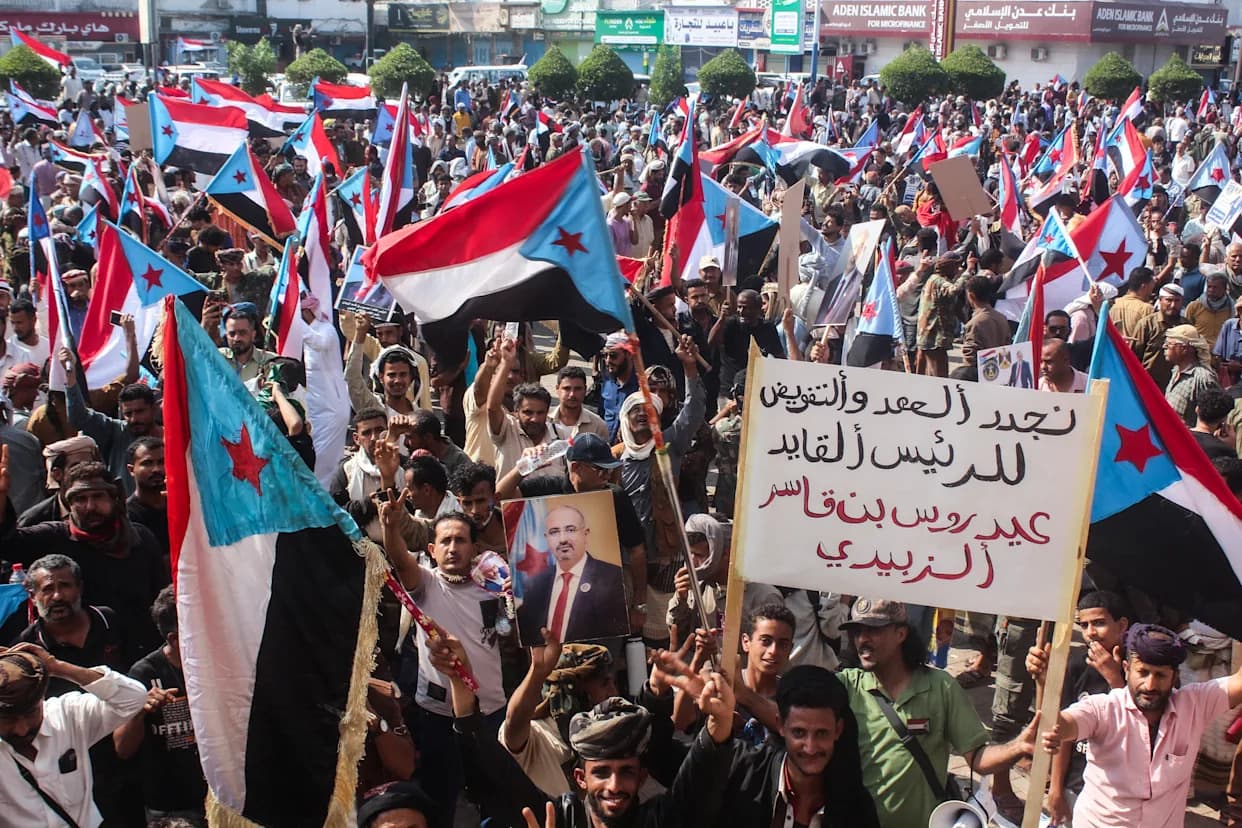
Supporters of the Southern Transitional Council hold an image of its leader, Aidarous al-Zubaidi, as they wave the old South Yemen flag during a rally on December 14, 2025, in the port city of Aden [AFP]
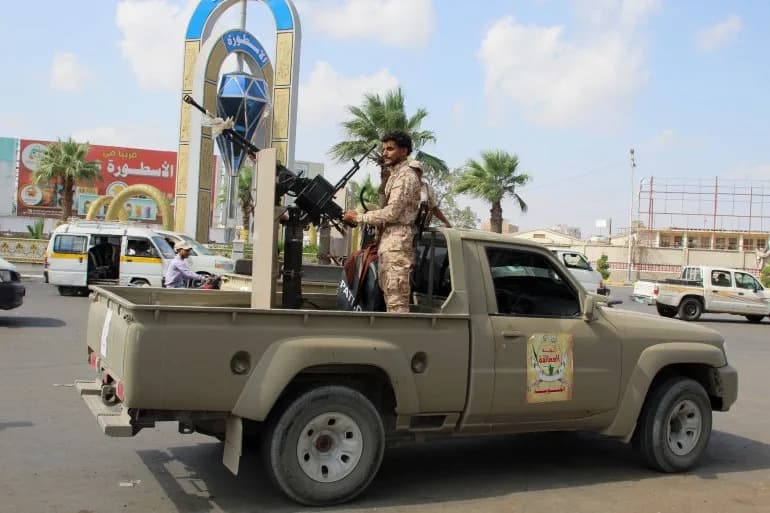
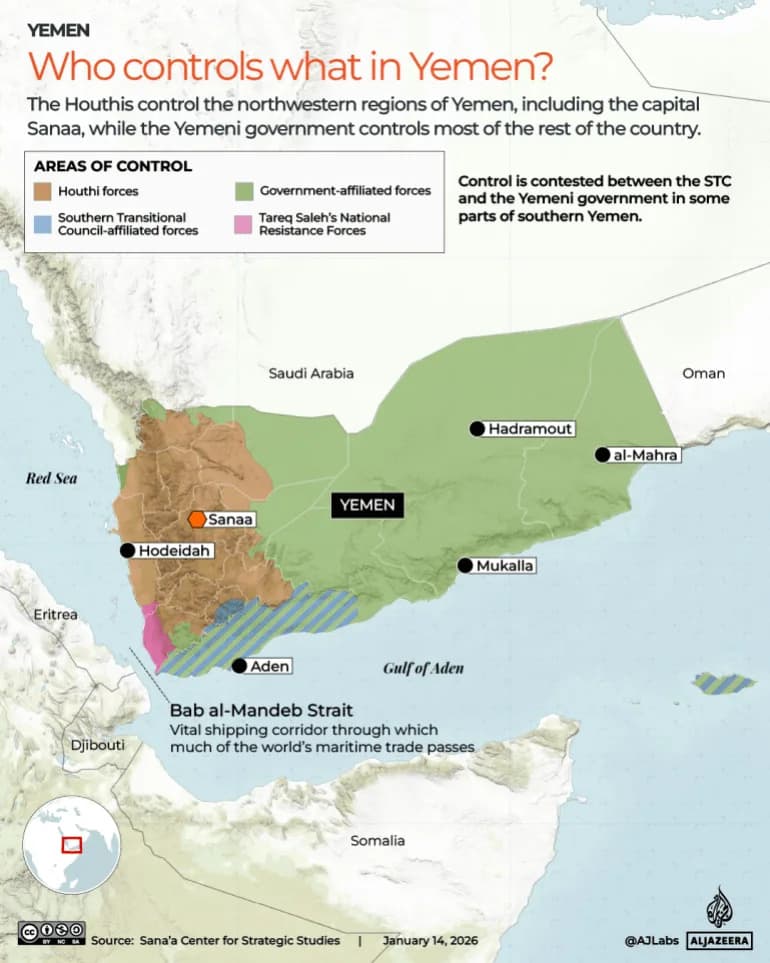
The Southern Transitional Council (STC) has pushed into the eastern governorates of Hadramout and al-Mahra, reshaping local power dynamics and deepening Yemen's political, geographic and representative fragmentation. These advances underscore that Yemen's conflict is no longer a simple binary between the internationally recognised government and the Houthi movement; instead, multiple de facto authorities now compete over security, resources and legitimacy.
Background and Recent Developments
The STC, backed by a regional patron, has established itself as the dominant force across much of the south and parts of the east. Its eastward expansion this month — focused mainly against government-aligned forces — is turning resource-rich Hadramout and al-Mahra into contested arenas. President Rashad al-Alimi warned that what Yemeni officials describe as the IMF's suspension of activities reflects the growing economic cost of rising insecurity, calling it a "wake-up call." The IMF has not publicly commented.
Economic Stakes
Al-Alimi emphasised that Yemen, already the poorest country in the region, cannot absorb new shocks. Instability in eastern governorates would immediately threaten salary payments, fuel and basic services and could deter international donors. Disruptions to ports, resource areas and supply routes quickly translate into pressure on livelihoods, exchange rates and the government's fiscal capacity.
Threefold Fragmentation
The conflict's evolution is producing fragmentation on three interconnected levels:
- Political: Decision-making within the anti-Houthi camp is splintering, eroding any single chain of command and complicating unified security and administrative policies.
- Geographic: New lines of contact now exist not only between Houthis and government forces but also between Houthis and the STC, along with many grey zones controlled by local and tribal formations.
- Representative: Competing claims over who legitimately speaks for the south and for Hadramout weaken the state's role as the arbiter of resources and institutions.
Regional Implications
Hadramout and al-Mahra are strategically sensitive: they border Saudi Arabia and Oman and have long coastlines that support trade, smuggling and migration routes. Local instability thus quickly spills over to regional security concerns. As Yemen becomes perceived as "islands of influence," external actors may increasingly engage directly with local authorities, undermining the political centre.
How the Houthis Benefit
The Houthis — who control Sanaa and large parts of northwestern Yemen — gain indirectly when their opponents fracture. Internal disputes among anti-Houthi forces divert attention and resources away from confronting the Houthis, strengthen the group's negotiating position, and provide time for the Houthis to sustain their war economy and administrative controls.
Risks and Possible Trajectories
The unfolding dynamics raise layered risks: front lines could harden into de facto borders between adjacent authorities; security vacuums could expand; smuggling and lawlessness along Saudi and Omani borders could increase; and international actors dealing with multiple parties could further internationalise the crisis. Rather than producing a decisive victory, the likely outcome is a mosaic of authorities that depend on external patrons and weaken prospects for a stable, central state.
Proposed Path Forward
Partial or tactical redeployments are unlikely to be enough. The article argues for a comprehensive approach built on three interlinked pillars:
- Redefine the National Compact: Draft a vision for a viable federal framework that guarantees fair partnership for all regions and reframes the political centre as a guarantor of rights and services.
- Local Security Under a National Umbrella: Build professional local forces operating within a clear national legal framework, with practical arrangements for withdrawing outside forces and uniform security decision-making in state institutions.
- An Economic Deal: Conclude a transparent agreement on resource management where they are produced, ensure fair revenue sharing, and link international support to an implementable reform plan that protects sovereign assets under central oversight.
Absent these steps, Yemen risks continued peripherally driven disintegration in which the most cohesive armed entities expand and contested margins widen. The economy would likely suffer first, worsening conditions for millions and turning the governance crisis into a prolonged stability crisis with difficult-to-contain local and regional effects.
Author: Saeed Thabit, Al Jazeera's bureau chief for Yemen.
Help us improve.