Mohamed Bouazizi’s 2010 protest sparked Tunisia’s democratic awakening, but many post‑revolution gains have been reversed since President Kais Saied consolidated power in July 2021. He temporarily closed parliament, rewrote the constitution and enacted Decree 54, which curtailed online speech and independent media. Dozens of politicians, judges and activists have been arrested, multiple NGOs suspended, and the judiciary and electoral bodies reshaped, leaving Tunisia’s democratic future uncertain.
False Spring: Tunisia’s Democratic Promise Unravelled Under Kais Saied

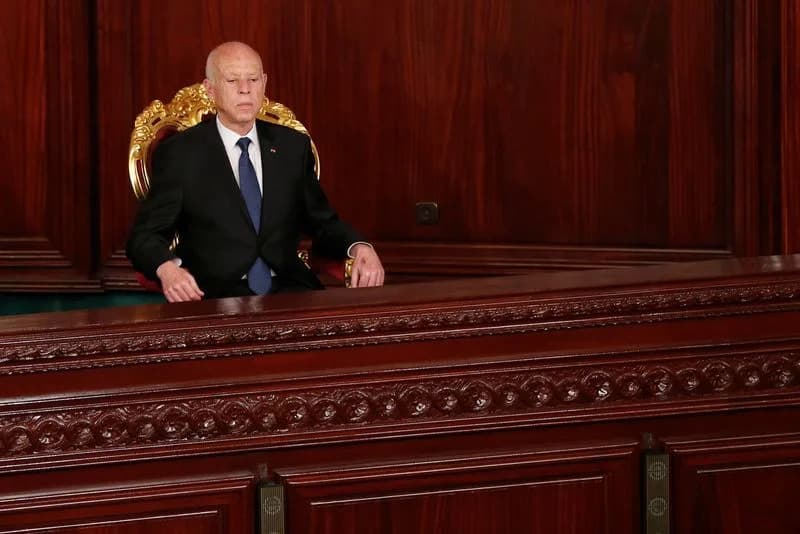
Tunisian President Saied attends a ceremony with President Xi Jinping in China [ingshu Wang/Getty Images]
Fifteen years ago, Mohamed Bouazizi, a street vendor in Sidi Bouzid, set himself alight in protest at police harassment and corruption. His act ignited nationwide uprisings that reshaped the region and raised hopes that Tunisia might build a lasting democratic model.
Those hopes have since been deeply eroded. While Tunisia was long regarded as the Arab Spring's lone democratic success, the consolidation of power by President Kais Saied since July 2021 has dramatically reversed many post‑revolution gains. What began as a popular anti‑corruption surge has been followed by a sweeping reconfiguration of state institutions and a crackdown on dissent.
From Promise to Power Grab
Saied's July 2021 moves — described by opponents as a coup — included temporarily closing parliament, later rewriting the constitution, and strengthening the presidency. Parliament only reopened in March 2023 under a system many critics say has been weakened so it is no longer an effective check on executive authority.
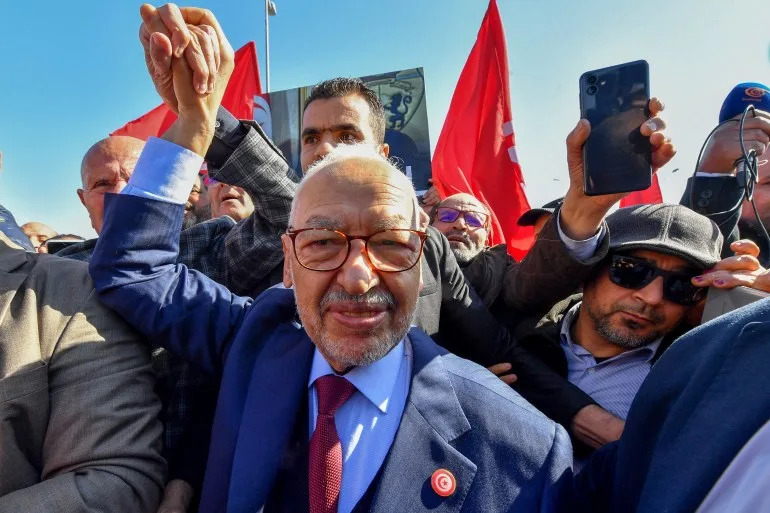
The head of Tunisia’s Ennahdha, Rached Ghannouchi, greets supporters upon arrival at a police station in Tunis on February 21, 2023, in compliance with the summons of an investigating judge [Fethi Belaid/AFP]
“They essentially came for everyone; judges, civil society members, people from all political backgrounds, especially the ones that were talking about unifying an opposition against the coup regime,” said Kaouther Ferjani, whose father, Said Ferjani, was detained in 2023.
Crackdown On Dissent
Legal and extra‑legal measures have narrowed civic space. Decree 54 (2022) criminalised certain electronic communications deemed false by the state, curtailing social media debate and independent reporting. Human rights groups have documented arrests of journalists, commentators and activists, and courts have ordered suspensions or closures of NGOs.
In 2025 Amnesty International and Human Rights Watch publicly condemned Tunisia's intensified repression. Over a four‑month period, 14 Tunisian and international NGOs were suspended by court order, including the Tunisian Association of Democratic Women, the Tunis Forum for Social and Economic Rights, the media platform Nawaat and the Tunis branch of the World Organisation Against Torture.
Targeting Political Figures And Institutions
Dozens of post‑revolution politicians, judges and civic leaders have been arrested or prosecuted irrespective of party affiliation. In April 2023, former Ennahdha leader Rached Ghannouchi was detained on state‑security charges and now faces additional years in prison, according to his family. His political opponent Abir Moussi has also been jailed on multiple charges. Critics say arrests are often aimed at figures who could rally resistance to Saied.
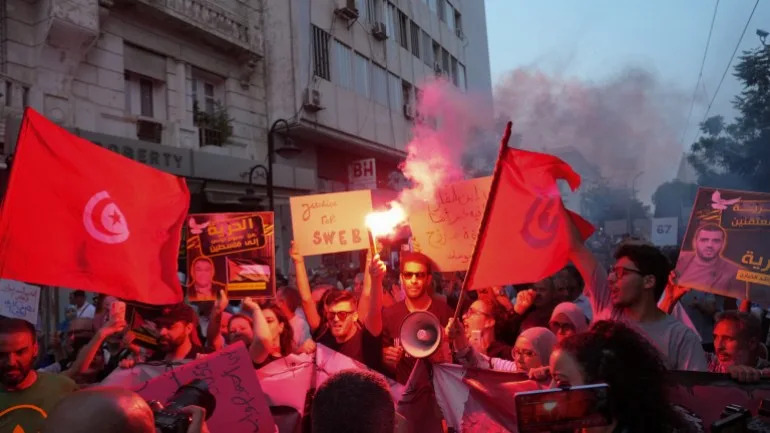
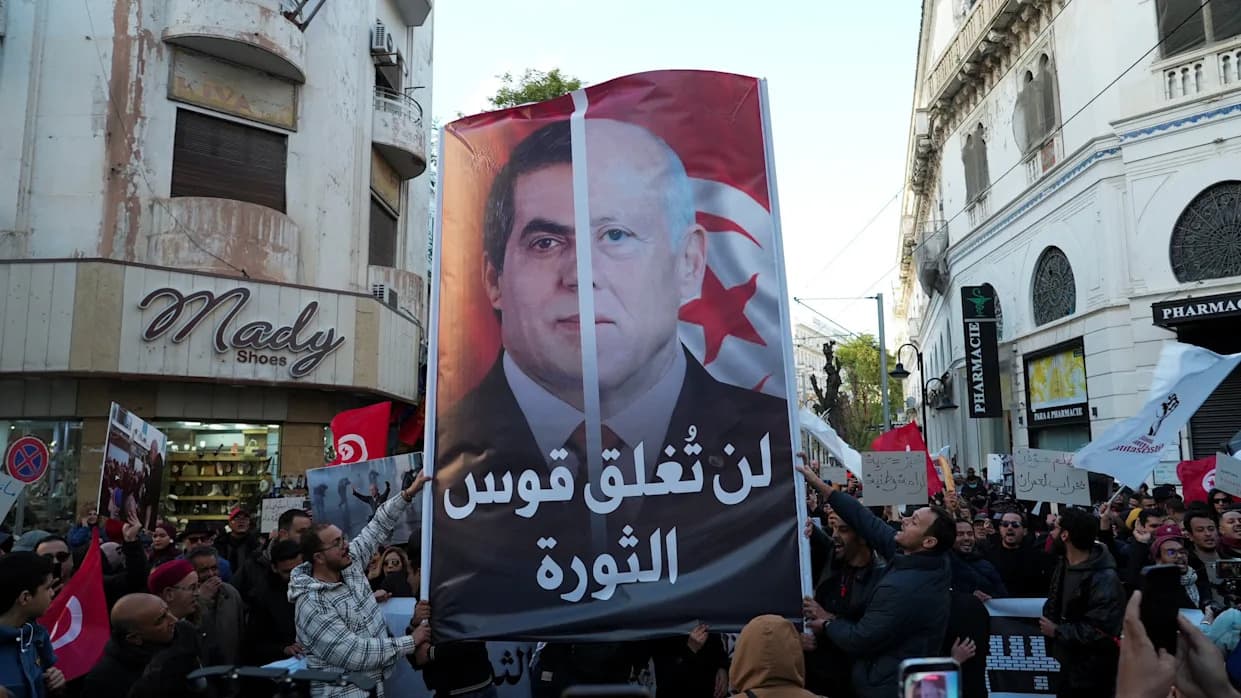
A protest against Saied on fourth years after his power grab. Tunis, July 25, 2025 [Jihed Abidellaoui/Reuters]
At the same time, the judiciary has been reshaped. In 2022, 57 judges were dismissed after refusing to issue rulings that aligned with the president's wishes, and key courts that previously offered independent oversight have been weakened or subordinated. Observers say the electoral authority and much of the justice system are now staffed by Saied appointees.
Declining Participation And Public Disillusion
Disillusionment shows in shrinking voter participation. Around 61% of eligible voters turned out for the 2014 presidential election; by the most recent vote turnout had fallen to about half that level. Many Tunisians have been cowed into silence, while others have chosen to abstain from elections they view as managed or meaningless.
What This Means
For many observers and rights groups, the arc of Tunisia's transition has bent back toward authoritarian rule. Supporters of Saied argue his measures address corruption and elite capture; critics say they have dismantled democratic institutions and undermined basic freedoms. With civic organisations suspended, opposition politics muted and much of the judiciary remade, Tunisia faces deep uncertainty about whether its revolutionary gains can be reclaimed.
“Kais Saied’s authoritarian rule has definitively buried the hopes and aspirations of the 2011 revolution,” Bassam Khawaja of Human Rights Watch said, citing the erosion of rights and democratic checks.
The coming years will determine whether domestic resistance, regional dynamics or international pressure can restore political pluralism — or whether Tunisia’s experiment in democratic transition will remain a cautionary tale.
Help us improve.