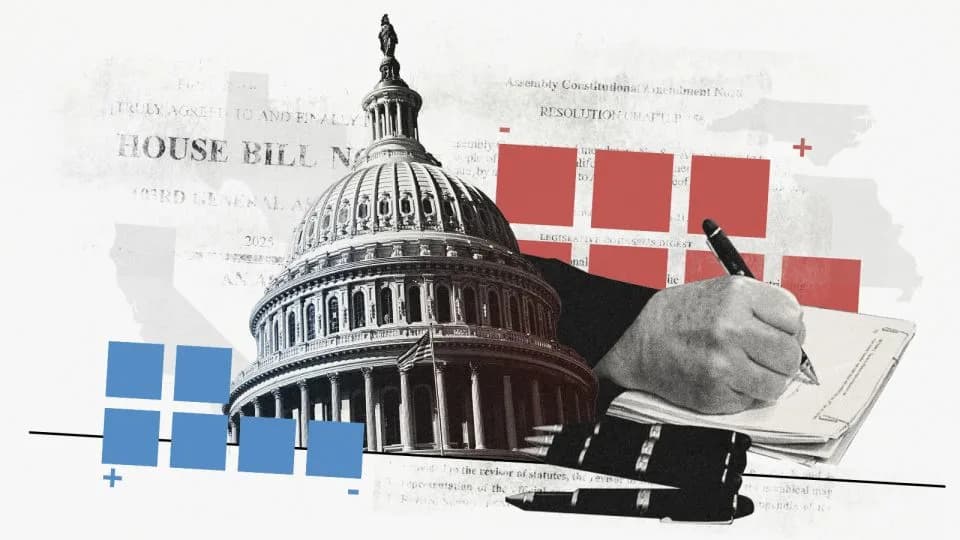
Indiana Republican state senators blocked a proposed congressional map after national pressure from President Trump and his allies. Senators Spencer Deery and Greg Goode, along with 19 other Republicans, joined Democrats to oppose a plan that could have eliminated two Democratic-leaning seats. The vote is framed as a defense of state authority, grassroots accountability, and a form of constitutional conservatism that contrasts with nationalized party control.
Indiana Republicans Defy Trump, Reassert State Authority in Redistricting Fight

This week, Republican state senators in Indiana delivered an unexpected rebuke to national pressure: a controversial congressional redistricting plan pushed by President Donald J. Trump and his allies failed to pass after a majority of Republican senators voted against it.
Senators Spencer Deery and Greg Goode — joined by 19 other Republican senators — allied with Democrats to block a map that could have eliminated two Democratic-leaning seats and handed them to Republicans. The proposal did not secure a majority vote and crucially did not win the support of a majority of Republican senators.
What Happened
Under sustained outreach from national figures and surrogates, Indiana's Republican leadership faced hard choices between following national party pressure and responding to local constituents. Rather than acquiesce, a substantial group of GOP senators prioritized local feedback and institutional norms, voting down the proposed map.
Why It Matters
This was more than a political spat — it was a statement about state prerogative, grassroots accountability, and constitutional conservatism.
To many observers, redistricting can look like routine state-level politicking. But this episode exposes a deeper tension within the modern Republican Party: the clash between nationalized party control and a conservatism rooted in state authority and local governance. When decisions are driven by national personalities or Washington-based priorities, the bond between elected officials and their communities can fray.
Indiana's dissenting senators emphasized that their first obligation is to the voters who elected them, not to outside influencers. In doing so, they illustrated a model of conservative governance that centers local institutions, state sovereignty, and transparent processes over personality-driven directives.
Broader Implications
The piece argues that as the influence of any single national figure wanes, the Republican Party’s future will depend on leaders who cultivate grassroots trust, exercise real authority within their communities, and adhere to constitutional principles. Moments like Indiana’s redistricting vote can build durable credibility that national messaging cannot manufacture.
By asserting state authority and defending institutional processes, these senators presented a practical blueprint for how the GOP might rebuild authenticity and broaden its appeal in coming years.
About the author: David Sypher Jr. is a freelance writer and commentator based in New Jersey.
Copyright 2025 Nexstar Media, Inc. All rights reserved. This material may not be published, broadcast, rewritten, or redistributed.
Help us improve.