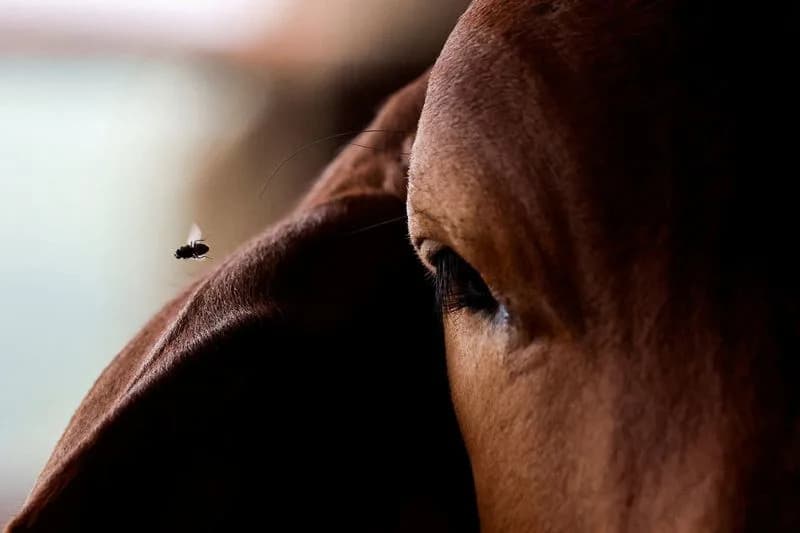
Juan Manuel Fleischer’s family ranched on the borderlands long before the modern U.S.-Mexico boundary existed. For decades he built a business importing Mexican cattle into Arizona, a trade that has withstood immigration fights and the construction of a steel barrier — until now. Over the past year that trade has largely collapsed because of the return of the New World screwworm, a parasitic fly whose maggots burrow into warm-blooded animals and can cause severe wounds, weight loss and death.
Trade disruption and local fallout
About 1.2 million young Mexican cattle typically cross a half-dozen U.S. entry ports each year to be finished in American pastures and feedyards. After a cow in southern Mexico tested positive for screwworm in November 2024, U.S. authorities closed most livestock crossings and imports fell to roughly 230,000 head in 2025 as additional cases were discovered farther north, including a September detection about 70 miles south of the border.
For importers, feeders and border communities, the consequences have been severe. Fleischer says his business is “basically going broke.” In Nogales, Arizona, Mayor Jorge Maldonado estimates the city has collected up to 15% less in lodging taxes because cattle buyers and brokers no longer stay overnight, and many hospitality and service businesses that relied on the trade have suffered. At Santa Teresa, New Mexico — the nation’s busiest livestock crossing — pens that normally move half a million animals a year now sit quiet, and layoffs have cut municipal and private payrolls.
History, risk and the response
The screwworm was once a plague across North America, devastating livestock and wildlife through the early 20th century. A U.S. eradication campaign in the 1960s used sterile-fly releases to collapse domestic populations. Occasional outbreaks have occurred since, including among endangered Key deer in the Florida Keys in 2016, and in humans exposed abroad.
Officials say the current worry is not catastrophic herd losses but the extremely high cost and labor intensity of containing and monitoring an outbreak. The U.S. Department of Agriculture (USDA) estimates an outbreak could cost the Texas economy alone as much as $1.8 billion. Federal leaders have described keeping the parasite out of U.S. livestock as a high priority, and both recent administrations have backed strict import restrictions while planning ramped-up control measures.
Industry impact and differing views
Ranchers and feedyard operators report dramatic business pain. Mark Rogers, who once ran 50,000 head with a large share from Mexico, is down to roughly 27,000 and has cut a third of his staff. Vaquero Trading in El Paso, which previously imported quarter-million cattle annually and generated about $400 million in revenue, has been forced to suspend operations.
Yet some economists and sector observers say the national price effect is likely limited. Mexican calves typically account for about 3–4% of the U.S. calf herd, and Oklahoma State agricultural economist Derrell Peel calls the impact on retail beef prices “marginal.” Still, he and others stress the regional economic damage is acute.
The industry is split on the right balance between caution and reopening. The National Cattlemen’s Beef Association supports the closure while urging faster development of an $8.5 million sterile-fly production facility planned in Texas — the only comparable facility in North America is in Panama. Some Texas officials have proposed targeted, limited reopenings or trial shipments for specific cattle types, but USDA has signaled it will keep the border largely closed until it is confident Mexico’s controls are effective.
What’s next
Officials are pursuing multiple strategies: expanded surveillance and quarantine protocols, accelerated construction of sterile-fly production capacity, and bilateral talks with Mexican authorities. Importers argue existing protocols—quarantines in Mexico, parasite treatments, and joint inspections—can reduce risk, while federal officials say more evidence is needed before reopening full-scale trade.
For families and towns dependent on cross-border cattle commerce, the uncertainty is immediate and painful. As Fleischer says, the closure is not just an economic blow: it disrupts long-standing relationships and livelihoods that span the border.