Thousands took part in "United against fascism" rallies in four major Croatian cities to denounce a recent surge in far-right activity and the public display of pro-fascist symbols. Demonstrators demanded that authorities curb extremist groups after incidents that targeted ethnic Serb cultural events and sparked clashes in Rijeka and Zadar. Organizers and speakers warned these trends threaten democratic society, while Prime Minister Andrej Plenkovic rejected claims his government has ignored the problem. The tensions follow a political shift after last year’s election and controversy over a popular right-wing singer who uses wartime slogans.
‘United Against Fascism’: Thousands Rally Across Croatia to Protest Far-Right Surge

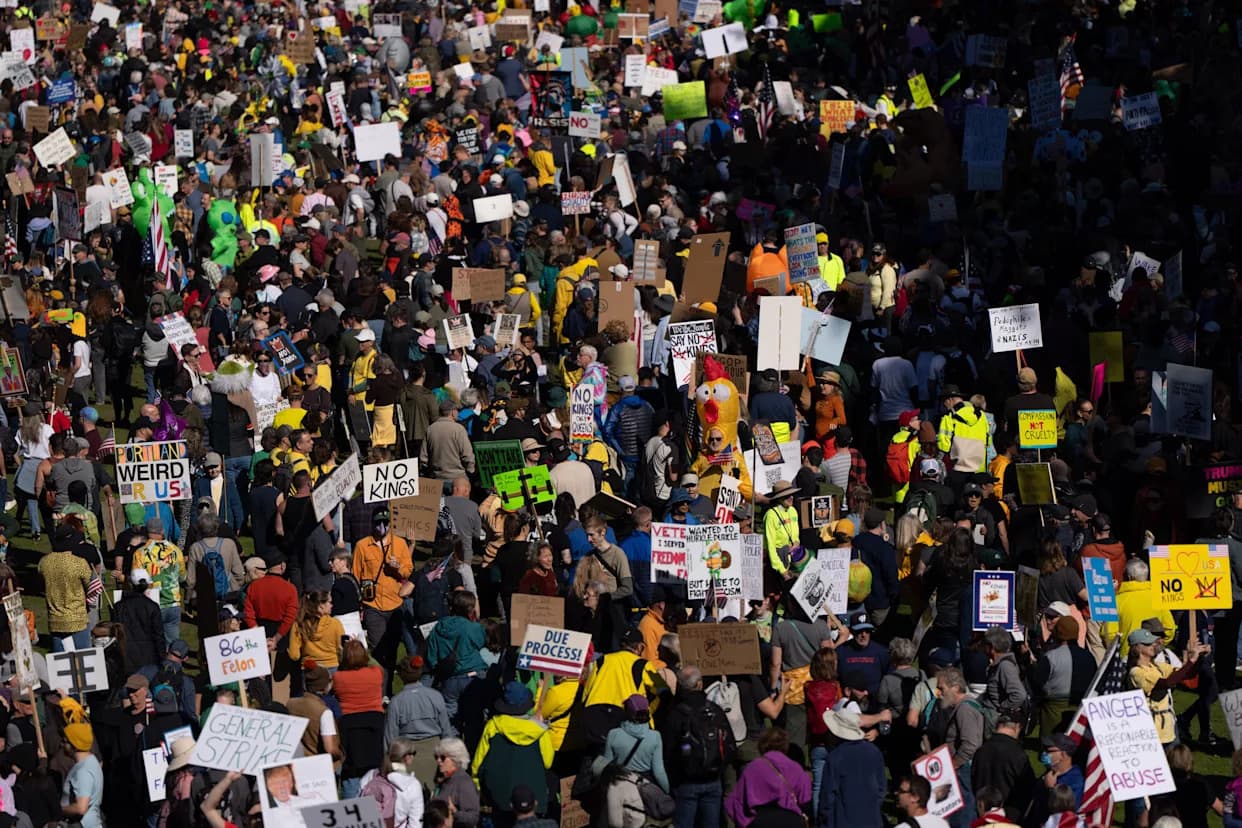
Thousands of people marched in multiple Croatian cities on Sunday under the banner "United against fascism," protesting a rise in far-right activity and the open use of pro-fascist symbols tied to the World War II-era puppet state. Demonstrators in Zagreb, Rijeka, Zadar and other cities said recent incidents have heightened ethnic and political tensions and demanded a stronger official response.
Protesters chanted "we are all antifascists" and urged authorities to curb extremist groups and stop displays of symbols and salutes associated with the Ustasha regime, which ran concentration camps during World War II where tens of thousands of Serbs, Jews, Roma and anti-fascist Croats were killed.
"All that has been happening around us is very dangerous," journalist Maja Sever told the crowd in Zagreb. "You have shown you will not be quiet — we will fight for a democratic society."
Counter-groups composed largely of young men dressed in black appeared at gatherings in Rijeka and Zadar. Local reports and photos circulating online showed minor scuffles with police and at least one detention. Organizers and participants say similar incidents in November targeted ethnic Serb cultural events in Zagreb and Split, where provocations and nationalist chants prompted police intervention and raised fears of renewed ethnic violence years after the 1991–95 war.
Organizers warned that extremists have also targeted liberal groups, politicians and foreign workers. Several witnesses described the use of the Ustasha salute — commonly translated as "For the homeland — Ready!" — during provocations and threats.
"We have groups throwing smoke bombs and firecrackers and threatening violence, raising their right hand in the air and shouting 'For the homeland — Ready,'" said Iva Davorija, an organizer of the Zadar march. "They are doing this freely."
Analysts link the recent rise in visible far-right activity in part to a political shift following last year’s parliamentary election, when the conservative governing party formed a coalition with a far-right party. That alignment left an ethnic Serb party outside government representation for the first time in years, a change critics say has deepened social divisions.
The controversy has also centered on a popular right-wing singer, Marko Perković (known by his stage name Thompson), whose frequent use of wartime slogans and imagery has sparked debate. Thompson has been banned from performing in some European cities but remains widely popular in Croatia.
Prime Minister Andrej Plenkovic has rejected accusations that his government is ignoring growing far-right extremism and neo-fascist rhetoric, while also accusing opponents of exaggerating the problem and exacerbating divisions.
Historical context
Croatia was a republic within communist Yugoslavia after World War II. The federation dissolved in a series of nationalist conflicts in the 1990s; in Croatia, ethnic Serbs rebelled against the breakup and seized swathes of territory with the aim of joining Serbia, leading to fighting that left more than 10,000 people dead. Croatia joined NATO in 2009 and became a member of the European Union in 2013.
Help us improve.