Steven Lubet argues that a recent Supreme Court decision shielding presidents from criminal prosecution for official acts has effectively given President Trump dangerous latitude. Under that ruling, Mr. Trump ordered aircraft and drones to sink 21 small, unarmed boats in international waters, resulting in at least 83 deaths. Leaked DOJ material suggests the strikes rest on Mr. Trump’s finding of a “formal state of armed conflict” with drug cartels; outside experts say no independent legal authority has accepted that rationale. Lubet warns the Court’s doctrine of near-absolute presidential immunity removes a crucial legal check on potentially lethal executive actions.
Supreme Court Ruling Has Turned Presidential Immunity into a 'License to Kill,' Legal Scholar Warns
By Steven Lubet, Williams Memorial Professor Emeritus, Northwestern University Pritzker School of Law
President Trump frequently cultivates a larger-than-life, hyper-masculine image — from digital trading cards that cast him as an astronaut or cowboy to depictions as a race-car driver, boxer and costumed superhero. He has not been marketed as a spy, but in one stark respect he now resembles Ian Fleming’s James Bond: both have been treated as if they possess a license to kill.
Bond’s license to kill is fiction: Fleming’s Double-0 operatives were a narrative device that allowed a suave hero leeway against fictional villains. In Trump’s case, the authorization is real and backed by far greater destructive power than any tricked-out Aston Martin.
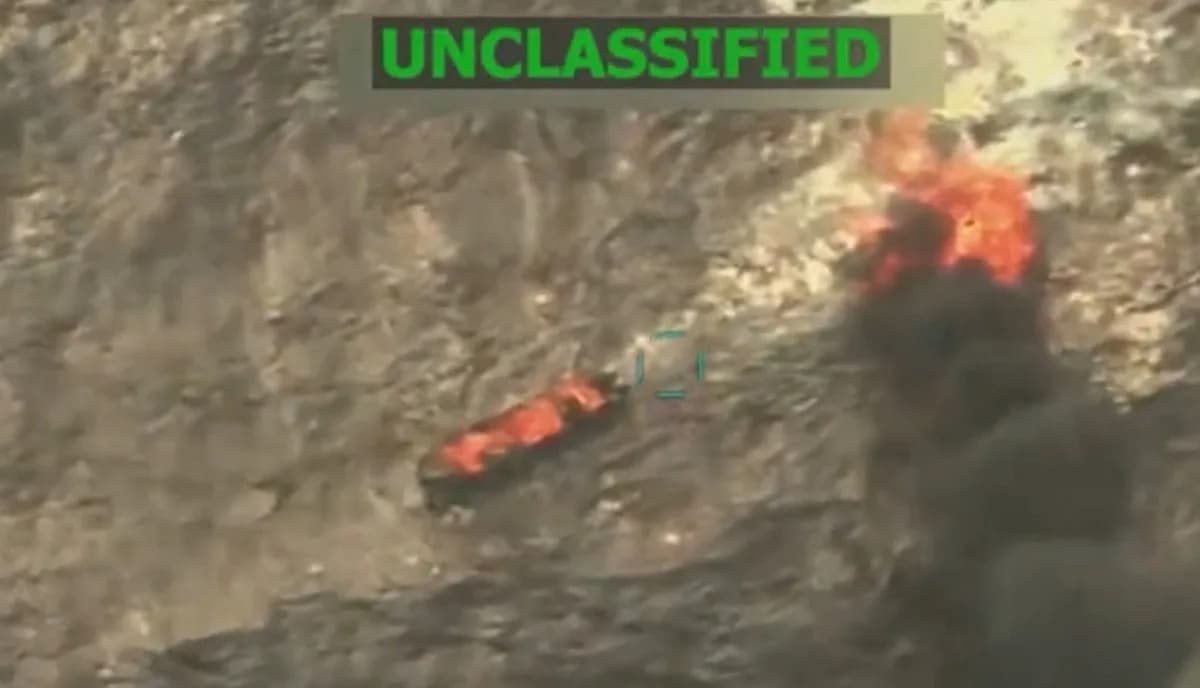
Following a Supreme Court decision that shields presidents from criminal prosecution for official acts, Mr. Trump ordered aircraft, missiles and drones to sink 21 small, unarmed boats accused of drug trafficking in international waters in the Caribbean and the Eastern Pacific. As of last week, at least 83 people who were crew members or passengers on those vessels have died.
The administration has not publicly released the evidence or the full legal rationale for those strikes. Leaks of a classified Justice Department memorandum indicate the lethal operations rely largely on Mr. Trump’s own determination that the United States is in a “formal state of armed conflict with ‘narco-terrorist’ drug cartels.” Outside experts say they have seen no independent legal or factual justification that validates that conclusion.
“No knowledgeable authority outside the administration appears to have accepted the administration’s asserted justifications or concluded that Mr. Trump’s order was lawful — not one,” a criminal-law specialist observed.
Deliberately directing lethal force against civilians can constitute a crime under U.S. law, including murder. Historically, that legal risk required an extra measure of presidential caution before ordering killings rather than pursuing interdiction and arrest for what may have been non-capital offenses such as drug-smuggling. That restraint, however, has been eroded by a recent Supreme Court ruling.
In Trump v. United States, the Court’s conservative majority held that the mere prospect of later criminal prosecution should not deter a president’s “bold and unhesitating action.” During oral argument, Justice Sonia Sotomayor asked whether presidential immunity might extend even to the assassination of a political rival. The former president’s lawyer conceded that, depending on the hypothetical, such an act “could well be an official act.”
Chief Justice John Roberts wrote the Court’s opinion declaring that then-president Trump is “absolutely immune from criminal prosecution for conduct within his exclusive sphere of constitutional authority.” The decision came from a majority that included six justices who describe themselves as originalists, even though the Constitution contains no express grant of presidential immunity (it does provide specific immunity for legislators’ official acts).
The Framers of the Constitution prized deliberation and restraint in the executive branch. In 1787, instantaneous presidential decision-making was unimaginable: telegraphs and rapid long-distance travel were decades away, and a directive from George Washington could not be implemented at a moment’s notice. Those conditions encouraged reflection before action — the opposite of what the Court’s ruling now appears to permit.
Where James Bond has killed roughly 370 fictional adversaries over six decades of films, these naval strikes have already resulted in at least 83 real deaths in a matter of months. There is no clear limit to how broadly this interpreted immunity might be used. At oral argument, Justice Neil Gorsuch warned the ruling would be written “for the ages” — an ominous phrase given the stakes.
The combination of expansive presidential immunity and an administration willing to treat drug cartels as participants in an armed conflict raises profound questions about accountability, separation of powers and the protection of civilian life. When the highest court effectively removes the threat of criminal prosecution for certain executive actions, it reshapes the incentive structure that once forced presidents to weigh legality and human cost before ordering lethal force.
This is not a theoretical concern: it has produced real deaths already. The law should not be a shield for unchecked violence by those who wield power from the Oval Office.
Help us improve.