Pete Hegseth unveiled six major initiatives aimed at reshaping the U.S. military—some pragmatic, some controversial. Proposals range from a four-star Autonomous Warfare Command and a 120-day Project Meridian review to FORTRESS America, a new-base competition, an expanded Corps of Cadets, and an Office of Religious Affairs. Each idea raises urgent implementation questions: authority for AUTOWARCOM, conflicts of interest on Project Meridian’s leadership, redundancy and cost for a new base, and the risk of politicizing officer education and religion in uniform.
Pete Hegseth’s Six Defense Initiatives: Ambitious Ideas, Big Questions

(Photo illustration by Bill Kuchman/The Bulwark| Photos: Getty)
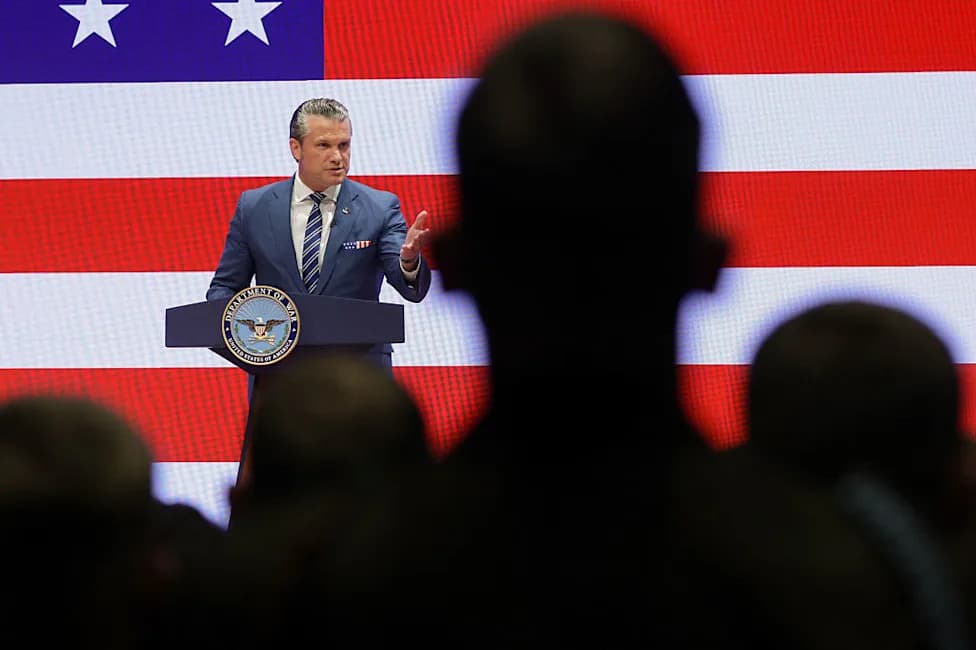
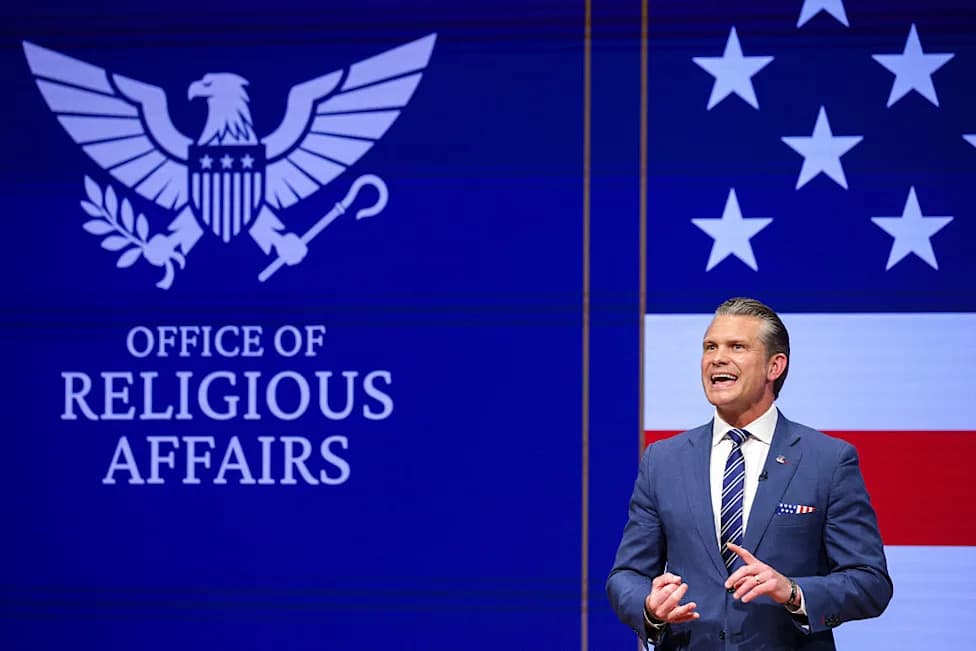
Secretary of Defense Pete Hegseth used a "State of the Force" address at Quantico to unveil six headline initiatives intended to reshape the U.S. military. Alongside a pledge to cut general and flag officer billets by 20 percent, Hegseth announced an Autonomous Warfare Command (AUTOWARCOM), a 120-day study called Project Meridian, a resilience program dubbed FORTRESS America, a competition for a “Next Great American Base,” an expansion of officer pipelines into “America’s Corps of Cadets,” and a new Office of Religious Affairs reporting directly to the secretary.
AUTOWARCOM (And Project Agincourt)
Hegseth proposes elevating an Autonomous Warfare Command (AUTOWARCOM) to a four-star functional combatant command by October 2027, with “service-like authorities” to accelerate adoption of autonomous and robotic systems across the joint force. An interim initiative, Project Agincourt, would pair operators with engineers and entrepreneurs to shorten acquisition timelines and move decisions and funding closer to experimentation.
Why this matters: drones, robotics, and AI are reshaping battlefield dynamics—as seen in Ukraine and elsewhere—so faster fielding matters. But creating a new four-star headquarters does not, by itself, create capability. The services already organize, train, and equip forces; the Defense Innovation Unit, Special Operations Command, and combatant commanders all play roles in fast acquisition and operational adoption.
Key question: What specific authority or gap justifies a new four-star command rather than empowering existing organizations to scale autonomy across the services?
Project Meridian
Project Meridian is a 120-day review to identify the technologies and capabilities the U.S. will need—covering AI, robotics, directed energy, biotechnology, autonomy, and new operational domains. Hegseth named Emil Michael to oversee the effort and named Elon Musk, Palmer Luckey, and Newt Gingrich as codirectors.
Why this matters: continuous, candid reappraisal of future warfare helps prevent strategic surprise. But the leadership choices raise conflict-of-interest and judgment concerns: Musk and Luckey have commercial ties to defense tech, and Gingrich is politically controversial and not a practicing military or technology expert.
Key question: Will Project Meridian balance technological imagination with operational experience—combat commanders, logisticians, intelligence analysts, wargamers, historians, allies, and junior service members who are already experimenting with these systems?
FORTRESS America
FORTRESS America (Federal Operations for Resilience, Troop Resources, Energy, Supply, and Survivability) calls for major U.S. bases to generate independent power and for more resilient domestic supply chains for critical materials, munitions, fuel, and medicine. This is sensible preparedness: domestic bases can be vulnerable to cyberattacks, grid failures, and supply-chain shocks.
Why this matters: energy resilience and supply-chain security are readiness issues, not political talking points. Many installations already pursue microgrids, solar, and storage (Fort Irwin is one example).
Key question: How will FORTRESS America build on proven, ongoing resilience efforts and scale them efficiently—rather than treating installation hardening as a newly discovered priority?
Next Great American Base
Hegseth invited governors to bid for a “Next Great American Base”—a new installation on hundreds of thousands of acres to support 15,000–25,000 service members, with independent power, autonomous systems, and advanced air defenses.
Why this matters: a modern, resilient base can be strategically valuable. But the U.S. already operates major installations that often need renovation: aging barracks, strained utilities, limited maintenance capacity, and overused ranges are widespread problems.
Key question: Is a brand-new, extraordinarily expensive base the best use of resources, or should Congress and the department prioritize modernizing and consolidating existing infrastructure to meet strategic needs?
America’s Corps of Cadets
This initiative would expand the senior military college model—starting with partner schools such as Louisiana State, Liberty, Tuskegee, Mississippi State, and Hillsdale—into a broader “America’s Corps of Cadets.” The aim is better officer development.
Why this matters: high-quality officer education matters deeply. Yet the U.S. already fields officers from service academies, senior military colleges, ROTC programs, and officer candidate schools—sources that produce diversity of background and thought.
Key question: What measurable improvements will this new program deliver over existing commissioning sources, and how will the department prevent politicization of officer education?
Office of Religious Affairs
Hegseth’s final initiative creates an Office of Religious Affairs reporting directly to the secretary, charged with strengthening spiritual readiness, protecting free exercise, identifying unmet needs, and supporting chaplaincies. The Pentagon says the office will not favor any one faith.
Why this matters: chaplains provide essential counseling and moral leadership. However, centralizing religious functions in a new Pentagon office risks the appearance—or reality—of endorsing religion, rather than protecting plural religious liberty.
Key question: What specific capability gap does this new office fill that the existing chaplaincy and personnel systems cannot already address, and how will the department guard against institutional bias?
Conclusion: From Announcements To Accountability
Many of Hegseth’s ideas respond to real issues—autonomy and AI adoption, installation resilience, supply-chain security, officer quality, and spiritual support. But announcements are the easy part; implementation determines whether proposals become capabilities, mire in bureaucracy, or create new problems.
Before moving forward, the Defense Department should: 1) identify the concrete authority and functions a new headquarters would perform; 2) ensure Project Meridian includes operational, logistical, intelligence, historical, wargaming, allied, and junior-service perspectives; 3) build FORTRESS America on proven projects; 4) require a clear strategic case before funding a new base; 5) set measurable outcomes for any officer-development expansion; and 6) demonstrate a specific gap that an Office of Religious Affairs must fill without compromising religious neutrality.
Ultimately, Secretary Hegseth owes the American public a clear accounting of how these projects will make the country safer from foreign adversaries—not merely safer from ideas or cultural trends he disfavors.
Help us improve.