President Trump acknowledged higher fuel prices but rejected responsibility, blaming Ukraine strikes and U.S. "Blue States" moving toward renewables. Reuters data suggests oil transit through the Strait of Hormuz has returned close to pre-conflict levels, and releases from European reserves may ease prices. Nonetheless, AAA reports U.S. gasoline and diesel averages have risen sharply, and a Brown University analysis estimates Americans have spent about $107 billion more on fuel — roughly $822 per household.
Trump Blames Ukraine And 'Blue States' For Soaring Gas Prices Despite Strait Of Hormuz Recovery

Trump Finds a New Way to Blame Gas Prices on Anyone But Himself
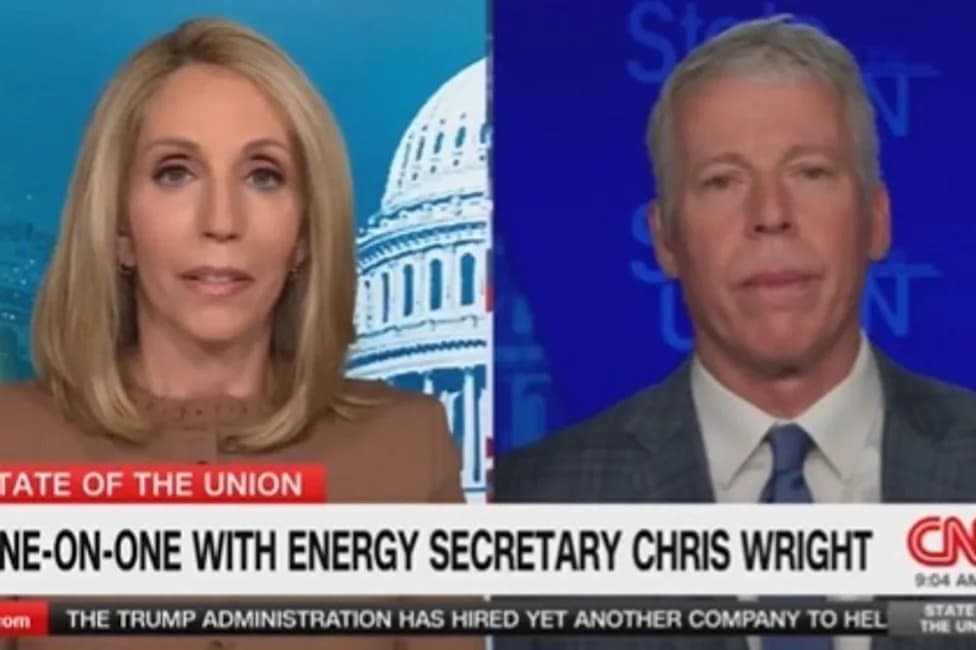
President Donald Trump acknowledged rising gasoline and diesel prices on Monday but insisted the increases are not the responsibility of his administration, instead pointing fingers at recent developments in Ukraine and at U.S. "Blue States" shifting toward renewable energy.
"What's driving up gasoline is no longer the Strait of Hormuz, because record numbers of barrels are coming out now on an almost daily basis," Trump wrote on Truth Social.
Trump argued that recent strikes on Russian oil infrastructure and policies in states like California have contributed to higher energy costs. Analysts note that strikes on Russian facilities are part of the broader Russia-Ukraine conflict and its wider economic effects.
Provisional ship-tracking data obtained by Reuters shows that, in September, oil transit through the Strait of Hormuz largely returned to pre-conflict levels. In addition, several million barrels from European strategic reserves — released after an urgent plea from Trump to G7 leaders — are expected to help ease supply pressures in the coming weeks.
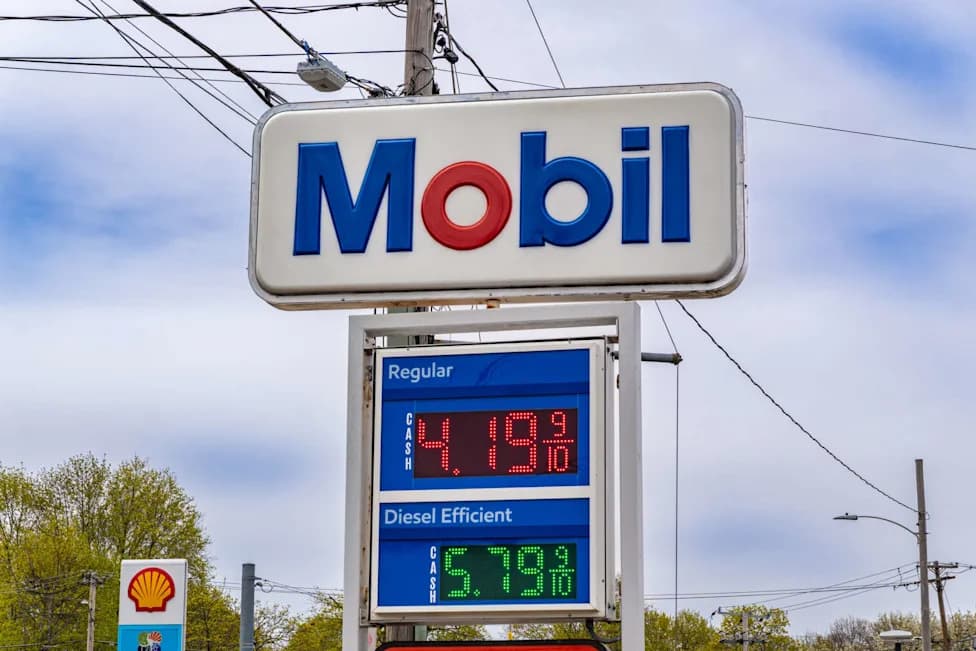
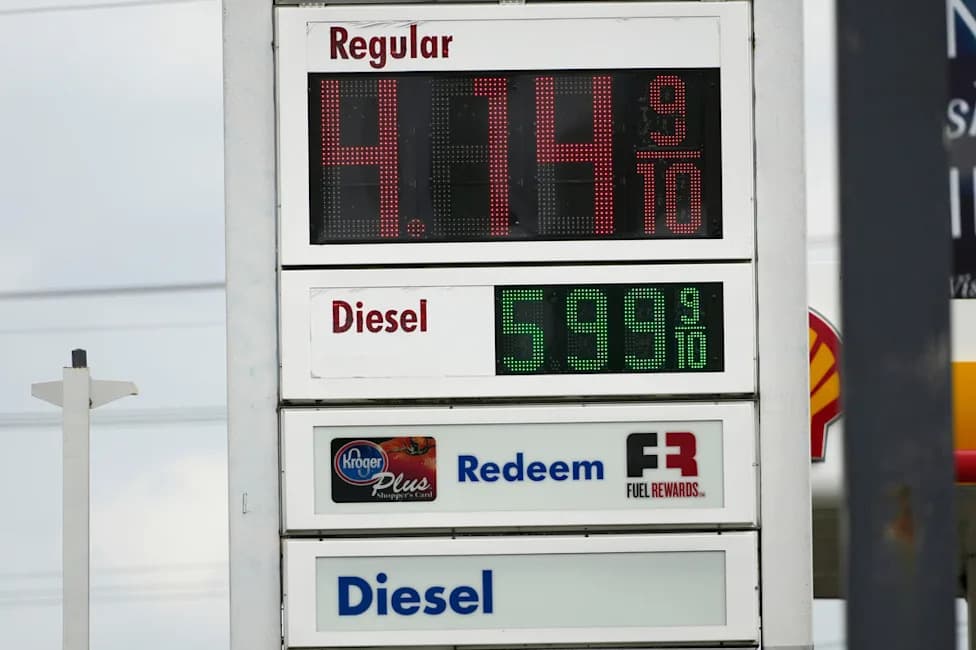
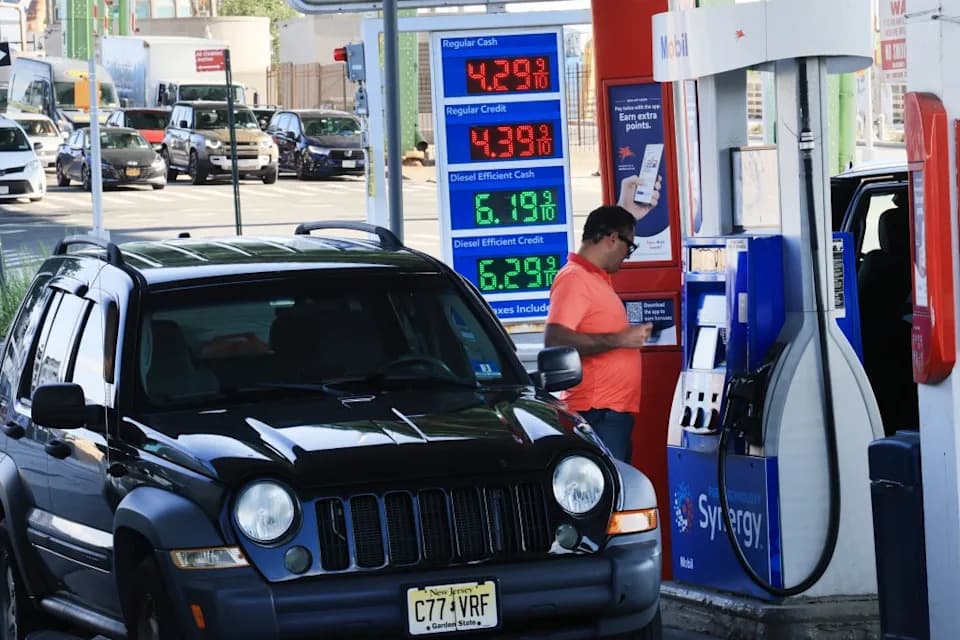
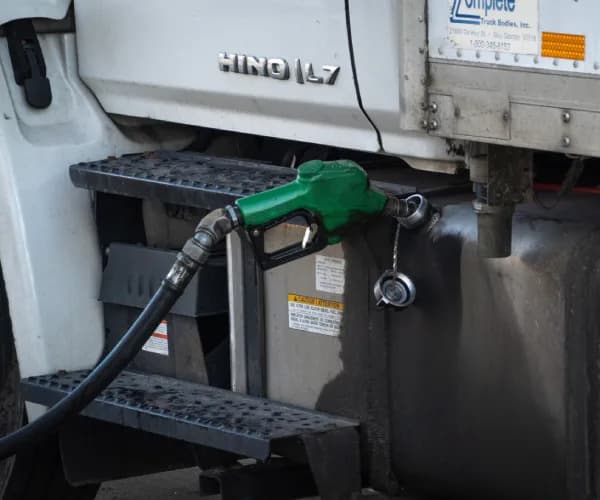
Despite those developments, U.S. consumers continue to feel the pain at the pump. According to the AAA fuel price tracker, the national average price for regular gasoline rose from about $2.99 per gallon in early February (before the recent escalation in the region) to $4.36 per gallon today. Diesel has climbed from roughly $3.68 per gallon a year ago to about $6.32 per gallon now.
A Climate Solutions Lab analysis at Brown University estimates that Americans have collectively spent an additional $107 billion on gasoline and diesel since the conflict began seven months ago. That total includes roughly $59 billion more on gasoline and $48.6 billion more on diesel — about $822.20 extra per U.S. household.
Bottom line: While shipping through the Strait of Hormuz appears to be recovering and strategic reserve releases may provide short-term relief, prices remain elevated and have imposed a significant added cost on American households. Political leaders continue to debate the relative impact of supply disruptions, geopolitical risk and domestic energy policy on gas and diesel prices.
Help us improve.