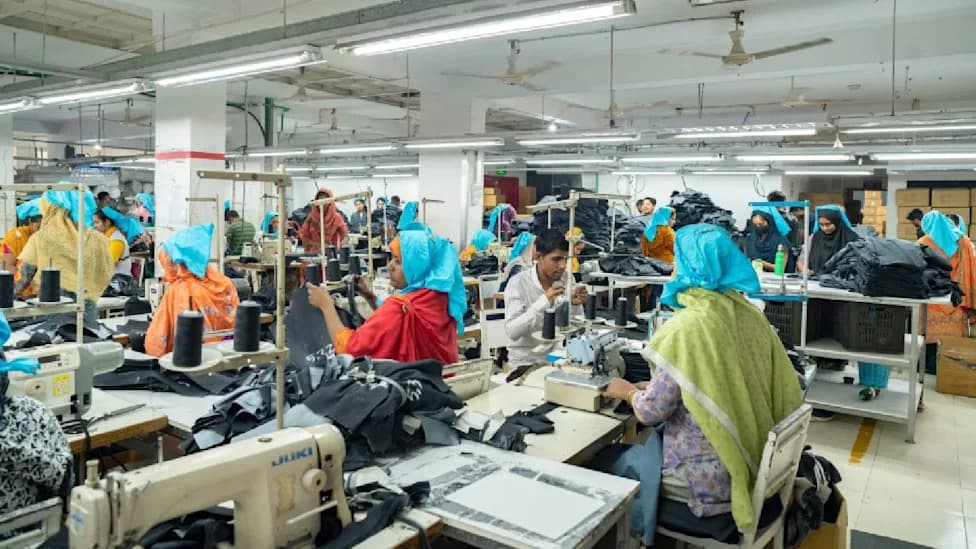
The Better Cotton Initiative will publish its first impact report in five years, revealing regionally varied progress toward regenerative cotton. Nearly 70% of BCI-licensed farmers improved soil health by up to 30%, while pesticide and crop-protection results were mixed—smaller, directly supported farms saw the greatest reductions. BCI is expanding its MRV system with satellite and AI checks but stresses that sustained brand investment and fair-trade-style premiums are essential to scale regenerative practices and support 250 million livelihoods.
BCI’s New Report: How Regenerative Cotton Could Transform Apparel Sustainability

SJ Fall Summit: The Benefits of Regenerative Cotton Farming
The Better Cotton Initiative (BCI) is preparing to publish its first impact report in five years, offering a detailed, farm-level look at progress—and persistent challenges—across global cotton production. Speaking at the Sourcing Journal Fall Summit, Jasmin Malik Chua interviewed Alia Malik, BCI’s chief commercial officer, about the organisation’s shift toward a formal regenerative standard, new data insights, and plans to strengthen monitoring and traceability.
Regional Results and Key Findings
BCI's forthcoming report—timed for WorldCottonDay—highlights how cotton outcomes vary widely by region. The data show that nearly 70% of BCI-licensed farmers achieved improved soil health, with average gains of up to 30%. However, progress on crop protection and pesticide reduction was uneven: smaller farms that received direct BCI support made the biggest pesticide reductions, while larger operations in the U.S., Brazil and Australia recorded smaller changes, tempering the global picture.
"We have a lot of data, and that has led us, in the last five years, to be almost green-hushing," Malik said. "There was so much data—it wasn't that comparable. How do you put it out? How do you share it meaningfully? What if it doesn't all look great? We ended up deciding that we wanted to put it all out there to create more transparency in the industry about how cotton looks different all around the world."
Climate As The Overriding Factor
Malik stressed that climate volatility is now the dominant factor shaping outcomes on farms. Farmers must constantly adapt to shifting water availability and extreme weather, which affects yields, input use and the feasibility of regenerative practices.
"For the farmers, and we really focus on the farm, there's no denying climate change," Malik said. "The climate is the farmer's boss. ... It means a lot of adaptation is needed."
From Training To A Regenerative Standard
BCI is transitioning from delivering sustainable farming training toward a formal regenerative standard. Malik noted that many regenerative practices are rooted in traditional, pre-green-revolution farming methods—practices that protect soil health and long-term productivity—but today’s markets demand higher assurance, stricter traceability and measurable impact.
Strengthening MRV With Technology—and Finance
To support the shift, BCI is expanding its Monitoring, Reporting and Verification (MRV) framework by combining field-level data with satellite imagery and real-time AI validation. While technology will play a major role in cross-checking and scaling data collection, Malik emphasized that tech alone is not enough: the industry also needs long-term commercial commitments from brands to make regenerative transitions economically viable for farmers.
"MRV, or monitoring, reporting, and verification, it's technical, but it's also pretty simple," Malik said. "It's about having reporting systems where there are also checks so that the data is meaningful and reliable… We're making some big investments into how we do that at the system level. So it means working with stuff that's out there, like satellites that can see farms, using that as checks, and working with AI to make sure that data's being validated on a real-time basis."
A Call For Fair-Trade-Style Finance
Malik urged the fashion industry to adopt financial mechanisms used in food commodities—such as price premiums and fair-trade models—to support the roughly 250 million people whose livelihoods depend on cotton. She argued meaningful sustainability requires direct investment in farming communities rather than treating regenerative cotton as a box-ticking compliance exercise.
"Cotton is the foundation for the lives and livelihoods of 250 million people around the world—cotton is people," Malik stated. "In food-based crops, that's understood. Price premiums and fair trade models for cocoa and coffee are well understood, accepted, and invested in. And in textiles, we don't do that, because we're always tempted to look for a quick win and a quick shortcut for sustainability."
BCI's new report aims to increase transparency, encourage tailored interventions by region and scale up both technological and financial systems to move the sector toward fully regenerative cotton production.
Help us improve.