The Oxford report, produced with DIRT Charity and co-authored by Arizona Muse, links fashion to roughly 1.45 billion hectares—about 30% of global agricultural land when wool and leather are included. It finds that farming and manufacturing methods, not fibre type alone, largely determine environmental impact. The authors call on brands to set targets based on verified farming practices, invest in regenerative transitions, and support a new Demeter Textile Standard to certify outcomes.
Oxford Study: Fashion Tied to Nearly 30% of Global Farmland — Farming, Not Fibre, Drives Impact

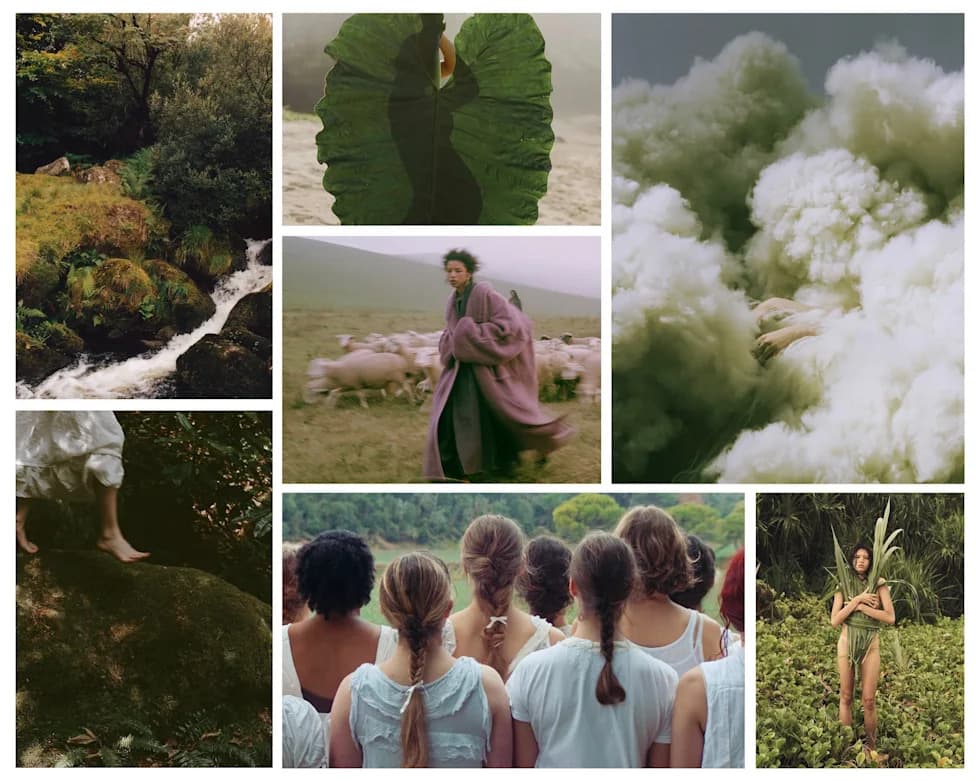
The fashion industry influences over nearly a third of the world's farmland. Credit: Eco Age/Arizona Muse.
A new report from the University of Oxford's Smith School of Enterprise and the Environment, produced with DIRT Charity and co-authored by Arizona Muse, finds that the fashion industry is linked to roughly 1.45 billion hectares — about 30% of the world’s agricultural land. The study, The Climate and Agricultural Impact of Textile Production, was published ahead of the EU’s Empowering Consumers for the Green Transition Directive, which takes effect on 27 September 2026.
How the figure was calculated
The researchers broadened the usual definition of textile land to include livestock-derived fibres such as wool and hides used for leather as well as conventional fibre crops (cotton, hemp, flax). That expanded accounting attributes roughly 876 million hectares to leather, 528 million to wool and 34.7 million to cotton, producing a total of about 1.45 billion hectares.
Farming and processing matter more than fibre type
The report challenges the common assumption that a garment’s fibre content alone reliably signals its environmental impact. Instead, the researchers found production processes and farming methods have a far greater influence, and impacts can vary widely within the same material category.
Sam Fankhauser, Director of the Smith School of Enterprise and the Environment and report author, said: "Once leather and wool are counted alongside textile crops, roughly a third of the world's agricultural land is linked to what this industry buys. That is the scale of the opportunity, and our review suggests it is currently underestimated. A brand changing how it sources is changing how land is farmed."
Examples of variability
Life-cycle analyses for leather range from about 8.5 kg to 152 kg CO2e per square metre depending on production methods. Mycelium-based "leathers" showed emissions ranging from roughly 2.76 kg to 57 kg CO2e per square metre, a factor of 20 difference largely driven by energy sources and manufacturing. Wood-based fibres such as viscose also vary widely, with reported emissions between 0.2 and 8.3 tonnes CO2e per tonne of fibre.
Regenerative farming shows clear benefits
The way raw materials are farmed emerged as a major determinant of biodiversity and soil health. The report highlights trials where biologically based pest control in Egyptian cotton production cut pesticide use by more than 90% while increasing yields. Long-term studies in India showed biodynamic cotton systems improved soil health and ecological resilience.
Arizona Muse, founder of DIRT Charity and co-author of the report, said: "Brands have spent a decade arguing about which natural fibre is more sustainable, many with little idea about how these fibres are farmed. Fashion — as a sourcing power — has the opportunity to regenerate up to 30% of Earth's agricultural land through transitioning to regeneratively farmed biodynamic fibre."
A practical path forward
The report urges fashion companies to shift from fibre-based marketing to targets that prioritise verified farming methods and environmental outcomes. It recommends contractual procurement changes, investment to support farmers through transitions to organic or biodynamic systems, and higher transparency across supply chains.
DIRT Charity, together with the Biodynamic Federation Demeter International, is developing a Demeter Textile Standard to certify regenerative farming, animal welfare and social criteria across fibre production, processing and manufacturing. The standard aims to give brands and consumers a more rigorous basis for environmental claims on clothing.
What this means for consumers and brands
Consumers should be cautious about assuming environmental performance from fibre labels alone. For brands, the report frames a large-scale opportunity: by changing sourcing requirements and financing farm-level transitions, the fashion sector can influence how nearly a third of the world’s agricultural land is managed.
Help us improve.