After repeated floods pushed sewage, trash and animal carcasses into Costa Esperanza, residents led by María Monges organised to clear clogged streams feeding the Reconquista River. Their work became the 9 de julio cooperative in 2005, receiving provincial support for regular cleanups. The Reconquista basin, home to about 4–5 million people, has long suffered sewage, industrial waste and contaminated aquifers, and specialists warn parts of the river remain in severe deterioration. Local groups and San Martín University are pursuing ecological preserves and artificial wetlands to filter pollutants, showing how grassroots action can drive visible improvements.
Neighbors Turn Cleanup Into Change: How Costa Esperanza Took on Argentina’s Polluted Reconquista River
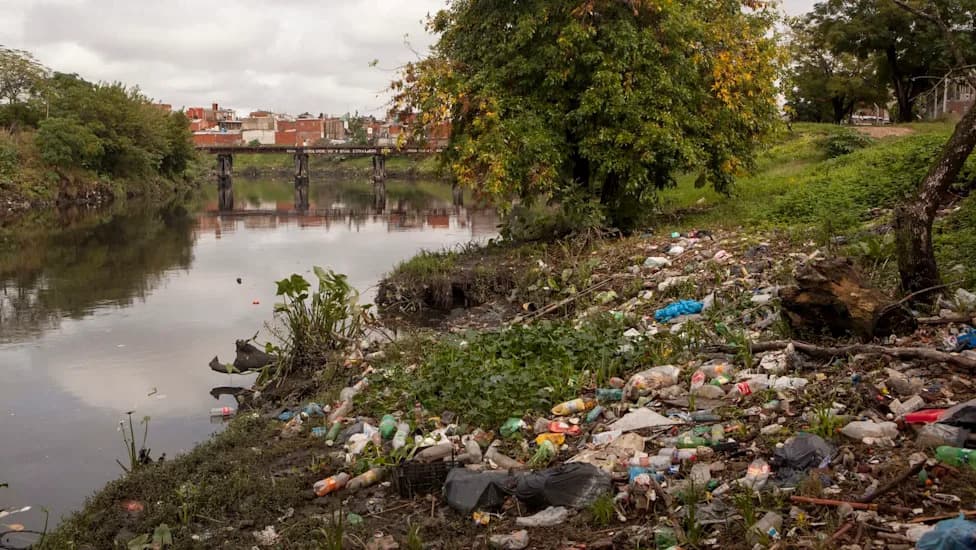
Photo Credit: Getty Images
Repeated floods in Costa Esperanza, Argentina, pushed sewage, household trash and even animal carcasses into the neighbourhood, convincing resident María Monges that the community could no longer wait for outside help to tackle the river that runs through their lives.
What began as neighbours clearing clogged streams evolved into a sustained, community-led program to restore stretches of the Reconquista, long considered Argentina's second-most-polluted river.
From grassroots cleanups to a formal cooperative
After seeing local waterways choked by debris, Monges organised volunteers to remove blockages and rubbish. She remembers the early work vividly: 'You don't know what it was like — when we started cleaning up, all the streams were blocked up everywhere: rubbish, dead dogs … a bit of everything. It was unsanitary, but we carried on working anyway.' By 2005 the effort formalised into the 9 de julio cooperative, which now receives tools, uniforms and training from the provincial administration. Monges coordinates weekday cleanups of the small streams that feed the Reconquista.
'It's beautiful when it's clean. The thing is, you have to stop the rubbish from reaching the neighbourhood,' said Monges' daughter, Zulma.
Scale of the problem
The Reconquista basin supports roughly 4–5 million people and the river runs about 51 miles through 18 municipalities in Buenos Aires province. Since at least the 1970s the river has accepted untreated sewage, industrial discharges and landfill leachate. Pollution has been compounded by homes lacking proper sanitation infrastructure and by factories in the San Martín district.
Natalia Gavazzo, an anthropologist and researcher at the National Scientific and Technical Research Council, warned that contamination extends beyond surface water: 'All of this not only pollutes the water, but also the soil and the air. In this area, there's no access to drinking water … all the aquifers are contaminated.'
Reports from experts underline the public-health risk: high E. coli counts and low dissolved oxygen make stretches of the river unsuitable for aquatic life and hazardous for people, according to Patricio Carmona, a biochemist who specialises in environmental analysis. Residents describe a sharp, acidic odour and a history of rashes, respiratory problems and gastrointestinal illnesses, although locals say some skin problems have decreased since cleanups began.
Local organising and longer-term solutions
Costa Esperanza residents now meet monthly to prioritise problems ranging from garbage buildup to water cuts and to present those issues to local government representatives. Grocer Rosa Valencia said the organising is 'very much a part of our lives; it's already become an integral part of the neighbourhood's culture.' Women are prominent leaders in these efforts, driving mitigation and adaptation activities rather than simply being portrayed as victims.
Local organisations and academic groups are also proposing longer-term restoration measures. The Foro por la Recuperación del Río Reconquista is advocating for an ecological preserve, while San Martín University's School of Habitat and Sustainability is developing artificial wetlands intended to filter pollutants before they reach the river. These nature-based solutions, combined with community cleanup and improved infrastructure, aim to reduce pollution at its source.
Broader context
The World Meteorological Organization's State of Global Water Resources report documented repeatedly below-normal water levels across much of the larger La Plata basin from 2021 to 2025, a factor that can concentrate pollutants and worsen impacts. Although Buenos Aires province established the Reconquista River Basin Committee in 2001, assessments as recent as 2026 still describe sections of the river near Costa Esperanza as in 'severe deterioration.'
Similar community-led river recoveries are underway globally: in Indonesia, flood survivors have organised to clean polluted rivers and beaches; volunteers in the Berkshires protect community streams from stormwater impacts; and in Thailand a plastic-interceptor project has been deployed in a heavily polluted river.
Residents say the experience shows the value of local action: visible results, improved wellbeing and the start of longer-term repair strategies that combine community effort with technical and governmental support.
Help us improve.