The Mar del Plata Submarine Canyon, about 186 miles off Argentina, was surveyed with an ROV to 4,500 meters and found plastic sheets, bags, food wrappers and fishing gear on the seafloor. Researchers documented fauna interacting with debris, raising concerns that litter can become artificial habitat and alter deep-sea ecosystems. Although the observed volume was lower than in some other canyons, scientists stress prevention and expanded monitoring to track pollution trends and protect deep habitats.
ROV Plumbs Nearly Three Miles Down and Finds Human Litter on Deep-Sea Floor — A Stark Warning
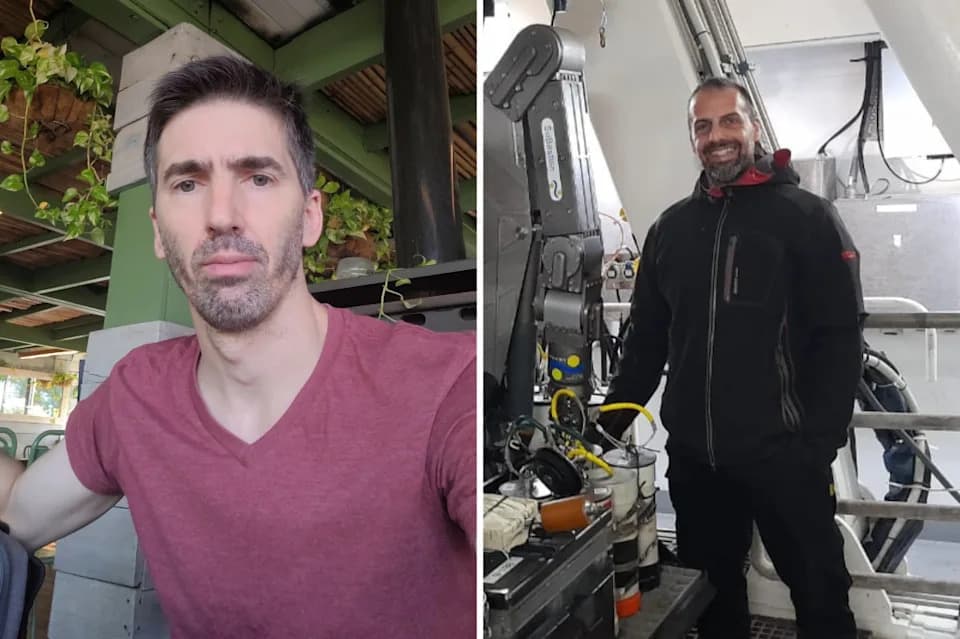
From left: Daniel Lauretta and Diego Urteaga.
Hundreds of miles offshore and thousands of feet beneath the surface, researchers have documented clear evidence of humanity’s reach into the deep ocean.
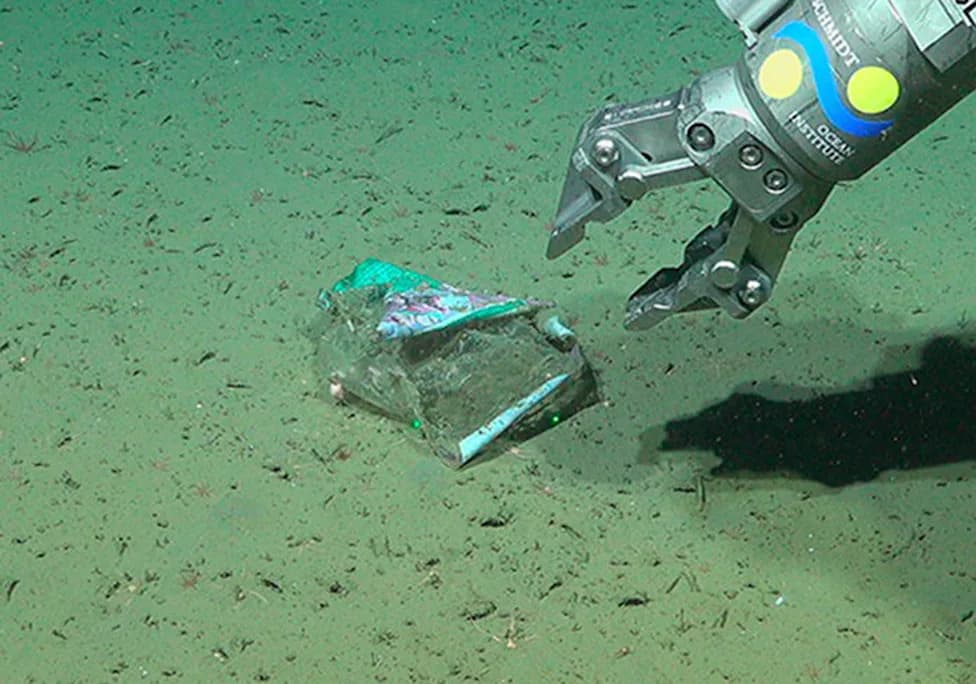
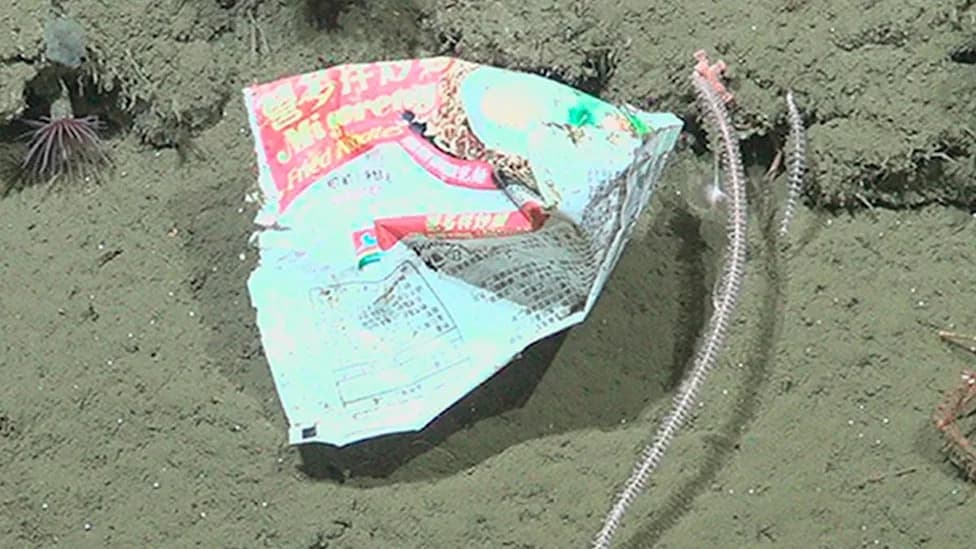
A team surveying the Mar del Plata Submarine Canyon off Argentina used a remotely operated vehicle (ROV) capable of descending to 4,500 meters (about three miles) to map and catalogue debris on the canyon floor. Operators logged individual items including plastic sheets, bags, food wrappers and pieces of fishing gear, then recorded how marine life interacted with that litter.
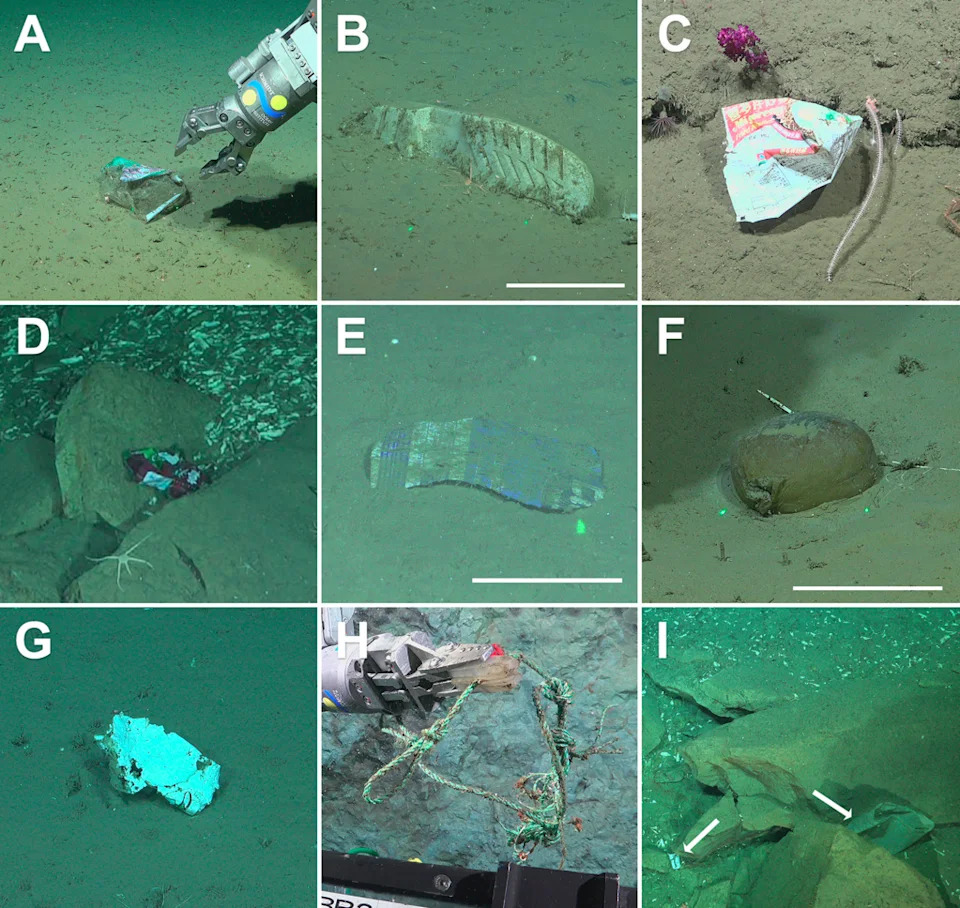
Examples of deep-sea litter found in the Mar del Plata Submarine Canyon.
What the Team Found
Lead researcher Daniel Lauretta (Museo Argentino de Ciencias Naturales; Deep Sea Studies Group of Argentina, GEMPA) said the work shows “even very remote and deep environments are not completely isolated from human activities.” Co-author Diego Urteaga noted that much of the debris appears consistent with waste generated by offshore vessels, particularly fishing boats.
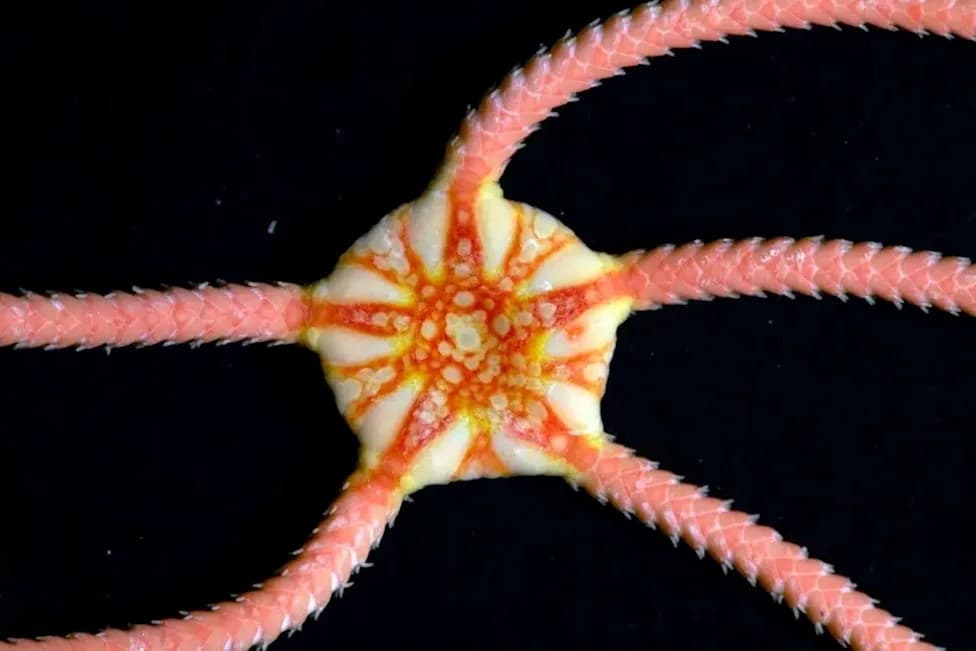
Among the more memorable moments were a fishing rope that suddenly appeared in front of the ROV—forcing operators to maneuver to avoid collision—and a solitary boot resting on the seabed. The team also documented fauna attaching to or sheltering among discarded objects, raising concerns that litter can become artificial habitat and alter deep-sea ecosystems.
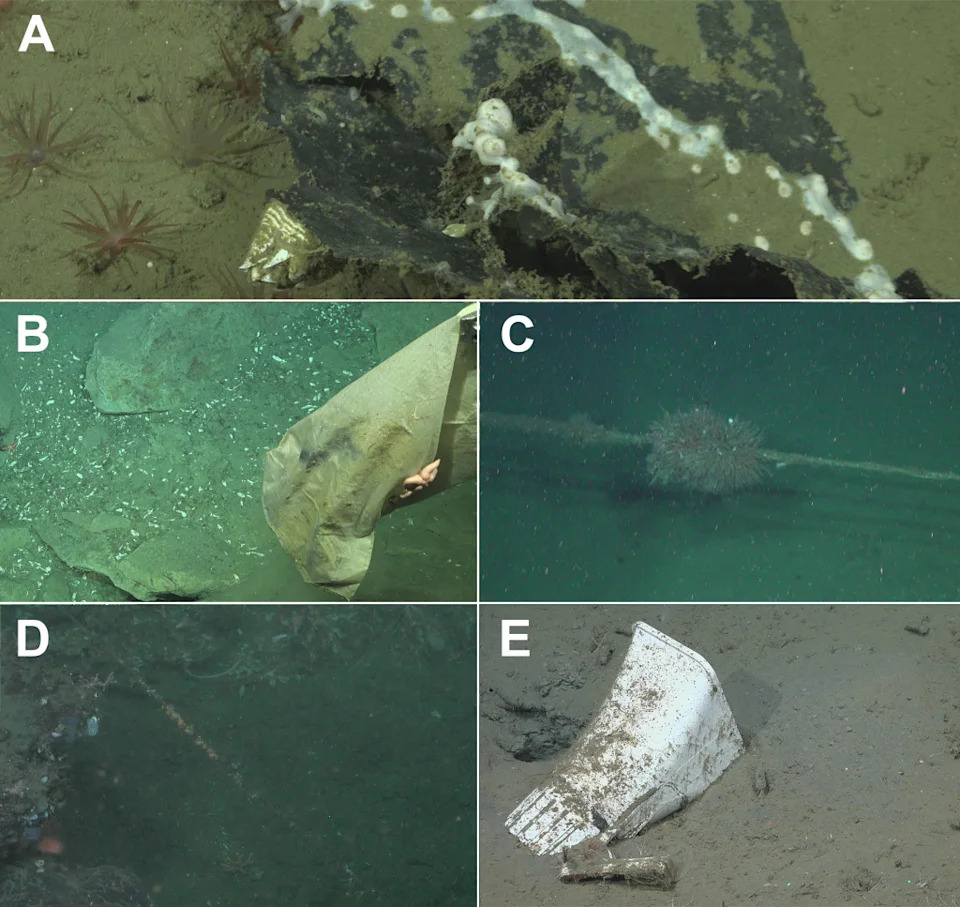
Faunal interactions with anthropogenic litter in the Mar del Plata Submarine Canyon.
Why This Matters
Submarine canyons are underwater valleys that cut into the continental shelf and are regarded as biodiversity hotspots. The Mar del Plata Canyon lies roughly 186 miles from the Argentine coast, but ocean currents and river outflows can carry debris long distances before it settles. Even where observed litter volumes were lower than in some other canyons, researchers warn against assuming the canyon is unaffected.
“The deep ocean is not an empty or distant space. It is a living environment, and our actions at the surface can reach places that seem unimaginably far away,” Urteaga told Newsweek.
Implications and Next Steps
Experts emphasize prevention over remediation: stopping debris at the source and reducing waste at sea are far more effective than attempting to remove litter from the deep seafloor. The authors call for repeated, long-term monitoring to detect changes and distribution patterns. The team plans to extend ROV surveys to other deep-sea canyons around Argentina to establish a regional baseline for pollution and assess long-term ecological impacts.

Collected litter for examination purposes in the Mar del Plata Submarine Canyon.
Commenting on the findings, Sian Sutherland, co-founder of nonprofit A Plastic Planet, said this is “proof that there is no 'away' when it comes to plastic,” noting that durable plastics can be transported vast distances and remain in deep habitats for decades.
Reference: Teso, V., Urteaga, D., Bozzano, G., Bigatti, G., Brogger, M. I., Brusa, F., et al. (2026). Out of sight, hidden into the deep: Marine litter in the Mar del Plata Submarine Canyon (southwestern Atlantic) revealed by ROV survey. PLOS One, 21(9), e0357098. https://doi.org/10.1371/journal.pone.0357098
Help us improve.