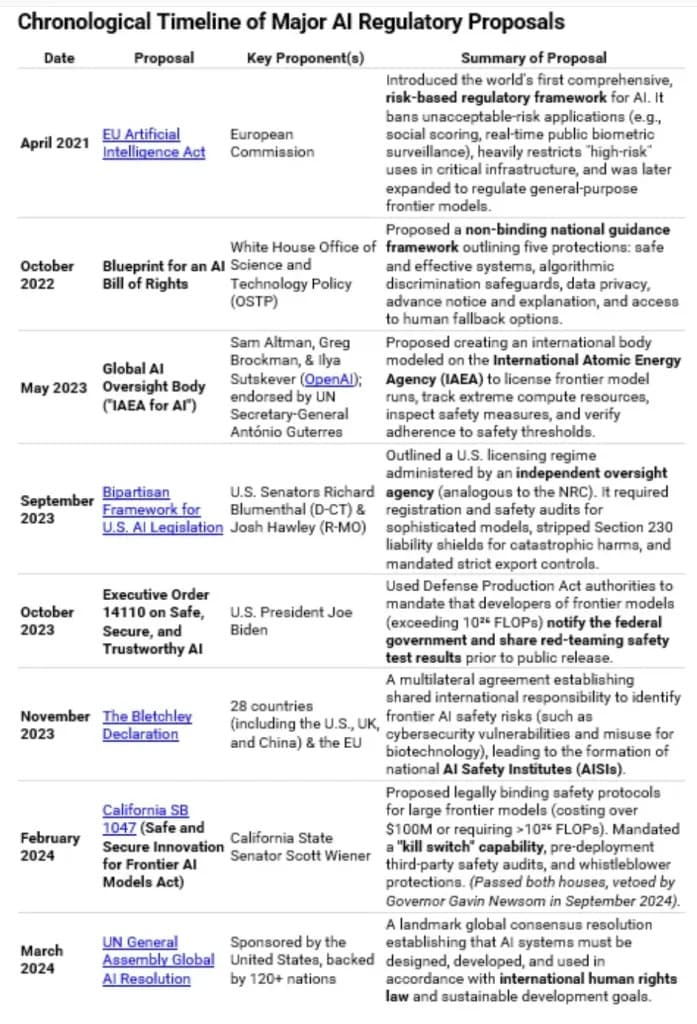
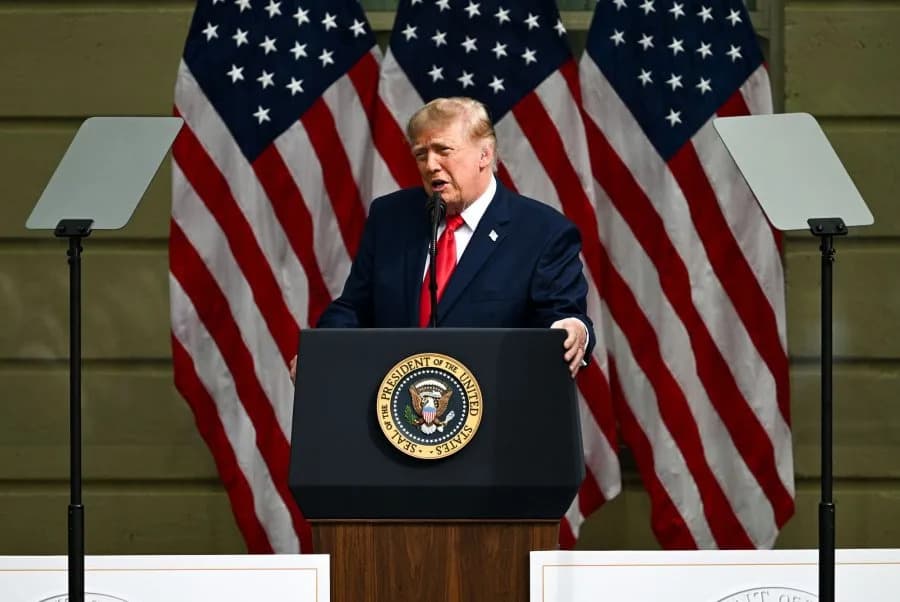
Overview: At the Imagination In Action conference, Brandon Remington of the U.S. National AI Center outlined a practical, risk‑based approach to exporting AI, supporting domestic procurement, and advising partner nations on AI sovereignty. The Center aims to serve as a one‑stop shop—connecting companies to government buyers, standards bodies, and IP resources. Remington emphasized operational tools like data and context officers, rigorous testing, and the importance of execution while calling for reduced bureaucracy.
Selling AI Abroad: How the U.S. National AI Center Is Becoming a One‑Stop Shop
USA, America, vector flag, virtual abstract 3D object from triangular polygons on a blue backgroundgetty
The U.S. National AI Center is positioning itself as a central contact point to help American companies export artificial intelligence, guide domestic procurement, and shape international safety and sovereignty conversations. That was the thrust of a wide-ranging interview at the Imagination In Action conference, The Next Endeavor, in Mountain View, California, where Brandon Remington, Executive Director of the National AI Center, spoke with Nico Enriquez of Future Ventures.
Scope and Strategy
Remington framed the challenge bluntly: the regulatory and market landscape extends globally, and the Center must translate that complexity into practical, usable policy and services. "How do you begin to sort that into something tangible and useful?" he asked. One organizing principle is the technology stack: defining stacks and an ordering process creates structure for export decisions and controls.
Risk‑Based Guardrails
Remington emphasized a pragmatic, risk‑based approach to restrictions. As he summarized:
“Where something is dangerous, then we put in certain restrictions. Where it's dangerous to everybody, we put in more. Where it's dangerous in only certain actors' hands, we put in [guardrails] there, and we just try to scope it.”He noted that AI moves quickly, so assessing risks and updating controls is often a continuous, near‑daily effort.
Competition and Procurement
On global competition, Remington acknowledged complementary strengths and price pressures: China leads in some robotics and lower‑cost solutions, while the U.S. has advantages in frontier models and innovation. Procurement choices, he said, rest on a mix of cost, dependencies, security considerations, and longer‑term strategic outlooks: what will matter in five or ten years.
Operational Tools and Safety
To manage safety and alignment, the Center and other government teams use practical tools and processes such as designated data and context officers, structured AI evaluations, and rigorous testing frameworks to identify where systems work and where they pose risks. Remington described an emphasis on technical foundations to make safety conversations concrete: testing where a model performs well and where it does not.
From Law To Building AI
Remington also shared his personal path into government AI work. He recalled being a lawyer in New York before being asked by the Marine Corps to help build AI at the Pentagon. "I was a lawyer. Surely you have someone better than this," he said. The experience of building technology, he added, changed his career trajectory.
The One‑Stop Shop
Remington described the National AI Center as intended to be an accessible hub: connecting companies with government buyers, advising on exports, standards, IP and safety, and coordinating with agencies such as the Patent Office. As he put it:
“If you want to find out what the U.S. government is doing on any given thing, come in. Let's talk. I can connect you with anyone.”
AI Sovereignty And Market Growth
On AI sovereignty, Remington said many client nations are thoughtfully designing policies that suit their circumstances. He expects continued investment at multiple scales: large, expensive infrastructure buildouts from major players and a cascade of smaller, follow‑on activity as local ecosystems develop and open new markets for app layers and services.
Execution And Bureaucracy
Asked what keeps him up at night, Remington emphasized execution: turning high‑level commitments into operational reality. And when asked what he'd change about the government, he answered simply: "Less bureaucracy." The interview ended on a lighter note, with the two agreeing to have a beer.
The discussion highlights how geopolitics, procurement, and safety intersect as governments and companies work to scale AI responsibly. Major industry players such as Nvidia, Google, OpenAI, and Anthropic remain central to the ecosystem, while national strategies and export policies will shape where and how those technologies are deployed.
Help us improve.