New research in Scientific Reports shows a mutually reinforcing relationship between the sugar ribose and borate minerals: borate helps stabilise ribose, while ribose promotes the dissolution of borate into water. Field samples from the boron-rich Puga hot springs and laboratory tests indicate more boron could have been available for prebiotic chemistry than previously thought. This interaction suggests organic molecules may have influenced mineral formation on early Earth, with implications for where life could emerge elsewhere.
How a Sugar From Space May Have Helped Build Life’s Molecular Backbone on Earth
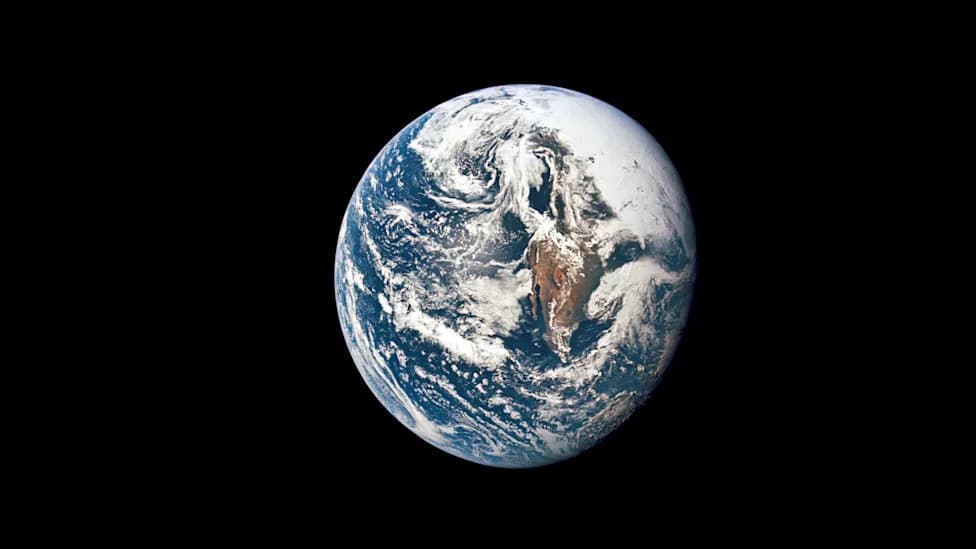
Is Earth unique in hosting life, or could life exist elsewhere? One way to address that question is to study how life began here. Our new research, published in Scientific Reports, sheds light on a specific step in prebiotic chemistry: how a fragile extraterrestrial sugar may have both survived and altered early-Earth chemistry to become central to life's molecular machinery.
Recreating Life's Beginnings
Scientists imagine life emerging from dynamic pools of water, minerals and organic molecules—the so-called primordial soup—found in places such as oceans, lakes and hot springs. Fluctuating temperatures, flowing water, mineral surfaces and evaporation could concentrate chemicals and drive increasingly complex reactions that moved chemistry toward biology.
Laboratory experiments often use purified chemicals and tightly controlled conditions to isolate reactions. While powerful, that approach can miss important interactions present in nature's messier environments.
Ribose, RNA And Borate
A central molecule in origin-of-life research is ribonucleic acid (RNA). RNA stores and transmits genetic information in modern cells and probably played a key role in early life. But RNA’s backbone contains the delicate sugar ribose, which readily decomposes when heated, turning into dark, tar-like residues.
Boron in the form of borate can bind ribose and help stabilise it against breakdown. Many lab studies demonstrating this protective effect start from dissolved reagents and relatively high boron concentrations that may not reflect natural waters.
The Puga Hot Springs: A Natural Analogue
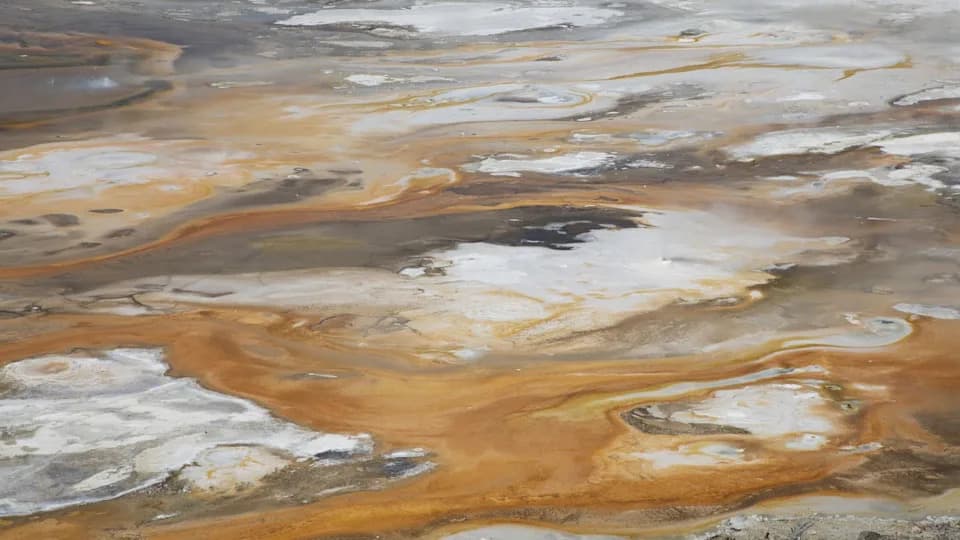
To test how realistic those laboratory conditions are, we studied natural analogues of early-Earth environments. One is the Puga hot springs field in the Himalayas (India), where borate salts accumulate as white crusts that crunch underfoot. Despite visible crusts, the waters at Puga usually contain only a fraction of the dissolved boron concentrations sometimes used in lab experiments.
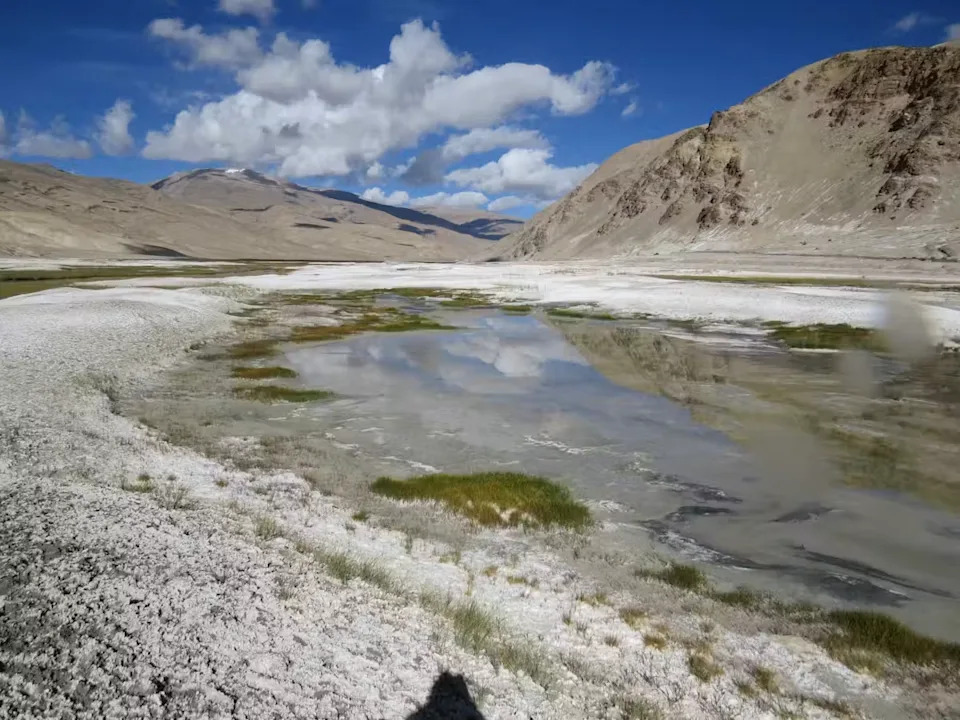
Borate salts form thick crusts on the ground around the Puga hot springs.Credit: Luke Steller
That difference arises because many boron-bearing minerals dissolve poorly: they precipitate as crystals or crusts, sequestering boron in solids and leaving less dissolved boron available for prebiotic chemistry.
A Two-Way Relationship: Ribose Helps Borate Stay Dissolved
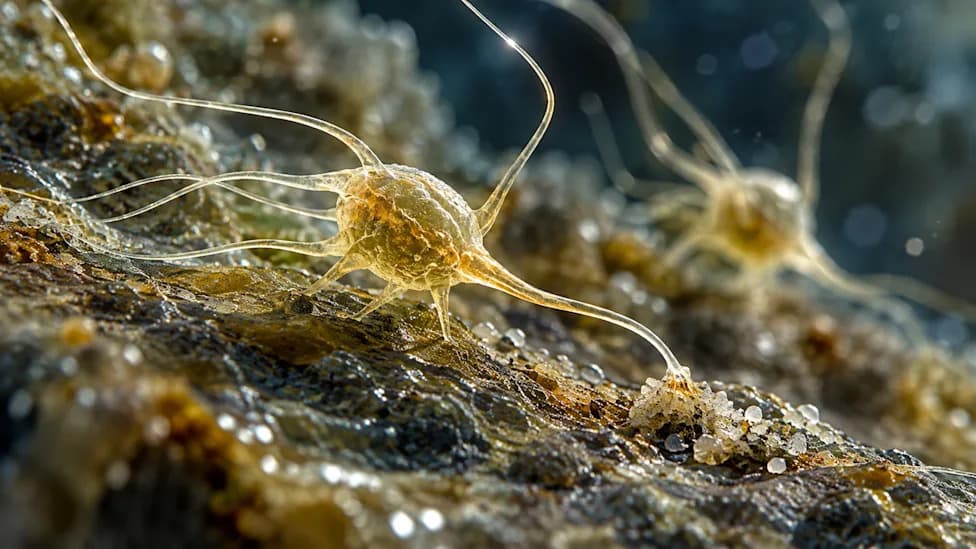
Using real minerals, including borate crusts collected from Puga, our experiments show that ribose can promote the dissolution of borate minerals and inhibit the formation of solid grains. In other words, the presence of ribose keeps more boron dissolved in water and therefore available for chemical reactions.
This creates a mutually reinforcing relationship: borate stabilises ribose against degradation, while ribose helps maintain borate in solution so it can continue to protect sugars and participate in further chemistry.
The World Before Life
About four billion years ago, Earth had little atmospheric oxygen, intense volcanism and iron-rich seas. The young planet was bombarded by meteorites that delivered water and organic molecules. Estimates suggest roughly a million tonnes of carbon may have arrived on Earth each year during this heavy bombardment.
The Murchison meteorite (fell in Victoria, Australia, 1969) is a notable example: it contained a range of organic compounds, including ribose, and smelled of kerosene when fragments were first recovered.
Broader Implications
Ribose was probably rare, but other organics—such as ethylene glycol and glycerol—also bind borate and may produce similar effects. More broadly, interactions between carbon-rich primordial soups and minerals (including silica and calcium-bearing phases) could have influenced which minerals formed at Earth’s surface before life began.
Today organisms actively shape geology through biomineralisation; our findings suggest that non-living organic molecules may have begun nudging mineral formation even before life existed. Whether these interactions reshaped landscapes at large scales remains an open question, but exploring them helps refine experiments on life’s origins and improves our understanding of where life might arise elsewhere in the universe.
Study: Experimental work with natural borate minerals (including samples from Puga) reported in Scientific Reports demonstrates a reciprocal stabilising effect between ribose and borate that could affect prebiotic chemistry and early mineralogy.
Help us improve.