The study led by Lewis Alcott and Andrey Bekker shows that a recycled phosphorus cycle in ancient oceans likely helped sustain elevated atmospheric oxygen after the Great Oxidation Event. Using a new sequential mineral-dissolution technique on South African rocks, researchers distinguished bioavailable phosphorus from forms locked in minerals. Their results clarify how long-term nutrient availability could have supported sustained oxygenation and offer a useful framework for identifying similar habitability signals on ocean-bearing worlds beyond Earth.
How Ancient Ocean Phosphorus Recycling Kept Earth Oxygenated — And Why That Helps in the Search for Alien Life
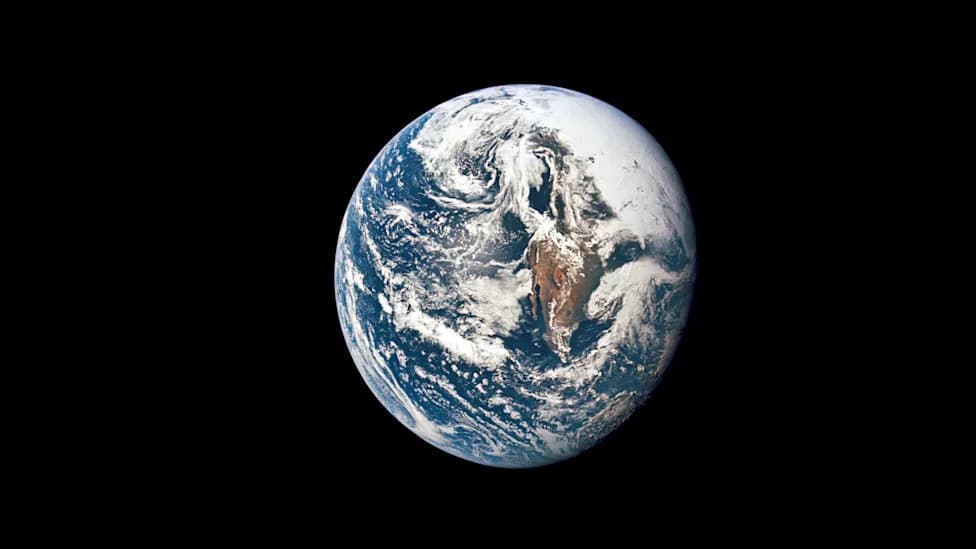
A close up of Earth in space.
Earth today teems with oxygen-dependent life, but for much of its early history the atmosphere contained virtually no free oxygen. About 4.5 billion years ago, when the planet formed, oxygen was essentially absent. It wasn't until roughly 2.4 billion years ago—during the Great Oxidation Event—that oxygen became a lasting component of the atmosphere. A new study suggests a surprising ally in keeping oxygen levels high after that event: recycled phosphorus in the ancient oceans.
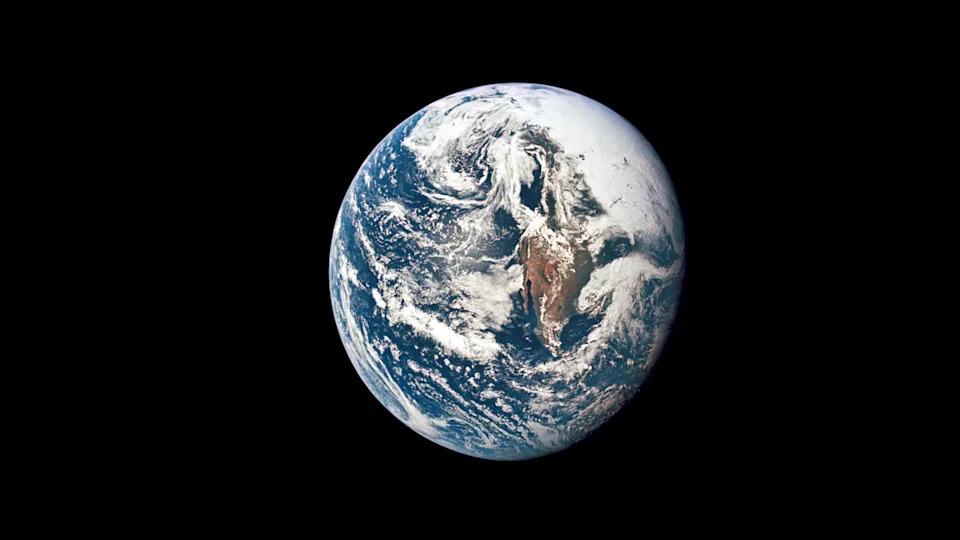
A close up of Earth in space. | Credit: NASA
New Method, Clearer Picture
Led by biogeochemist Lewis Alcott at the University of Bristol, the research team developed a chemical technique that separates phosphorus by the mineral phases in which it is preserved. By sequentially dissolving different mineral fractions in ancient sedimentary rocks from South Africa, the team could distinguish phosphorus that would have been bioavailable to marine organisms from phosphorus that was locked into inert minerals.
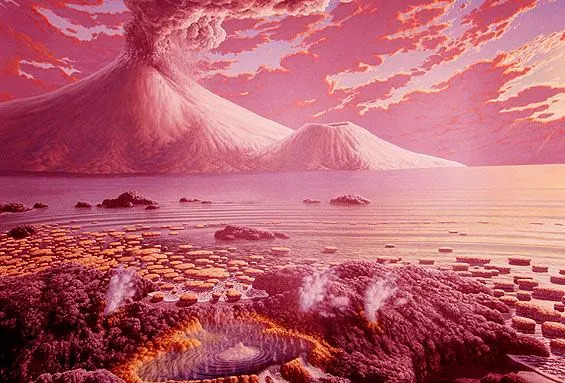
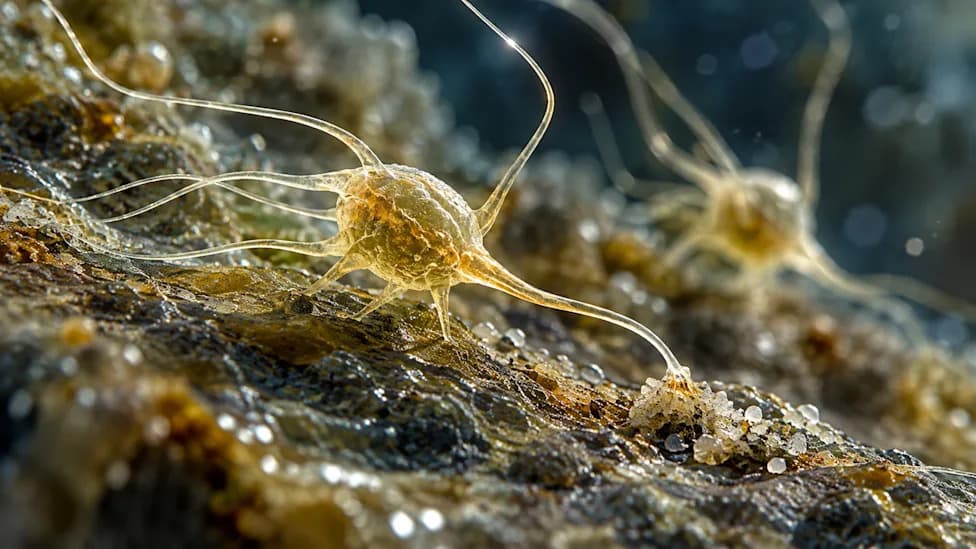
An artist's illustration of early life on Earth. | Credit: Peter Sawyer / Smithsonian Institution
"Living things cannot grow or function properly without phosphorus," said study co-author Andrey Bekker, a geology professor at the University of California, Riverside. "We can now separate the phosphorus that was available to organisms from phosphorus that was essentially locked away. That gives us a much clearer picture of nutrient levels in ancient oceans than we had before."
How Phosphorus Recycling Supports Oxygen Levels
The study describes a self-sustaining cycle in which phosphorus was repeatedly recycled in seawater and sediments. When more phosphorus remained in bioavailable forms, marine primary producers (like ancient microbes) could flourish, producing organic matter that ultimately released oxygen to the atmosphere. According to the authors, that sustained nutrient budget helped keep atmospheric oxygen elevated for millions of years after the initial rise during the Great Oxidation Event—creating conditions more favorable for the later emergence of complex life.
Broader Implications: Searching for Life Beyond Earth
Beyond reconstructing Earth’s history, the findings help refine how scientists think about habitability on other ocean-bearing worlds. If stable oxygenation can arise when key nutrients like phosphorus remain bioavailable over long timescales, then detecting similar nutrient–oxygen relationships on exoplanets or icy moons could be an important signpost of habitability.
"Earth's history shows that oxygen, nutrients, and life evolved together," Bekker added. "Understanding those connections gives us a more nuanced perspective on our own planet's future and what we might look for on other planets."
The research was published on Aug. 27 in the journal Nature Communications.
Help us improve.