A University of Exeter-led study tested two visual deterrents — a commercial "scarybird" kite and a low-tech floating buoy painted with oversized eyes — to reduce seabird bycatch in gillnets. Over two years around Cornwall, the kite lowered bycatch only along its flight path (about 100 feet), while the floating "looming eye" buoy produced a wider zone of avoidance and a larger overall drop in entangled auks. Researchers say these simple, low-cost measures can be targeted to high-risk locations and seasons to protect vulnerable seabird populations.
Floating “Scarecrow” Buoy: Giant Eyes Cut Seabird Bycatch More Effectively Than Kites
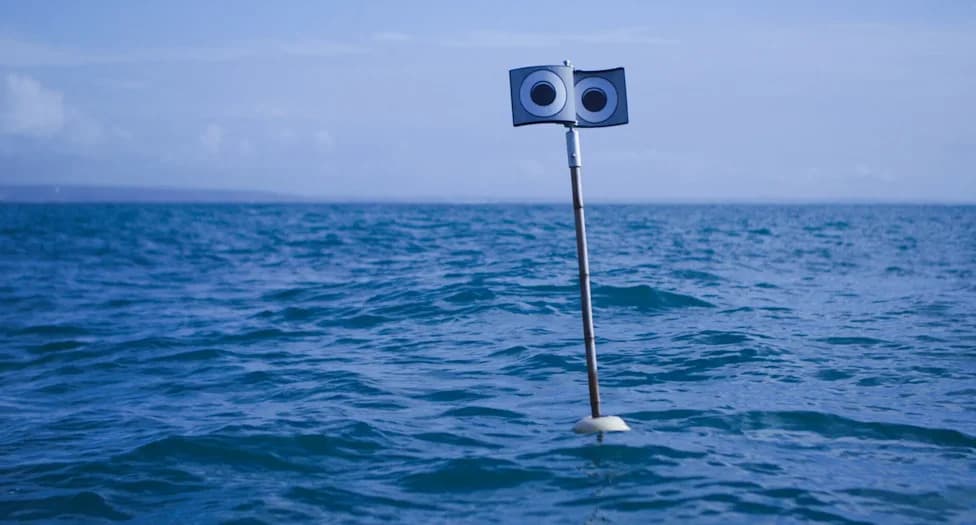
A simple visual trick inspired by insect eyespots — and an old idea used to deter Bengal tiger attacks — may offer an effective, low-cost way to reduce seabird deaths in gillnet fisheries. A team led by researchers at the University of Exeter tested a commercial "scarybird" kite against a low-tech floating "looming eye" buoy and found that the buoy produced a broader protective zone and a larger overall reduction in entangled seabirds.
From Tiger Masks to Seabird Protection
In the 1980s, Indian foresters distributed rubber masks to villagers to deter ambushing Bengal tigers by simulating eyes on the back of the head. That same principle — that a visible pair of eyes can change predator behavior — inspired British ecologists to try a visual deterrent at sea.
The Bycatch Problem
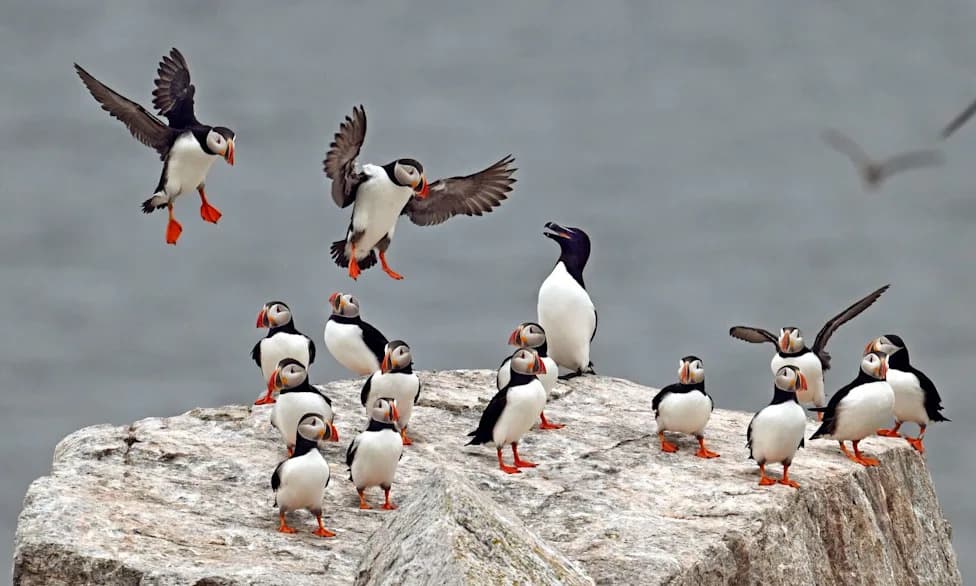
Every year roughly 95,000 diving seabirds are accidentally caught in gillnets off Europe’s coastlines. Gillnets hang vertically in the water and snag fish by their gills; hungry auks (guillemots and razorbills) often collide with the nets and become entangled, drowning. Bycatch rises in winter when fisheries use smaller mesh sizes, increasing the risk to birds.
Two Deterrents, One Trial
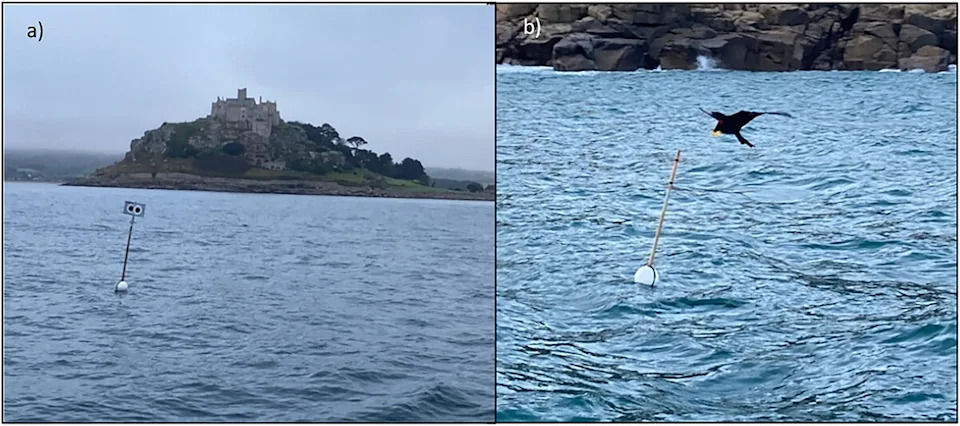
On the left, the looming eye buoy maintains unblinking vigilance. On the right, the scarybird kite offers eerie verisimilitude.Credit: Richard Caslake/Tom Hooper via Horton et al. 2026
The research team compared a commercially available "scarybird kite" — a moving aerial deterrent used by farmers — with a floating scarecrow: a buoy fitted with oversized cartoon eyes (the "looming eye buoy"). Both devices were tested over two years in the waters around Cornwall.
Photographs from the study show the stationary eye buoy looming on the water while the kite provides a mobile, more lifelike deterrent (image credit: Richard Caslake and Tom Hooper via Horton et al. 2026).
Results
The kite produced clear local benefits: bycatch dropped where it flew, but the effect was concentrated in a roughly 100-foot corridor along the kite’s path. The looming eye buoy, by contrast, affected a much wider zone around the nets and produced a larger overall reduction in entangled auks.
“This study provides some of the strongest evidence to date that simple, practical deterrents can substantially reduce seabird bycatch in gillnet fisheries,” said Tom Horton of the University of Exeter. “By identifying when and where bycatch risk is highest, we now have a clear opportunity to target mitigation measures where they can deliver the greatest conservation benefit for vulnerable seabird populations and encourage sustainable fishing practices.”
Implications
The findings suggest that inexpensive, easily deployed visual devices like eye buoys can be an effective part of targeted mitigation strategies for gillnet fisheries. Because they are simple and low-cost, such measures could be scaled and deployed in high-risk areas and seasons to reduce mortality of vulnerable seabird populations while supporting sustainable fishing practices.
Lead Image Credit: Fishtek Marine
Help us improve.