California passed two laws after a June 17 fire at Lineage’s Boyle Heights cold‑storage warehouse burned for eight days, destroyed an estimated 85 million pounds of frozen food and left nearby residents dealing with smoke, foul odors and pests for months. SB 716 raises fines up to $50,000 per violation for safety breaches that contribute to declared emergencies. AB 817 requires qualifying refrigerated projects seeking permits to secure funds, bonds, or insurance to help affected communities. Experts warn that dense stacking, insulation and ammonia refrigeration make cold‑storage fires hard to detect and extinguish.
After an Eight‑Day Blaze, California Tightens Rules for Cold‑Storage Warehouses
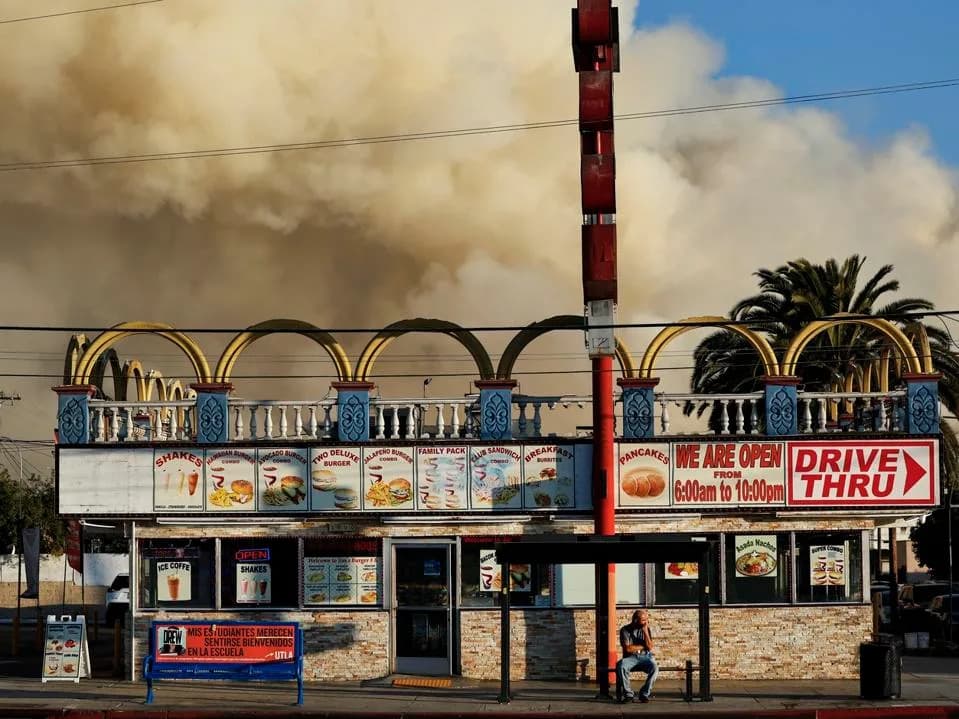
A person sits at a bus stop as a massive warehouse fire at a Lineage cold storage facility continues to burn and spread smoke around Los Angeles, California on June 20, 2026. California Governor Gavin Newsom declared a state of emergency in response to the fire which began June 17 in the Boyle Heights neighborhood. (Photo by Mario Tama)Getty Images
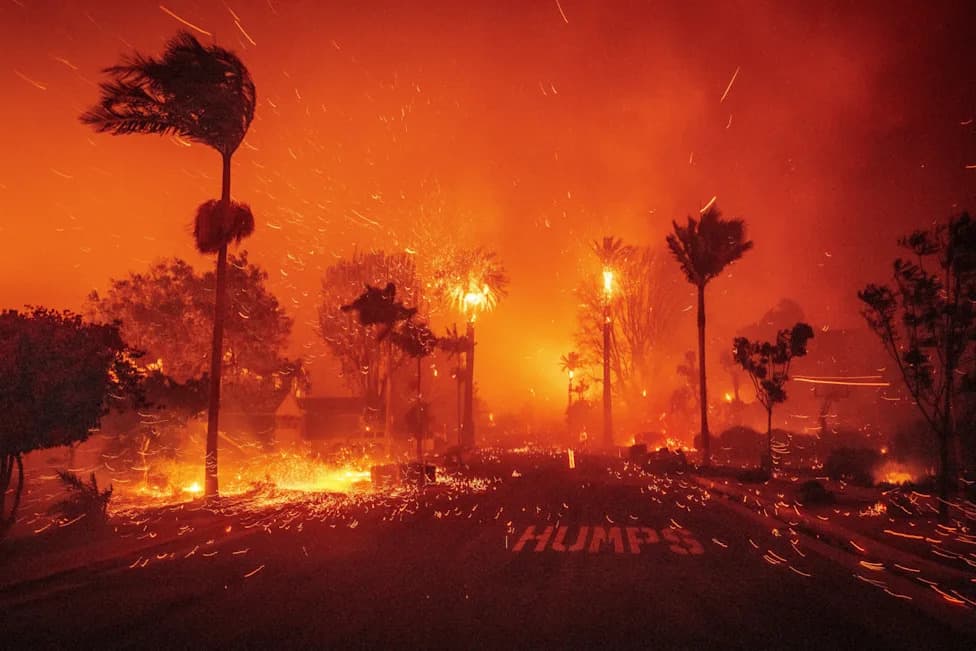
California enacted two new laws after a massive June 17 fire at Lineage’s Big Bear cold‑storage facility in Boyle Heights burned for eight days, ruined an estimated 85 million pounds of frozen food and left neighbors coping with smoke, foul odors and pest problems for months.
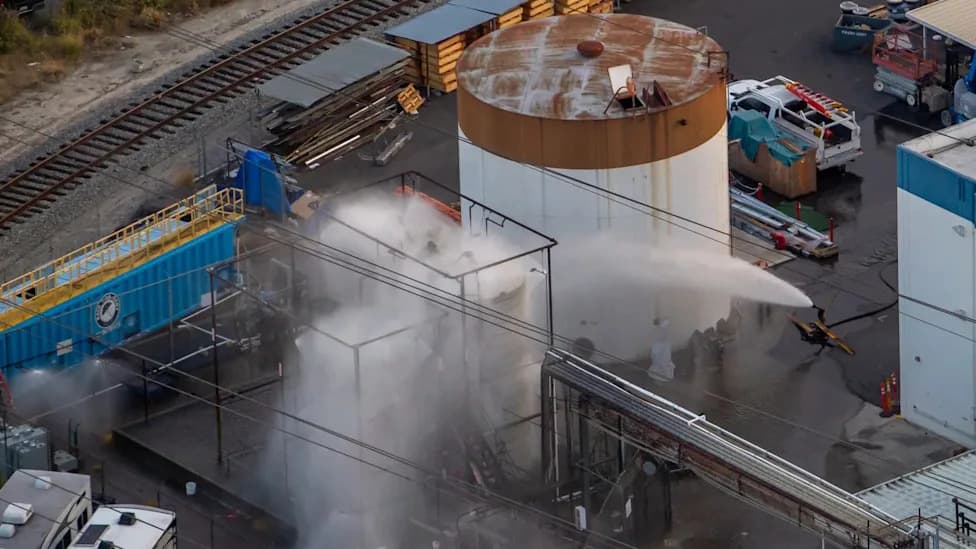
What happened: The nearly 500,000‑square‑foot warehouse stored seafood, pork, beef and poultry destined for grocery stores and restaurants across the U.S. West Coast. When refrigeration failed after the blaze, removing and disposing of inventory became a lengthy and complex cleanup. Residents reported lingering odors, flies and rats in the weeks following the fire. Lineage said it completed cleanup on September 5 and spent more than $100 million on its response; the company has since filed suit naming a rooftop solar operator and a contractor as potentially responsible.

California Senator María Elena Durazo authored SB 716, while Assemblymember Mark González authored AB 817, in response to the devastating fire at the Lineage cold-storage facility in Boyle Heights.
New Laws Target Community Impacts
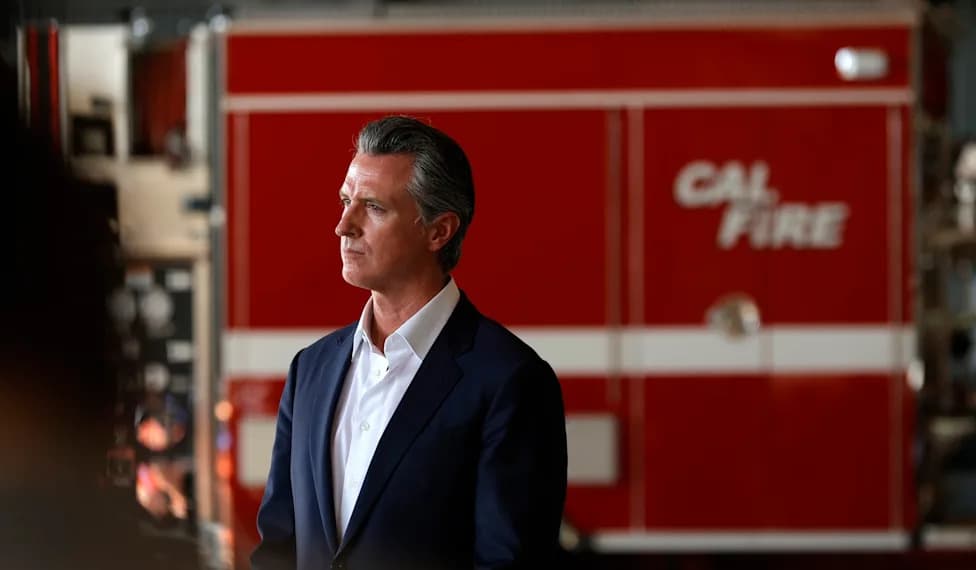
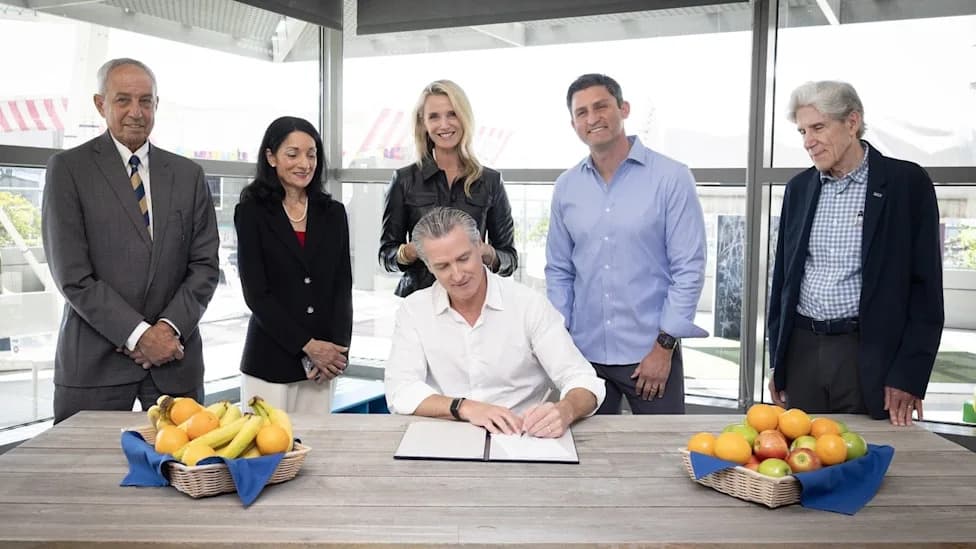
Governor Gavin Newsom signed two measures on September 27 aimed at protecting neighborhoods when large industrial facilities cause emergencies that extend beyond their property lines:
- SB 716 raises fines up to $50,000 per violation for certain health and safety breaches that contribute to a declared emergency.
- AB 817 requires qualifying cold‑storage projects seeking building permits to show they have a fund, bond, or insurance coverage in place to assist affected communities under specified emergency conditions. The rule initially applies in parts of Los Angeles and will expand to other eligible California areas in 2028.
Senator María Elena Durazo, a sponsor of SB 716, said the changes were driven by the widespread disruption in Boyle Heights:
"Families in Boyle Heights and East LA were exposed to toxic smoke and lived with the stench of millions of pounds of rotting food for months. They could not open their windows and could not let their kids play outside."
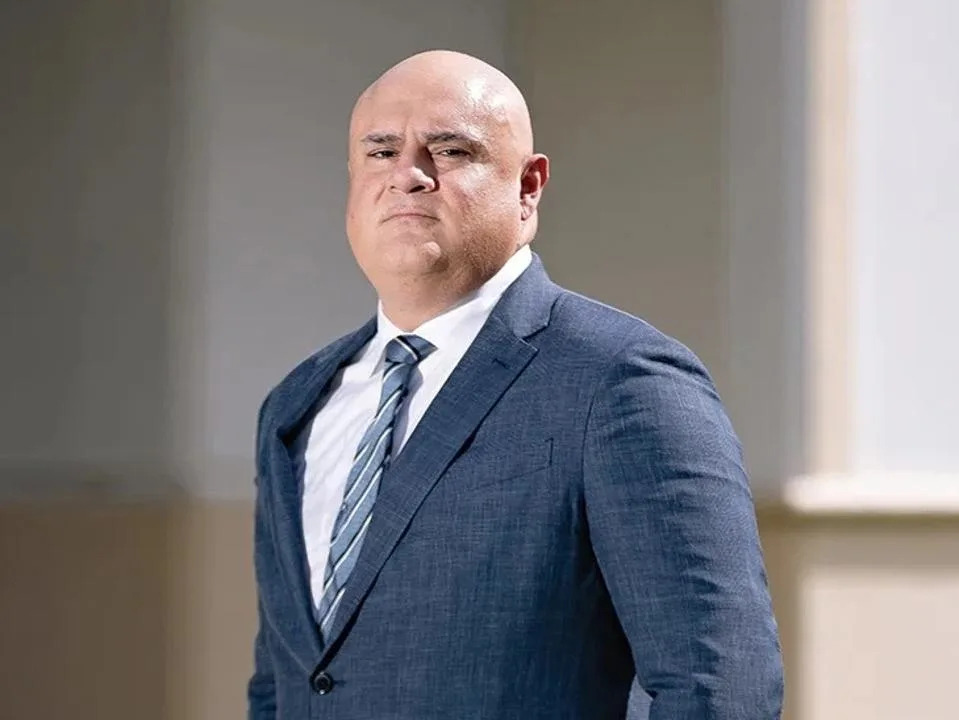
Noah Navarro, a retired firefighter and CEO of The Fast Fire Watch Company, says dense storage, automated equipment and insulated walls can make warehouse fires harder to prevent, locate and extinguish.
Industry Response and Concerns
The Global Cold Chain Alliance opposed the bills, warning they could raise costs for growers, processors, distributors and retailers without sufficiently improving emergency preparedness. The alliance noted that cold‑chain operators have invested in equipment and safety measures for years.
Why Cold‑Storage Fires Are Especially Challenging
Experts say several factors make fires in refrigerated warehouses hard to prevent and fight:
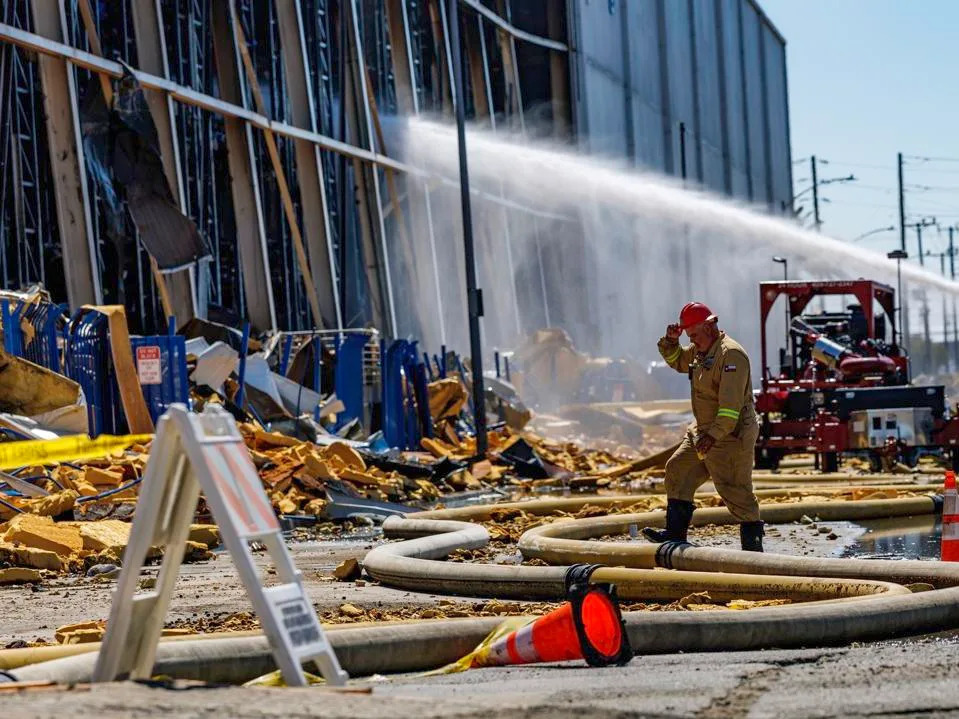
A firefighter from Williams Fire and Hazard Control of Texas walks towards the side of Lineage cold storage facility which was destroyed by fire in Los Angeles, CA. (Gina Ferazzi/ Los Angeles Times)
- Combustible packaging and wooden pallets can feed fires.
- Dense, high stacking can prevent sprinkler spray from reaching smoldering material.
- Insulated walls and ceilings can conceal fires until they are well established.
- Automation, batteries and electrical equipment raise ignition and spread risks.
- Many facilities use anhydrous ammonia for refrigeration, a toxic chemical that complicates firefighting when released.
Noah Navarro, a retired firefighter and CEO of The Fast Fire Watch Company, emphasized contingency planning when alarms or sprinklers are offline:
"If a sprinkler or fire alarm is out of service, operators need a plan for someone to watch for fire, call emergency services, and get the system working again. A fire watch can cover that gap while repairs are made."
Context and Past Incidents
The U.S. had 931 refrigerated warehouses with nearly 4 billion cubic feet of gross capacity in 2025, according to the Department of Agriculture. National data on cold‑storage fires are limited; the National Fire Protection Association estimated fire departments responded to an average of 35 refrigerated‑storage fires per year from 2015 through 2019.
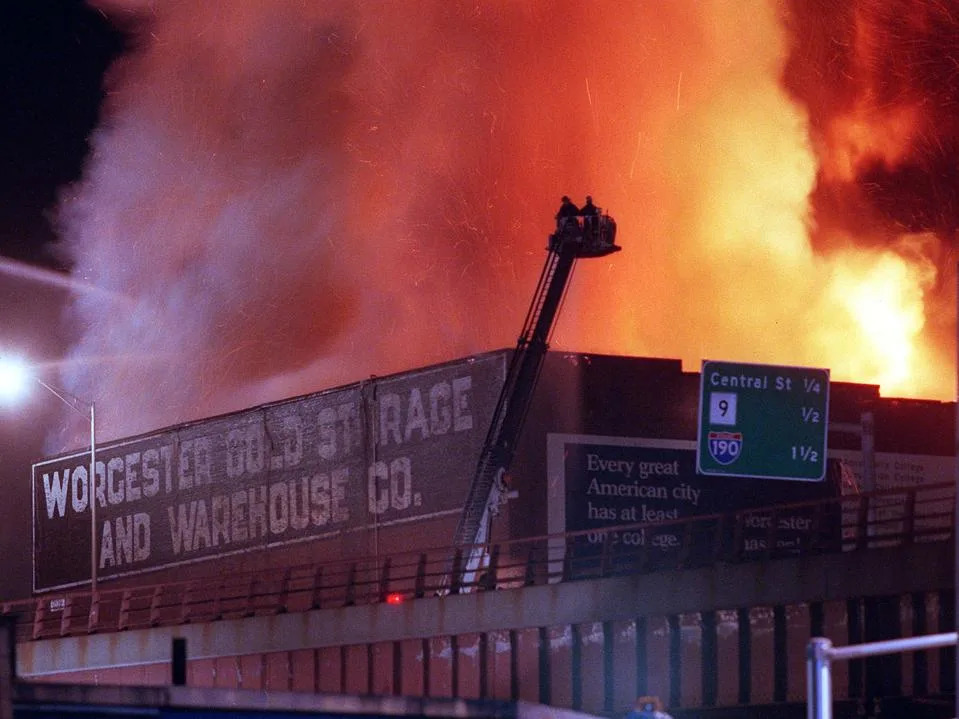
Flames engulf the vacant Worcester Cold Storage and Warehouse building in Massachusetts on December 3, 1999. Six firefighters died battling the blaze. (Photo by MediaNews Group/Boston Herald)
An ACBS News investigation found at least 63 fires in or around Lineage‑associated cold‑storage properties over the past decade; Lineage acknowledged 34 building fires. Notable past events include a 2024 Finley, Washington, warehouse blaze that burned for nearly two months and destroyed tens of thousands of tons of produce, and a deadly 1999 Worcester, Massachusetts, warehouse fire that claimed six firefighters’ lives.
Health, Environmental and Neighborhood Impacts
The Boyle Heights incident released smoke and—according to state records—elevated ammonia levels around the site. California records indicate the Boyle Heights warehouse stored between 10,000 and 24,999 pounds of anhydrous ammonia daily. Dr. Jill Johnston, an environmental health scientist at UC Irvine, warned that refrigeration chemicals used in many facilities are toxic and can complicate emergency response.
What This Means Going Forward
California’s new laws seek to shift some costs and responsibilities onto operators of large cold‑storage facilities when emergencies cause community harm—through higher fines for serious breaches and requirements for financial safeguards. Industry groups argue the measures could increase costs without directly improving preparedness; public officials counter that the laws address the tangible community impacts experienced in Boyle Heights.
Bottom line: The Boyle Heights fire exposed vulnerabilities in how refrigerated warehouses are designed, regulated and insured—and prompted California to tighten rules intended to protect neighbors from the long, costly fallout of industrial disasters.
This article was originally published on Forbes.com and has been edited here for clarity and readability.
Help us improve.