Genetic evidence points to black-backed jackals as the source of a rabies outbreak now confirmed in more than 100 Cape fur seals. Sequencing suggests the virus entered seals around 2015 and went undetected until case numbers surged after 2024. Containment is hampered by the seals' large population, wide range, and social behavior; current measures focus on vaccinating habituated animals and removing suspected cases. Public guidance: give wildlife space and seek medical care after any bite.
Mystery Rabies Outbreak in Cape Fur Seals Traced to Jackals — What We Know and What’s Being Done
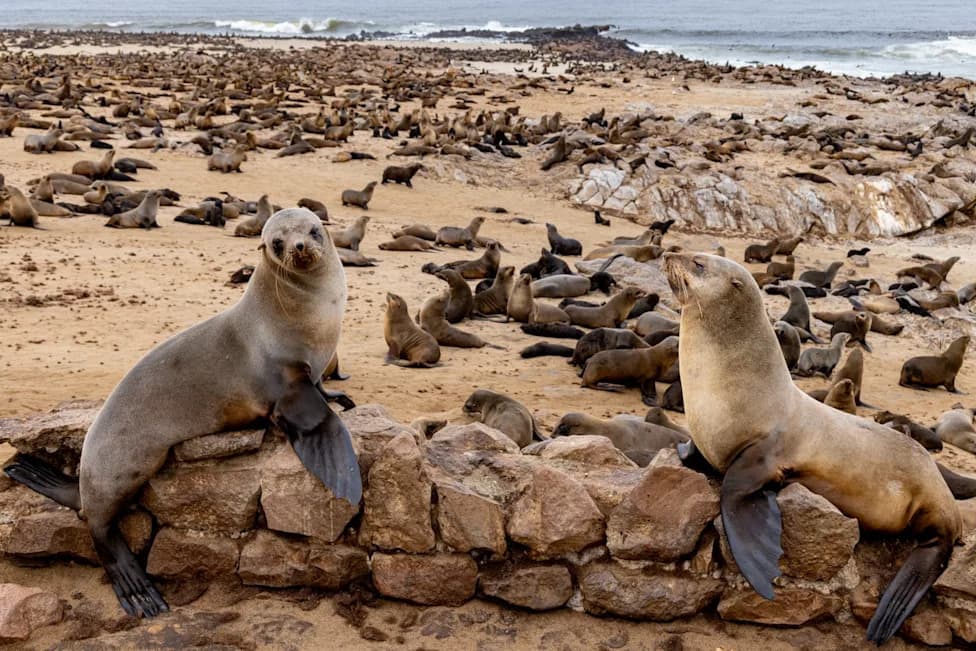
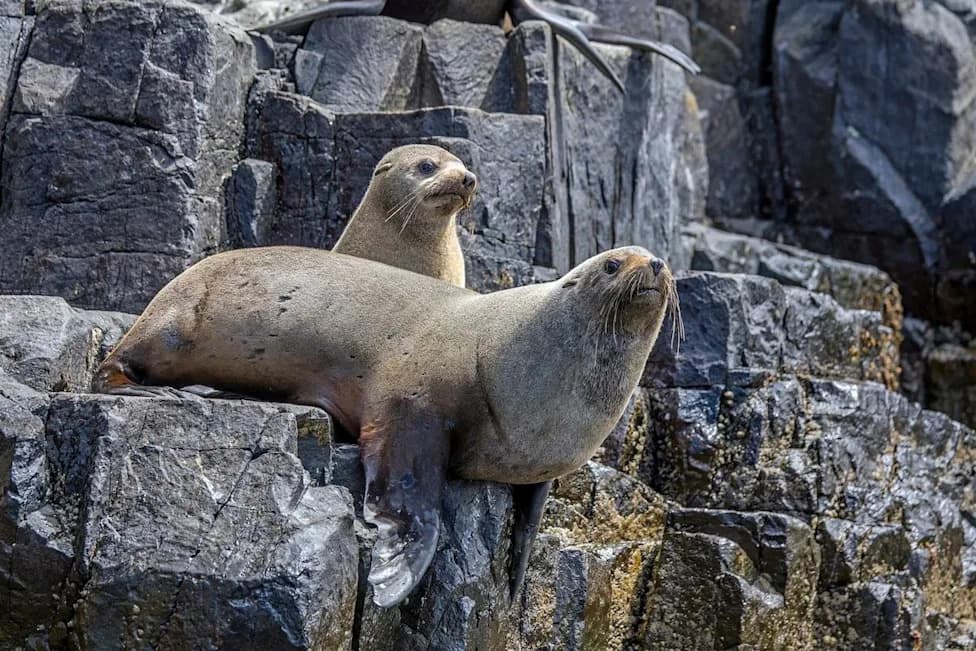
Two Cape fur seals rest on stones with the colony behind them. For a while, no one knew how Cape fur seals had contracted rabies.Denis-Huot, Nature Picture Library
Researchers have traced a worrying rabies outbreak among Cape fur seals to black-backed jackals, revealing a stealthy spillover that may have been circulating in seals for years.
Robert Sivewright still remembers little of the attack: "I don't recall the blood, but they say I was completely drenched in it," he says. In February, while leading a kayaking tour in Hout Bay Harbor on South Africa's Cape Peninsula, Sivewright encountered a Cape fur seal with a bloodshot eye. After nudging a kayak several times the animal "just lost it and started attacking the client's kayak," he says. The seal bit the boat repeatedly and then turned on him. Sivewright required reconstructive surgery and multiple post-exposure rabies prophylaxis injections.
The seal was later euthanized from shore but its body could not be recovered from the ocean for laboratory testing. Based on the animal's aggressive behavior, Sivewright and others suspected rabies: "From the behavior, there's not much doubt that it was rabies," he says.
How Rabies Appeared in Marine Mammals
Rabies is a viral infection that causes deadly inflammation of the brain and spinal cord and is typically spread among mammals through saliva—most often via bites or scratches. Until this outbreak, which was detected after 2024, marine mammals were not known to sustain or transmit rabies at scale.
Clues and the Breakthrough
Officials first noticed a change in seal behavior as early as 2021, when incidents of unusually aggressive seals and negative human interactions rose. Initially, researchers considered other causes—such as algal blooms producing domoic acid, which can cause aggression and erratic movements, and other disease events that masked early signals.
The key breakthrough came in May 2024, when a pet dog developed rabies after a seal attack. Rabid dogs are rare in the Western Cape, prompting investigators to test seals. Laboratory analysis found three of four tested aggressive seals were rabies-positive. Retrospective testing since then has confirmed more than 100 rabies-positive Cape fur seals on the Cape Peninsula dating from 2024 onward. Experts stress that the true number of infected animals is unknown because confirmation requires brain tissue from deceased animals.
Tracing the Source
Using genetic sequencing and phylogenetic analysis, researchers traced the viral lineage to black-backed jackals, a terrestrial species known to carry rabies in South Africa. Jackals often live close to seal colonies, scavenging carcasses or preying on pups, which creates opportunities for spillover during confrontations.
Sequencing suggests the virus first entered seal populations around 2015, meaning it circulated undetected for years before the recent surge in cases.
Why Containment Is Difficult
Authorities are using targeted vaccination of habituated seals and humane euthanasia of suspected cases as the main control measures. But large-scale containment is severely constrained by practical and biological factors:
- Population size and range: About 2 million Cape fur seals inhabit a range from southern Angola through Namibia to South Africa's Eastern Cape—impractical to vaccinate en masse.
- Vaccine logistics: Injectable vaccines require boosters and individual handling; seals are visually indistinguishable, so tracking who has been vaccinated is nearly impossible.
- Oral bait limits: Cape fur seals tear prey apart and eat it alive, making it infeasible to hide oral vaccines in bait without exposing many non-target species.
- Social behavior and mobility: Cape fur seals are highly gregarious and can swim up to 100 kilometers (about 60 miles) per day, allowing rapid movement of infected individuals between colonies.
Human Risk and Public Guidance
Globally, rabies causes roughly 59,000 human deaths each year. Prompt medical treatment after exposure—wound cleaning and timely post-exposure prophylaxis—can prevent the disease. Without treatment, symptoms such as numbness, hallucinations, breathlessness, and paralysis can develop (sometimes months after exposure), and symptomatic rabies is almost always fatal.
In the Cape Town area, the earliest confirmed human attack linked to a seal occurred in July 2022, and bite incidents continue to be recorded. Authorities report about 176 recorded human bite cases; on one day in September 2026, a single seal believed to have rabies bit nine people, including six children, at Muizenberg Beach. Despite these incidents, there has been no confirmed sustained seal-to-human transmission.
Officials urge the public to give wildlife space. Infected seals often show signs such as increased aggression, reluctance to return to the water, and repetitive head shaking. "If it's behaving strangely in any way, leave the water or leave the beach," advises Gregg Oelofse, Coastal Manager for the City of Cape Town. "Call the authorities."
What Comes Next
The virus appears to be endemic in the local seal population, meaning eradication is unlikely. Managers will continue targeted vaccinations, humane removal of suspected cases, and public education to reduce human exposures. Researchers will monitor viral genetics and seal health to better understand long-term impacts and to refine mitigation strategies.
"It's this slow burn in the population—little flares now and then," says Oelofse. "We're working in a complete unknown."
Help us improve.