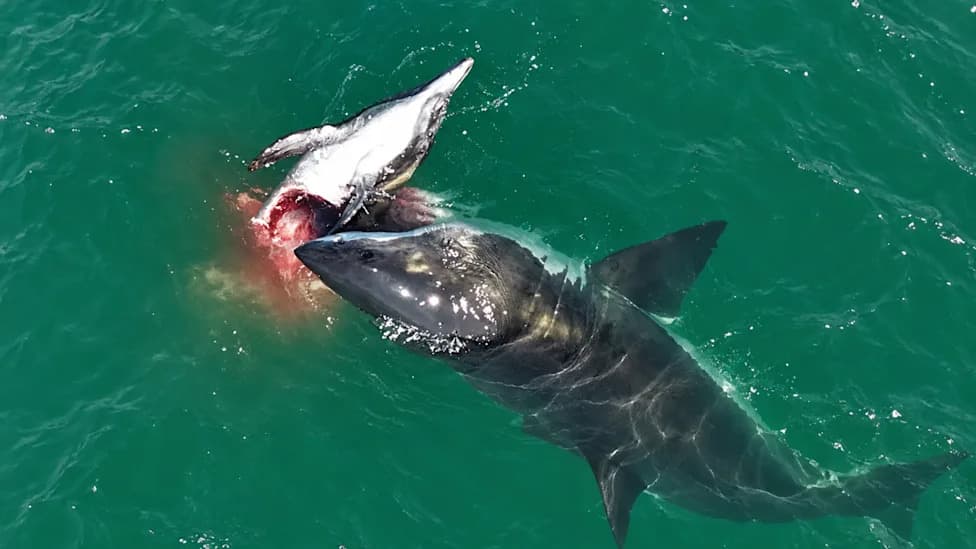
National Geographic released exclusive footage of a juvenile great white shark removing a fish directly from an angler's line off Cape Cod, a behavior called depredation. The clip, filmed by Brian Skerry, supports fishermen's reports of increasing incidents where sharks take catches from recreational lines. Experts link rising shark sightings to growing grey seal populations, signaling ecological recovery but also changing coastal dynamics. Researchers urge continued monitoring and public awareness as sharks move closer to shore.
Rare National Geographic Footage Shows Great White Shark Stealing Fish From Anglers' Lines
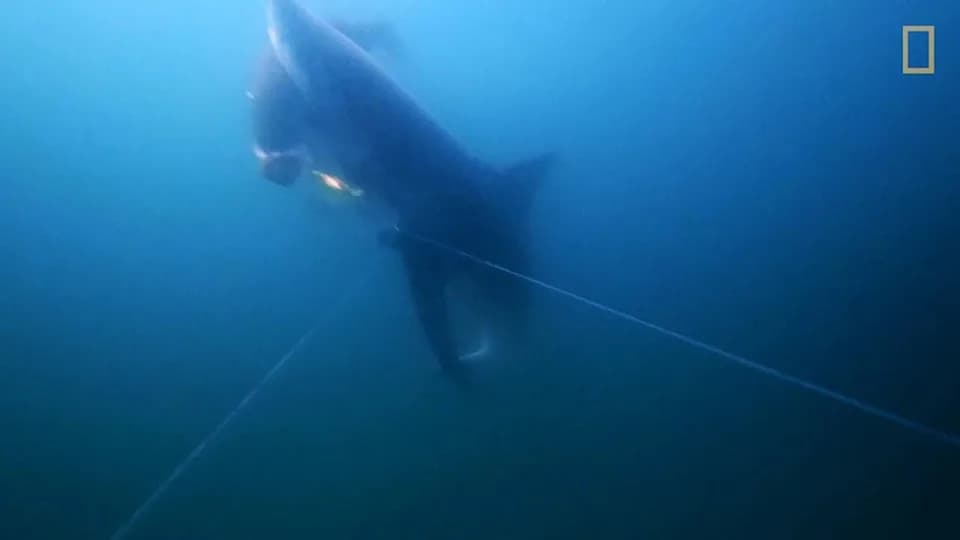
Brian Skerry/National Geographic - PHOTO: Video captured by National Geographic explorer and photographer Brian Skerry shows rare footage of a great white shark catching fish off a fisherman's line, called depredation.
National Geographic has released rare, exclusive footage showing a juvenile great white shark taking a fish directly from an angler's line off the Cape Cod peninsula in Massachusetts. The behavior, known as depredation, was captured by National Geographic explorer and photographer Brian Skerry.
What the Video Shows
The short clip documents a shark approaching a recreational fishing line and quickly removing the catch. Depredation—predators stealing bait or landed fish from fishing gear—is relatively uncommon to witness on camera, making this footage notable for scientists, fishermen, and the public alike.
I've been exploring the oceans for 50 years, 30 years as a National Geographic photographer, and I'm seeing things in the ocean that I never saw before, Skerry told ABC News.
Fishermen's Observations and Local Trends
Skerry says the video corroborates reports from anglers who have noticed juvenile great whites increasingly stealing fish from recreational lines. One captain Skerry spoke with said he was aware of at least 50 depredation incidents observed or reported just this season.

ABC News - PHOTO: Brian Skerry is a National Geographic explorer and photographer.
Researchers and shark experts have reported more frequent great white sightings in the region, with peak activity extending later into the fall. Similar rare footage has also been captured off the coast of Rhode Island, indicating a broader pattern along parts of the northeastern U.S. coastline.
Ecological Context
The Atlantic White Shark Conservancy and other experts link much of the increase in white shark presence around Cape Cod to a rebound in grey seal populations, a primary food source for adult great whites. That recovery is a positive sign for ocean health, since apex predators play an important role in balancing marine ecosystems.
This is a good thing in terms of the health of the ocean. Sharks keep the oceans healthy as any major predator does in any ecosystem, Skerry said. But it also tells us about the fact that the ocean is changing.
While scientists celebrate the return of sharks as an ecological success, they also note the implications for coastal anglers and recreational water users. Increased depredation brings sharks closer to shore and closer to people, underlining the need for ongoing monitoring, public awareness, and safe boating and fishing practices.
Photo/Video Credit: Brian Skerry/National Geographic.
Help us improve.