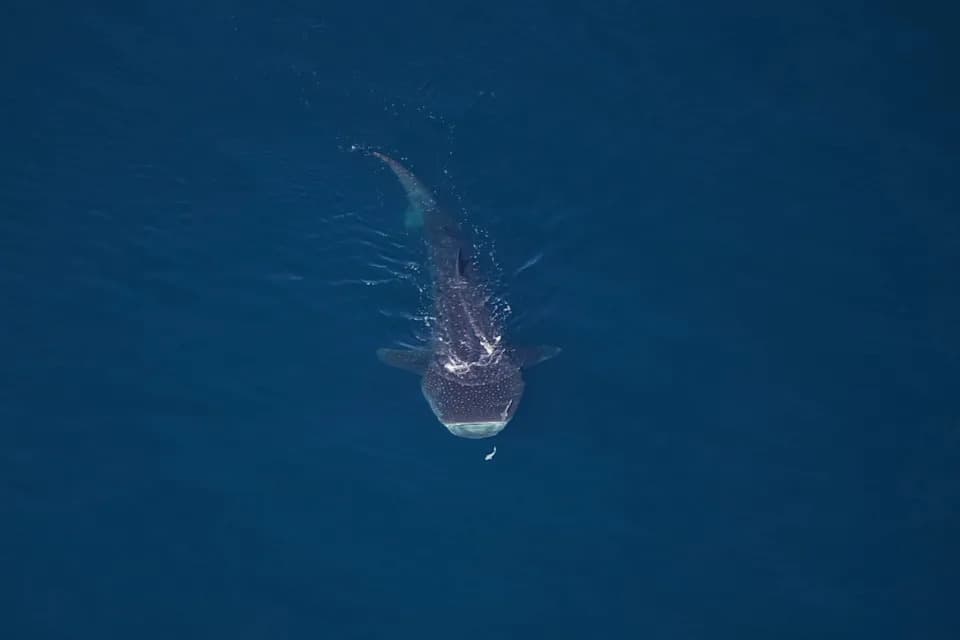
The roughly 18-foot minke whale was first reported entangled on Sept. 6 and resighted more than 40 miles away off Eastham on Sept. 8, allowing responders to partially free it. Crews removed most rope and buoys using a grappling hook and a pole-mounted hook knife but left a line deeply embedded near the left flipper to avoid severe bleeding. Although the whale's prognosis remains poor, it resumed normal swimming after the procedure. The rescue underscores the importance of quick reporting, aerial surveys, and specialized disentanglement teams.
Rare 40‑Mile Chase: Rescuers Partially Free Entangled Minke Whale Off Cape Cod
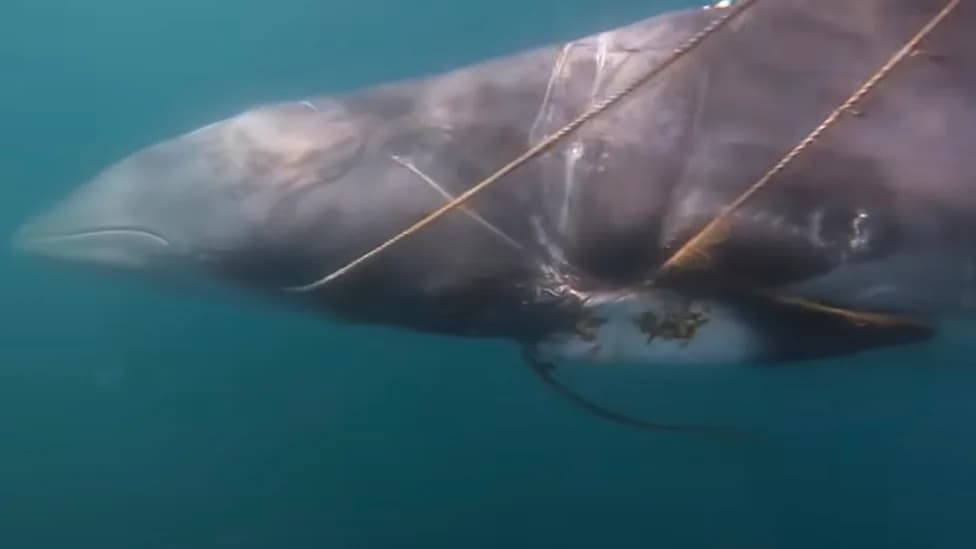
Photo Credit: Center for Coastal Studies
Rescuers successfully freed a severely entangled minke whale after a rare, more-than-40-mile movement from Cape Cod Bay to Nauset Inlet, giving responders a second chance to intervene.
Recreational anglers first reported the roughly 18-foot whale on Sept. 6, noting it was trailing rope and buoys. Crews searched the following day without success, and responders feared the animal had been lost. An aerial survey team from the Northeast Fisheries Science Center then resighted the whale off Eastham on Sept. 8, enabling the Provincetown-based Marine Animal Entanglement Response team from the Center for Coastal Studies to reach it.
How Rescuers Responded
When crews arrived, the whale was in poor condition: rope was lodged in its mouth and wrapped around its body, apparently preventing normal feeding. Responders used a grappling hook to secure the animal and a hook knife mounted on a long pole to cut away most of the entangling gear.
One section of line remained because it was deeply embedded near the whale's left flipper; removing that piece risked heavy bleeding and further injury. After the partial disentanglement the whale resumed normal swimming behavior, giving the team cautious optimism though its overall prognosis was described as poor.
Scott Landry, who directs the Marine Animal Entanglement Response program, said repeat sightings of a free-swimming entangled minke are uncommon and that the aerial resighting made the rescue possible.
Why This Matters
Entanglement is one of the leading causes of serious injury and death for large whales, alongside vessel strikes. Minke whales—among the smallest baleen whales in New England during summer—are particularly vulnerable: fishing gear can restrict movement, prevent feeding, and cause deep, infection-prone wounds if lines cut into flesh. Animals that survive an initial entanglement may drag gear for weeks or months, steadily declining in condition.
This rescue came during a busy period for the response team: since June 14 they have freed three humpback whales, including two within a 48-hour span. Since 1984 the Marine Animal Entanglement Response program has freed more than 200 whales and other marine animals and helped develop disentanglement techniques now used worldwide.
How You Can Help
The Center for Coastal Studies urges anyone who spots an entangled whale, sea turtle, or other marine animal to call 800-900-3622 or contact the U.S. Coast Guard on VHF channel 16. Observers should remain with the animal at a safe distance if possible, providing location and behavior details until trained teams arrive.
The Eastham incident also echoes entanglement emergencies worldwide—cases in California, Poland, the southern hemisphere, and the Gulf of Mexico show how quickly fishing gear can become life-threatening and why rapid reporting, repeat sightings, and specialized crews are critical to saving animals.
Help us improve.