WHOI researchers using 2,000 fps high-speed imaging and micro-PIV show eastern oyster larvae (Crassostrea virginica) feed by exploiting gravity: their dense shells create local currents that pull microscopic food toward the velum rather than relying mainly on swimming drag. This mechanism explains earlier microgravity findings of poorer larval performance and raises concern that ocean acidification — which produces smaller, less-calcified shells — could impair feeding, survival, and future oyster harvests.
Oyster Larvae Use Heavy Shells — Not Active Chasing — To Pull Food In
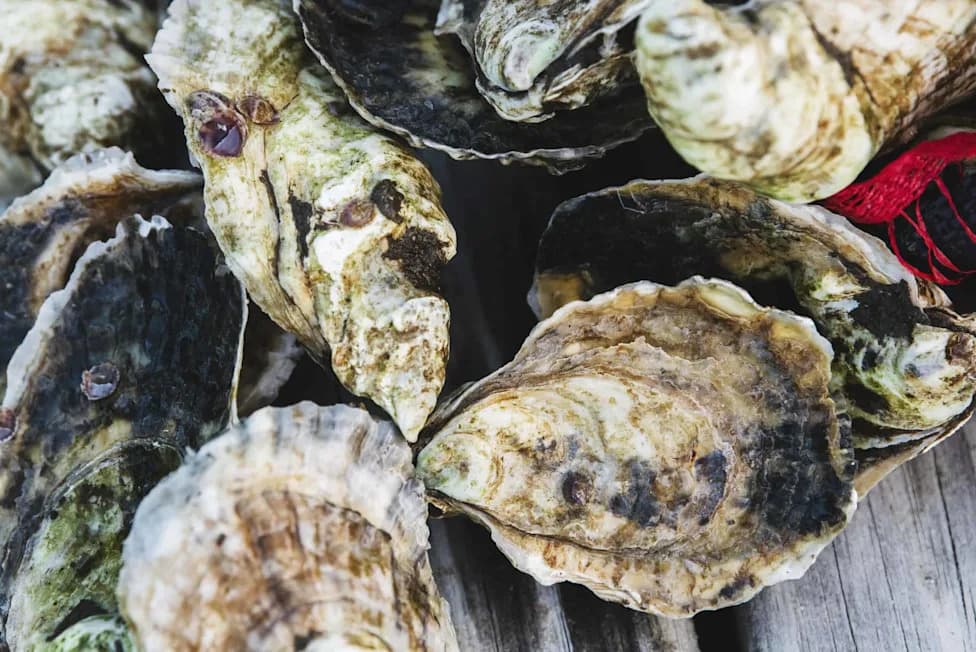
© Woods Hole Oceanographic Institution
A new study led by the Woods Hole Oceanographic Institution (WHOI) and published in Physical Review Fluids finds that eastern oyster larvae rely on the weight of their dense shells to generate gravity-driven currents that pull microscopic food toward their feeding organ, rather than primarily using swimming-produced drag. This discovery reshapes our understanding of how these tiny animals feed and highlights an underappreciated mechanical role for the shell.
How Gravity Helps Larvae Feed
Eastern oyster larvae (Crassostrea virginica) are planktonic for roughly two to three weeks before they settle on a hard surface and become sessile adults. During that larval period they swim and feed using a sail-like organ called the velum. While many small plankton are thought to rely mainly on currents produced by their own motion (drag feeding), the WHOI team shows oyster larvae are effectively "gravity-dominated" feeders — similar to some larger copepods — because their dense shells make them heavier than the surrounding seawater and shape local flows that draw food inward.
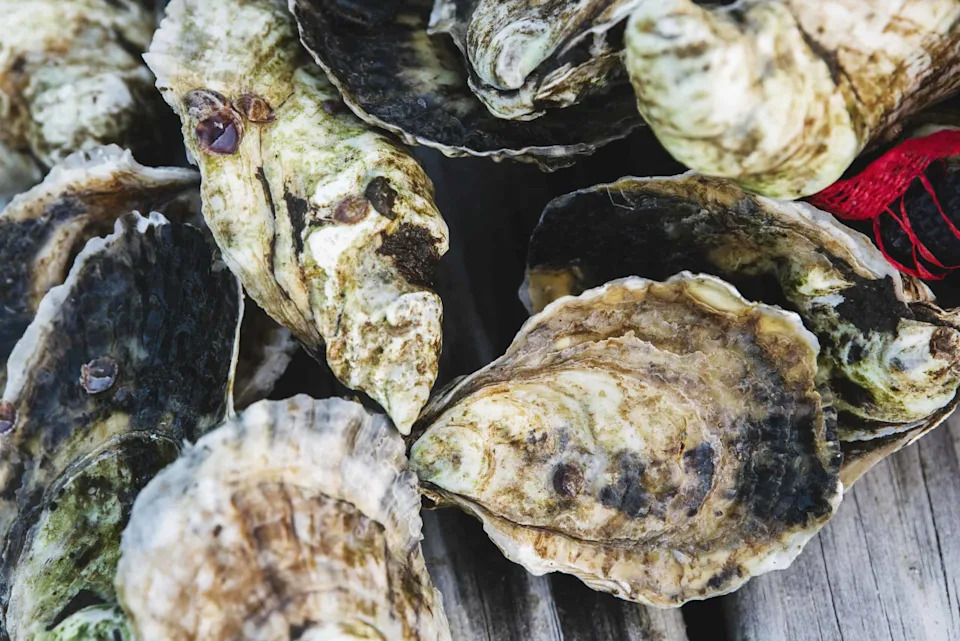
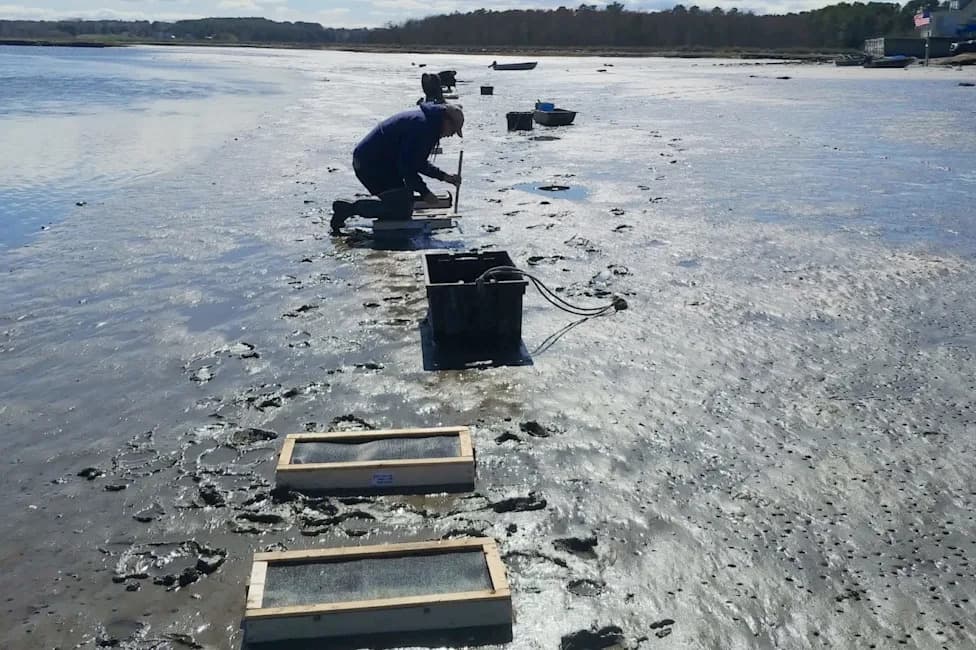
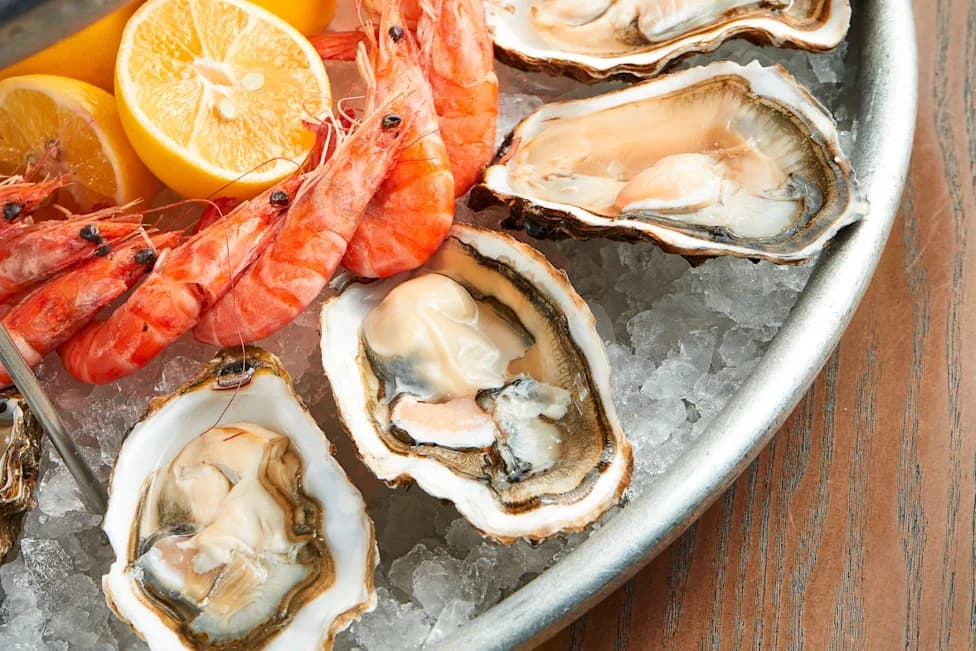
Eastern oysters are native to the Atlantic coast of North America and are an important species for coastal ecosystems and fisheries.©Woods Hole Oceanographic Institution –Original/License
Methods: High-Speed Imaging and Particle Tracking
Lead author Houshuo Jiang used a custom high-speed microscope imaging system (HSMIS) developed in his lab. HSMIS combines long-working-distance optics, a low-heat red LED, and a high-speed camera recording at 2,000 frames per second to observe free-swimming larvae in larger water volumes without heating or disturbing them. The team added microscopic tracer particles to the seawater and used micro-particle image velocimetry (micro-PIV) to track particle motion around individual larvae. Those measurements revealed subtle, gravity-driven currents that pull food toward the velum.
"This tells us that the shell is doing more than just protecting the animal," said Houshuo Jiang, senior scientist at WHOI. "It is actually helping the larva feed. That means anything that changes the shell could also change how the larva gets its food."
Why This Explains Older Findings
The new results help explain a puzzling 1999 microgravity experiment in which bivalve larvae reared in near-weightless conditions fed less, grew slower, and appeared in poorer condition than controls raised under normal gravity. If dense shells generate the feeding currents, removing or reducing that gravitational effect would reduce feeding efficiency — consistent with the earlier observations.
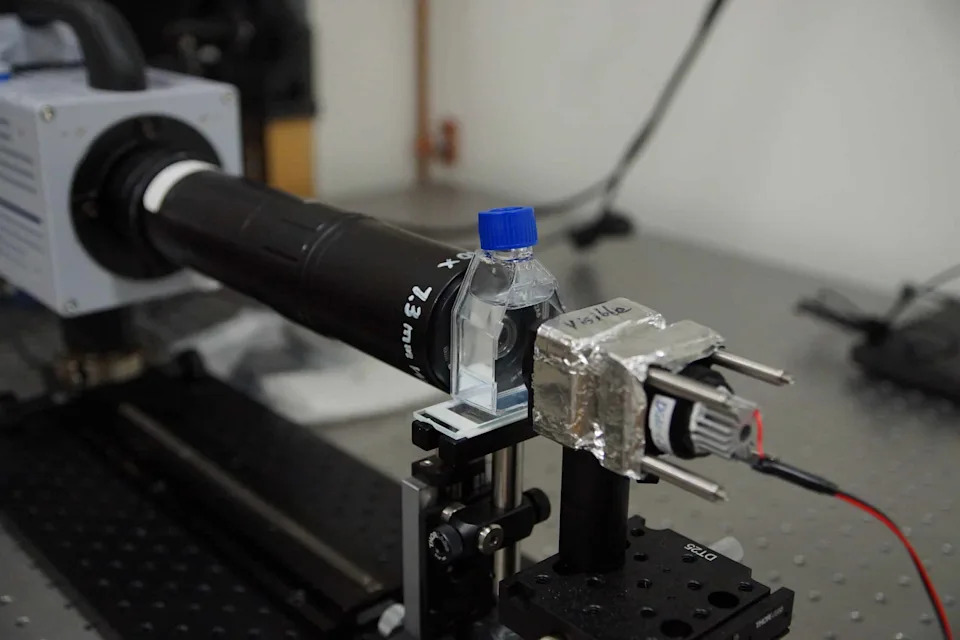
WHOI scientists developed a high-speed imaging system that uses a low-heat red LED and a camera recording 2,000 frames per second to capture the rapid movements of microscopic organisms without heating or disturbing them.©Woods Hole Oceanographic Institution –Original/License
Environmental and Fisheries Implications
One of the clearest practical concerns is ocean acidification. When seawater absorbs atmospheric CO2, available carbonate declines, limiting the material larvae need to build dense shells. Studies on eastern oysters have reported dramatic effects: larvae reared at current CO2 levels produced shells about 16% smaller and containing roughly 42% less calcium than larvae reared under pre-industrial conditions. Other experiments find higher CO2 exposure reduces survival, slows growth, and yields thinner shells. An unrelated investigation also linked a mass die-off of Pacific oyster larvae at Oregon's Whiskey Creek Shellfish Hatchery to highly acidic water.
Beyond acidification, pollution, disease, and overfishing also threaten oyster populations. NOAA Fisheries data show the commercial harvest value of eastern oysters in the U.S. declined by about $15.2 million (7.2%) from 2023 to 2024. Because larval survival strongly influences future adult populations and harvests, changes to shell formation — and thus feeding mechanics — could have cascading effects on fisheries and aquaculture.
Takeaway
The WHOI study reframes the oyster shell as both a protective structure and a mechanical aid for feeding: by increasing larval density, the shell enables gravity-driven flows that bring food within reach. That mechanical link clarifies decades-old experimental results and highlights another pathway by which changing ocean chemistry may ripple through marine ecosystems and human industries that depend on them.
Help us improve.