The crypt-keeper wasp, Euderus set, parasitizes crypt gall wasps on live oaks and manipulates its host to chew an undersized exit tunnel, leaving the host’s head lodged as a plug. The parasite feeds on the host, matures, then chews through the head plug to escape. The biochemical or biological mechanism behind this behavioral control is unknown, and the wasp’s short ovipositor limits which galls it can attack. Researchers believe many similar parasitoid strategies may still be undiscovered.
The Crypt-Keeper Wasp: How a Parasite Escapes Through Its Host’s Head
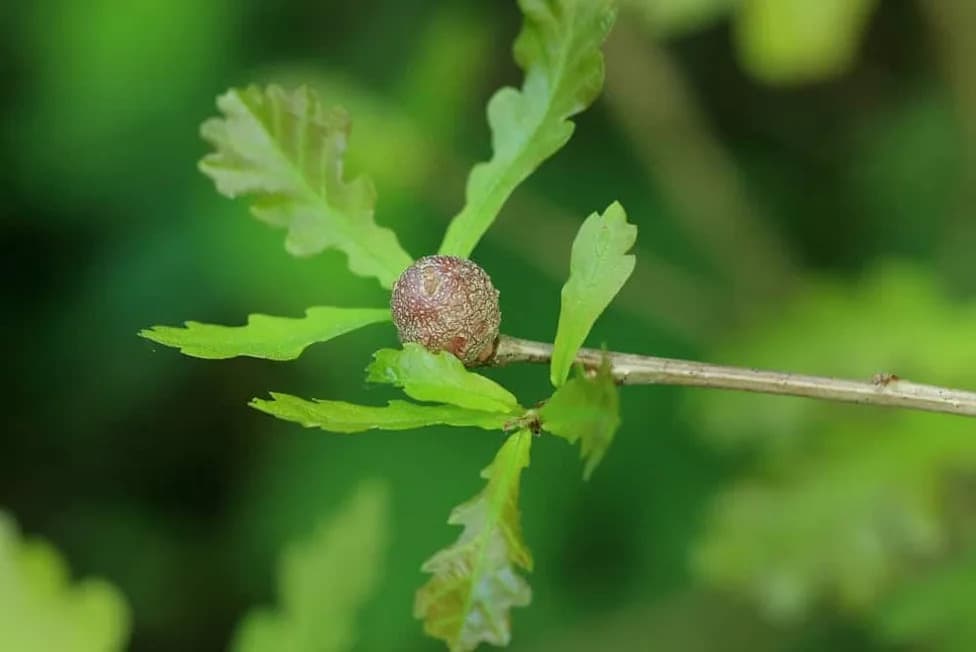
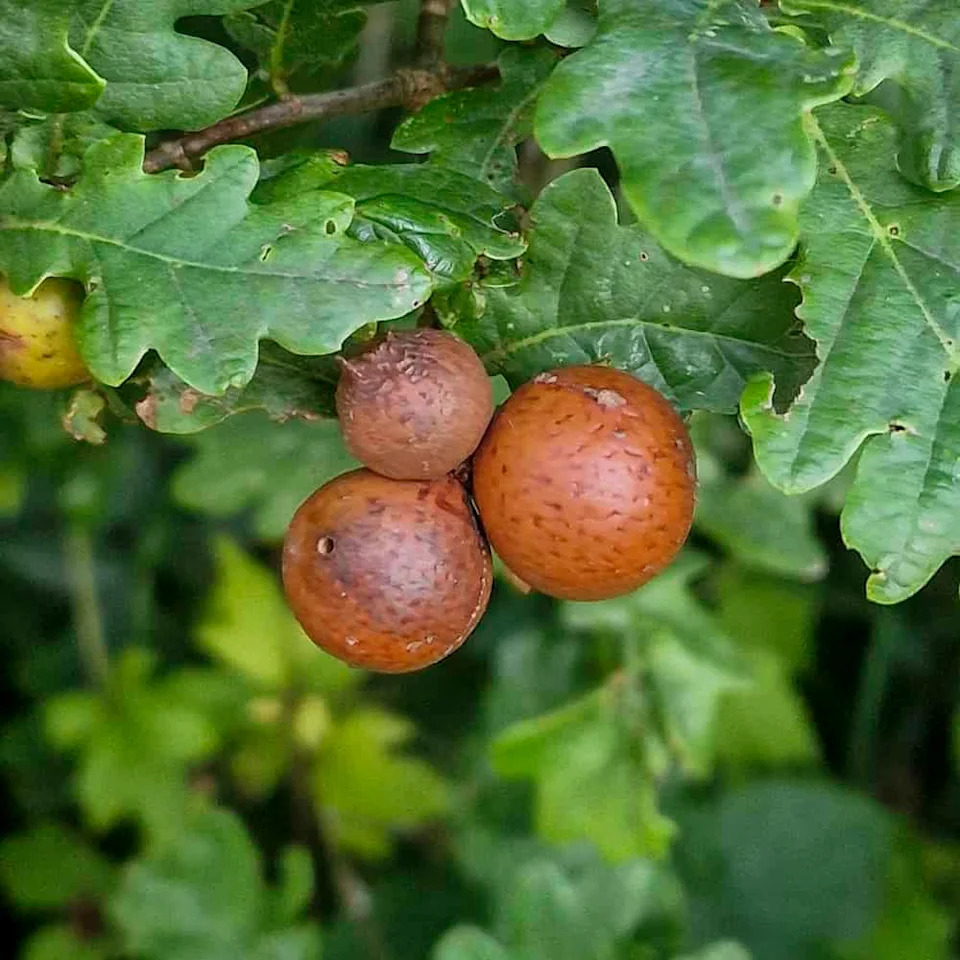
Close up of a round oak gall (oak apple) caused by a gall wasp on an oak tree branch with green leaves.© Zlocia7/Shutterstock.com
The tiny crypt-keeper wasp, Euderus set, leads one of nature’s more gruesome reproductive lives. Found across the Midwestern, South-Central and Southeastern United States, this metallic-green chalcid measures roughly 1/10th of an inch, with males typically smaller than females. Its scientific name references Set, the Egyptian god of chaos — a fitting allusion to the wasp’s manipulative behavior.
Appearance and Range
Euderus set is a small, metallic green chalcid wasp present in multiple U.S. regions. Adults are tiny — about 0.1 inch long — and sexually dimorphic, with males generally smaller than females.
Host and Gall Lifecycle
The crypt-keeper targets gall-forming insects such as the crypt gall wasp (Bassettia pallida). Female crypt gall wasps lay eggs into young live-oak stems, which respond by forming internal swollen structures called crypts. Larvae develop inside these crypts and, when ready, healthy gall wasps chew a tunnel through woody tissue to emerge as adults.
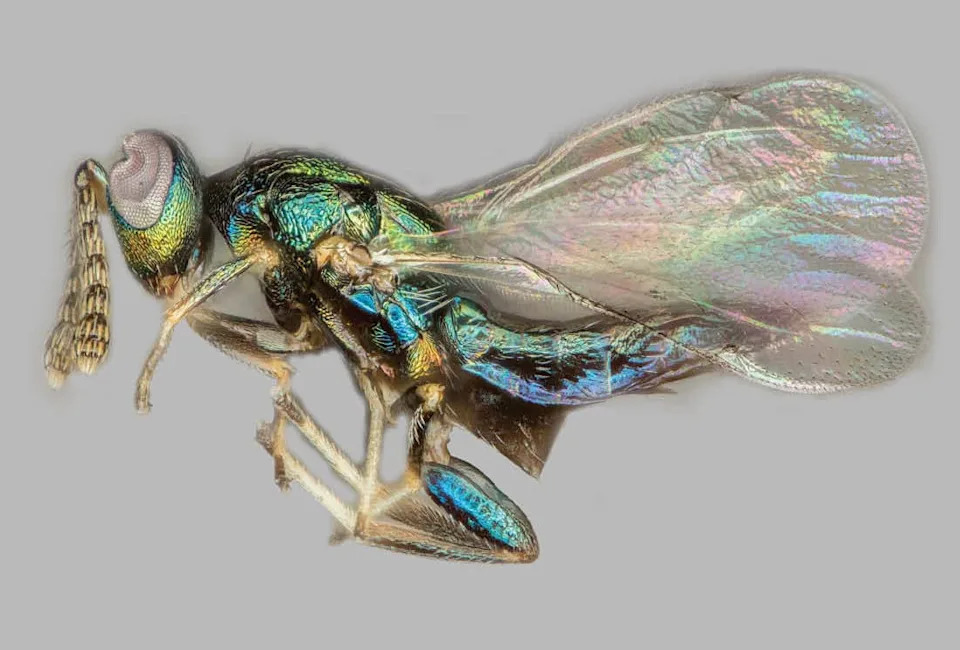
The crypt-keeper wasp controls the behavior of its host.©Scott P. Egan, Kelly L. Weinersmith, Sean Liu, Ryan D. Ridenbaugh, Y. Miles Zhang, Andrew A. Forbes –Original/License
Parasitism and Behavioral Manipulation
The female crypt-keeper uses her ovipositor to insert eggs into a live-oak crypt. When the crypt-keeper larvae hatch, they burrow into the developing gall-wasp larvae and manipulate the host’s development, accelerating metamorphosis. Crucially, the infected host attempts to chew an exit but makes only a much smaller hole than normal.
The Head-Plug Escape
Because the host chews an undersized exit, it dies with its head lodged in the opening, effectively plugging the tunnel. The crypt-keeper larva feeds on the incapacitated host as it develops. Once mature, the adult crypt-keeper chews through the host’s head — far easier than biting through wood — and escapes the crypt to fly away. This manipulation is fatal to the host.
Why It’s Called a Hypermanipulator
Euderus set is described as a hypermanipulator because it controls a parasite (the crypt gall wasp) that in turn manipulates the oak tree to form galls. This three-way interaction — tree, gall wasp, and crypt-keeper — highlights an especially complex ecological and behavioral hijacking.
Wasps have to chew their way out of galls.©Roel Meijer/Shutterstock.com
Mechanism Unknown, But Clues Exist
Researchers do not yet know how the crypt-keeper alters its host’s behavior. Other parasitoid wasps use venoms, neuroactive compounds, or even virus-like agents to affect host nervous systems, so similar chemical or biological mechanisms may be involved. Additional experimental work is needed to identify the exact cause of the altered chewing behavior.
Host Range and Anatomical Limits
Field studies suggest gall type matters when the crypt-keeper selects hosts. Because Euderus set lacks a long, extended ovipositor, it likely cannot reach hosts buried deep inside some complex or well-defended galls. Researchers have also documented that Euderus set parasitizes multiple gall-wasp species, indicating the strategy is not strictly species-specific.
Why This Matters
Parasitoid wasps are among the most species-rich groups of animals, and scientists suspect many similarly macabre life cycles remain undocumented. Studying species like the crypt-keeper not only reveals remarkable behavioral evolution but also deepens understanding of host-parasite interactions, ecological networks, and the biochemical tools parasites use to control hosts.
Note: The crypt-keeper’s behavior has been observed in laboratory and field studies; ongoing research aims to clarify the precise mechanisms and the full host range.
Help us improve.