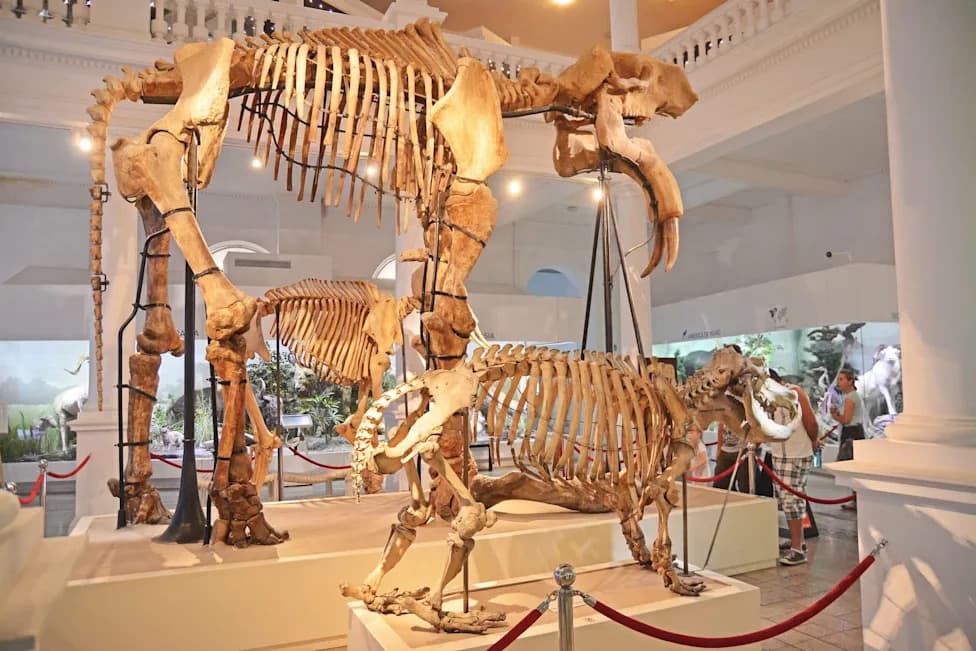
Researchers led by the University of Göttingen re-examined century-old museum sponges and new field samples to uncover at least ten previously unknown branching-worm species. These syllid polychaetes have a single head and hundreds of posterior branches that interpenetrate sponge tissue and share a continuous gut. Using microCT imaging, DNA sequencing and morphological study, the team identified thirteen distinct forms and established two main lineages — including a newly recognized genus, Cladosyllis. The results underscore the value of museum collections for revealing hidden biodiversity.
One Head, Hundreds of Branches: Ten New Branching-Worm Species Found in Century-Old Museum Sponges
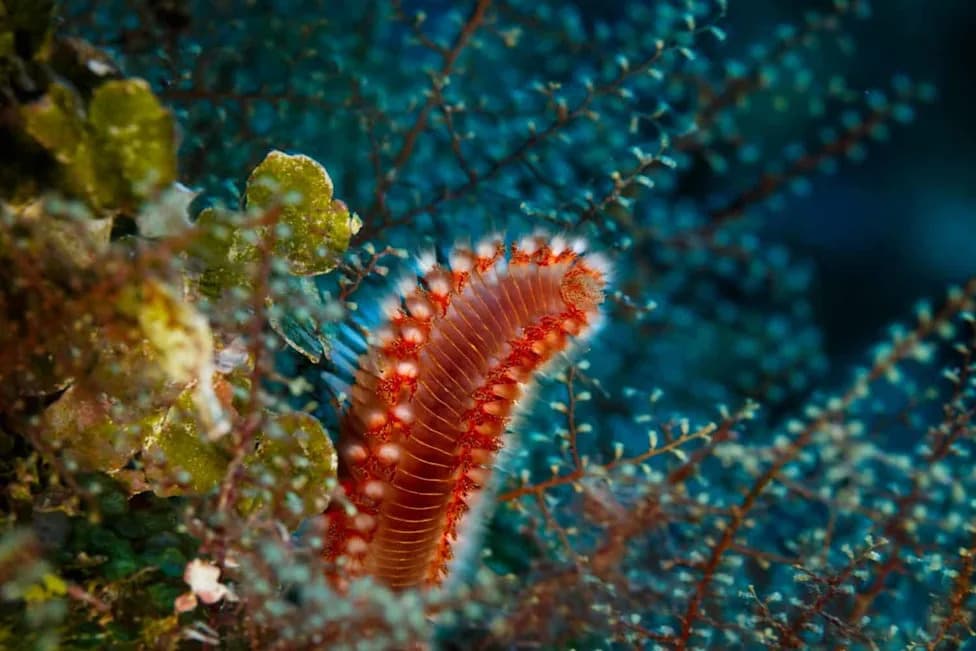
bearded Fire Worm,Hermodice carunculata , hides in tentacles of branching coral© Pete Niesen/Shutterstock.com
If you know where to look — and have access to century-old museum drawers — you can still uncover species new to science. An international team led by the University of Göttingen has done exactly that, identifying multiple previously unknown branching worms preserved inside historic sea sponges.
Hidden Diversity Inside Sponges
Before this study, scientists recognized only three species of these unusual branching polychaete worms. By re-examining historic sponge specimens and comparing them with fresh field samples, researchers combined DNA sequencing, high-resolution imaging and detailed anatomy to reveal at least ten additional species. In total, the team identified thirteen distinct branching-worm forms across the Indo-Pacific.
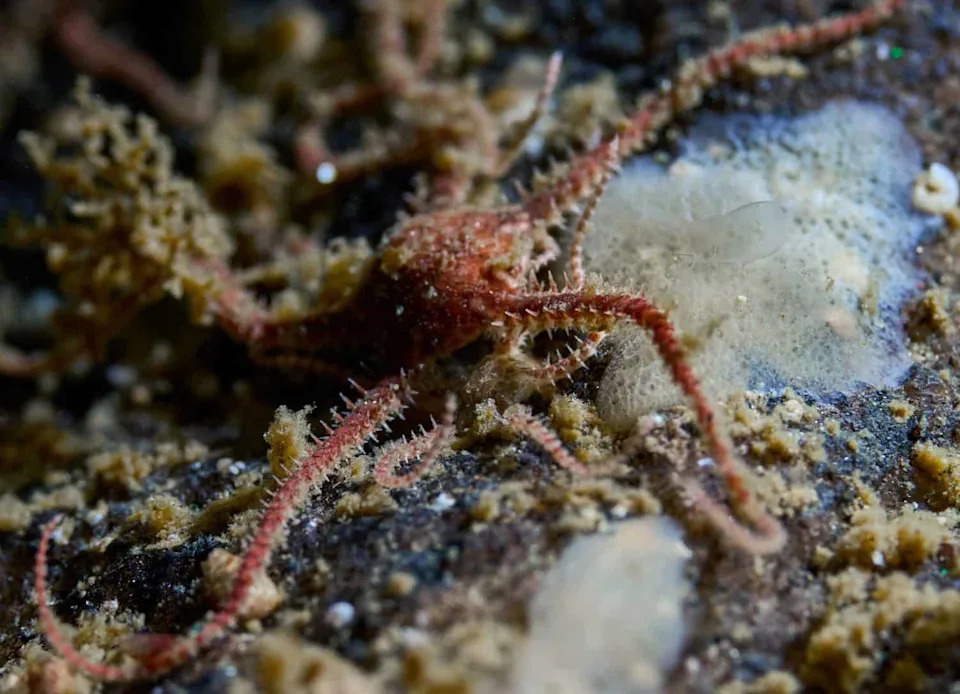
Branching worms are a type of polychaete worm that extends many ends of its body into the porous tissue of sea sponges.©Aleksei Miroliubov/Shutterstock.com
What Are Branching Worms?
Branching worms belong to the syllid family of polychaetes and live interwoven within the porous tissues of sponges. Unlike most animals that have a single head and tail, these worms have a single head while their bodies ramify into hundreds of interconnected posterior branches that penetrate sponge tissue. Remarkably, a continuous gut runs from the main body into these tree-like appendages, keeping all branches connected.
Unusual Life Cycle
These animals are difficult to detect because typically only the tips of their posterior branches are visible outside the sponge; most of the organism remains concealed. Their reproduction is equally extraordinary: branching worms reproduce by stolonization, in which posterior regions develop into small reproductive clones (stolons) bearing eyes and simple neural tissue. When mature, stolons detach and swim to the surface to spawn.
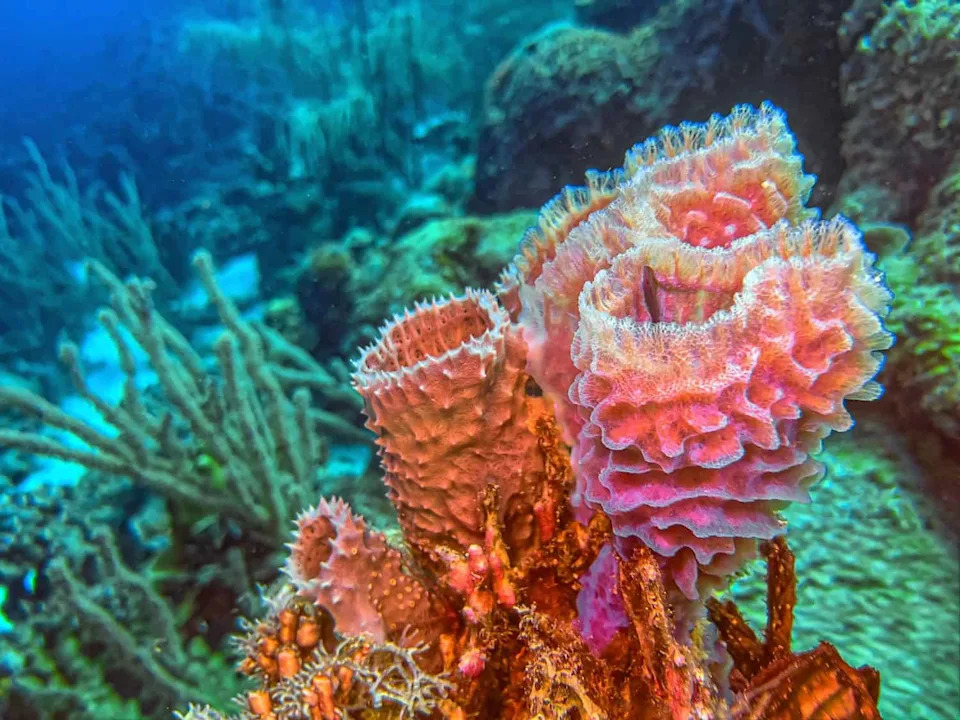
Researchers believe that many more undiscovered branching worm species are living in the ocean's sea sponges.©John A. Anderson/Shutterstock.com
Museum Collections and Modern Techniques
The research team examined preserved sponges from several museum collections, including material from the Senckenberg collection dating back to 1914. Using non-destructive microCT imaging, they revealed worms inside century-old sponges without damaging the hosts. Combining these imaging results with genetic data and careful morphological comparisons allowed the team to reconstruct the evolutionary relationships of branching worms.
"Some of the sponges hiding these worms came from the Senckenberg collection and date back to 1914. We were able to reveal the worms without damaging the sponges by using microCT imaging — modern techniques are helping us rediscover hidden biodiversity in centuries-old collections," said Dr. Ekin Tilic, co-author of the study.
New Lineages and Taxonomy
The analyses show that branching worms form a clade with two principal lineages. One lineage fits within the previously known genus Ramisyllis, while the other represents an entirely new lineage placed within Cladosyllis. "For more than a century these rare branching worms had been lumped together as a single widespread species," said Dr. Guillermo Ponz Segrelles, co-author. "Our work shows their family tree branches into multiple, geographically and host-associated lineages."
Why This Matters
The findings highlight the scientific value of long-preserved museum specimens and show how modern imaging and sequencing can unlock hidden biodiversity. The researchers argue that specialization on different sponge hosts and depths likely helped drive diversification and persistence of these worms. Given the number of taxa uncovered by re-examining preserved material, many more undiscovered branching-worm species likely remain hidden in overlooked sponges around the world.
Lead author and curator comment: Professor Maria Teresa Aguado, Scientific Curator of the Biodiversity Museum at Göttingen University, emphasized: "These collections are not just repositories of old samples, but resources that continue to generate new discoveries."
Help us improve.