Digital-savvy Gen Z organisers have registered millions of new voters in Kenya and could be a decisive force in the August 2027 election. Leaders like Ademba Allans and Senator Edwin Sifuna are mobilising young people around voter registration, rights and economic opportunity, while President William Ruto’s UDA points to job and youth programmes. Analysts say the movement is unpredictable and untested in formal electoral politics; entrenched factors such as party structures, ethnic loyalties and campaign finance still heavily influence outcomes.
How Gen Z Could Decide Kenya's 2027 Vote: From Social Media Hype To Real-World Swing

[Reuters]
Ademba Allans has helped make voting "cool" for young Kenyans. The former student journalist turned civic organiser used upbeat selfies, music and humour to drive a social-media voter registration campaign that signed up 2.6 million new voters during the latest registration window. He says the campaign hopes to add another 2.3 million ahead of the 2027 election.
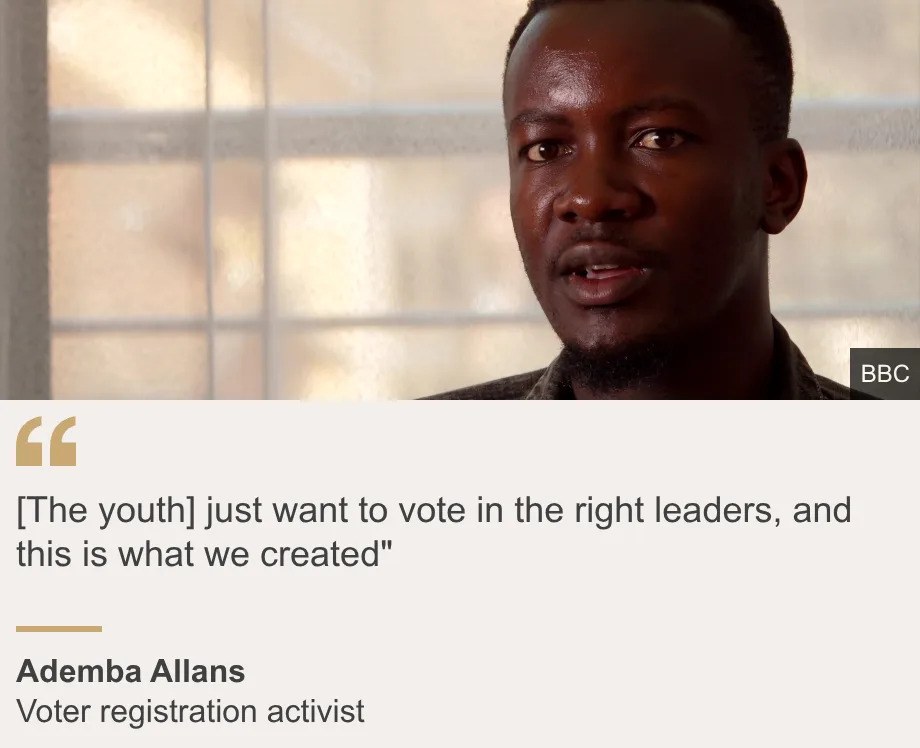
"[The youth] just want to vote in the right leaders, and this is what we created"", Source: Ademba Allans, Source description: Voter registration activist, Image: Head and shoulders image of Ademba Allans
Gen Z On The Rise
Gen Z — broadly those born in the late 1990s and early 2000s — first made a national impact with mass protests in 2024 that forced the government to withdraw an unpopular tax bill. The protests were followed by a police crackdown that killed and injured dozens of demonstrators. Now many young Kenyans appear intent on moving from the streets to the ballot box, motivated by anger at alleged corruption, heavy-handed policing and economic frustration.

Senator Edwin Sifuna has managed to draw large and youthful crowds to his rallies [AFP via Getty Images]
Young voters are a substantial force: more than 30% of voting-age Kenyans are under 35. Polls suggest President William Ruto may be politically vulnerable with the August 2027 vote approaching, but translating online momentum into organised electoral power remains uncertain.
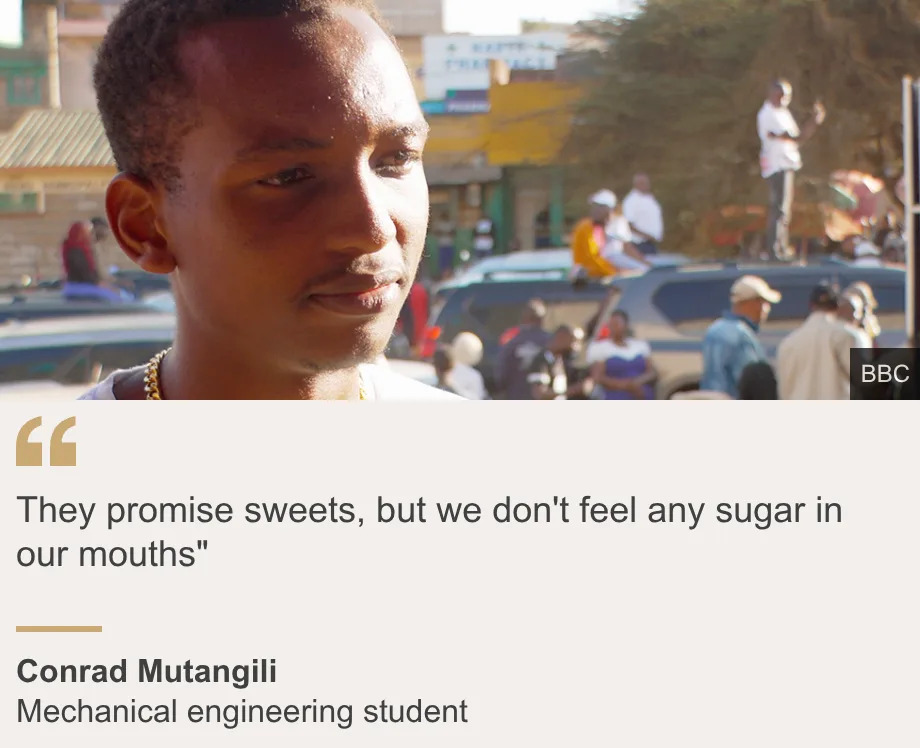
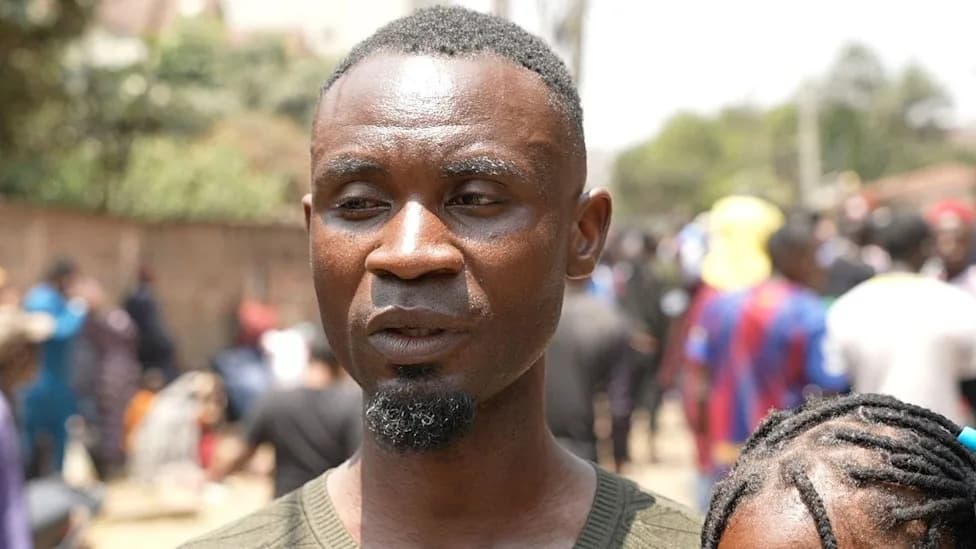
"They promise sweets, but we don't feel any sugar in our mouths"", Source: Conrad Mutangili, Source description: Mechanical engineering student, Image: A head and shoulders image of Conrad Mutangili
Political Players And Platforms
One prominent figure attracting Gen Z interest is Nairobi Senator Edwin Sifuna, leader of the Linda Mwananchi (Protect the Citizen) movement. He drew attention during the 2024 protests for trying to stop police from firing on demonstrators, and he is now campaigning on a "people-led" platform that emphasises human rights, rule of law and fair competition.

It is not yet clear which way young people will swing but their voice will matter next year [BBC]
President William Ruto and his United Democratic Alliance (UDA) point to job programmes, grants, loans for youth enterprises, technology hubs and healthcare reforms to counter discontent. UDA officials say their grassroots organising and tangible development projects give them an advantage over social-media-driven buzz.

[BBC]
Strengths And Limits Of A Digital-Led Youth Movement
Analysts describe Gen Z activism as a "wild card": digitally savvy, decentralised and resource-light, capable of rapid mobilisation but untested in formal politics. Political analyst Tom Mboya warns the movement has not yet been tested at an overtly political level; if it coalesces behind a candidate, that candidate could do well, but conversion from protest to disciplined voting remains a key unknown.
Traditional forces remain powerful. Ethnic allegiances, party machinery, and campaign financing — including commonplace cash handouts at events — continue to shape outcomes. At one rally described in this reporting, attendees queued for cash payments of 350 Kenyan shillings (about $3), underscoring the role of money in Kenyan elections.
On the Ground: Voices From The Rally Trail
Youth attendees voiced a demand for immediate results and jobs. "We want immediate results," said a 22-year-old computer science student. Others criticized repeated campaign promises that failed to materialise: "They promise sweets, but we don't feel any sugar in our mouths," said a 19-year-old engineering student.
What To Watch Ahead Of 2027
- Whether Gen Z organisers can convert social-media energy and voter registration into coordinated turnout and candidate support.
- Whether opposition figures can unite behind a single challenger to Ruto, or remain fragmented.
- The influence of state resources, party mobilisation and campaign finance on voter behaviour.
- How economic sentiment — a June survey found over three-quarters of respondents say Kenya is moving in the wrong direction and about two-thirds say their personal finances have worsened since 2022 — will shape turnout.
With less than a year to go, Kenya may be entering a moment of change. Gen Z’s rejection of old-style, ethnically based politics and its new digital organising tactics could reshape campaigning — but whether that translates into wins at the ballot box remains to be seen.
Help us improve.