The world’s tallest wind turbine prototype now stands 365 meters (1,197 ft) tall in Schipkau, eastern Germany, with a 300-meter (984 ft) hub height designed to tap stronger, more consistent winds. Built by Dresden-based Gicon, the prototype aims to more than double output compared with lower turbines and will be inaugurated on Nov. 19 after final wiring. Gicon plans to use the data to develop small farms of three to five ultra-tall turbines and explore "two-story" layouts to ease land constraints. Renewables supplied 59.1% of Germany’s electricity in H1 2026, with wind providing 29.4%.
Record-Breaking 365m Wind Turbine in Germany Surpasses Eiffel Tower, Aims to Boost Power Output
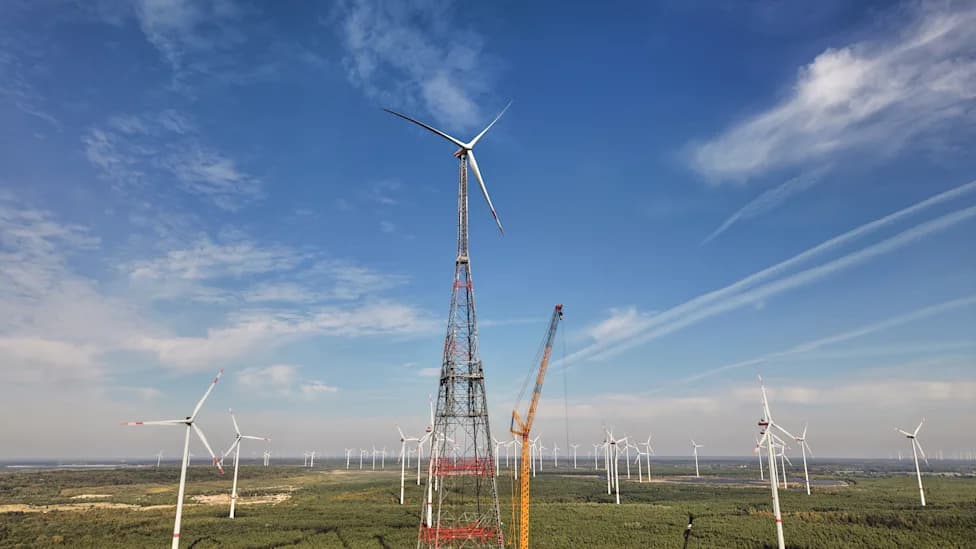
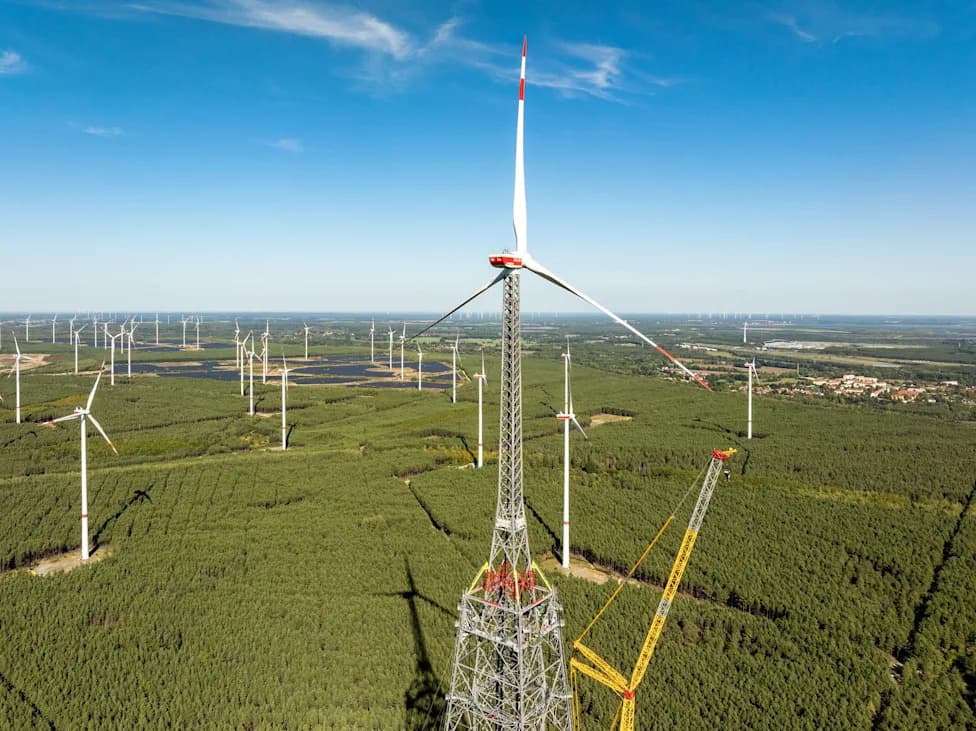
A newly constructed wind turbine, whose rotor tips reach a maximum height of 365 meters (1,198 feet), stands in Schipkau, Germany, Thursday, Oct. 1, 2026. (AP Photo/Markus Schreiber)(AP Photo/Markus Schreiber)
A prototype wind turbine that its developer calls the world’s tallest now rises 365 meters (1,197 feet) above the plains of Schipkau in eastern Germany, overtopping Paris’s Eiffel Tower. The extra-tall turbine was erected at an existing wind farm in Lusatia, a former lignite-mining region southeast of Berlin that has been shifting toward renewable energy.
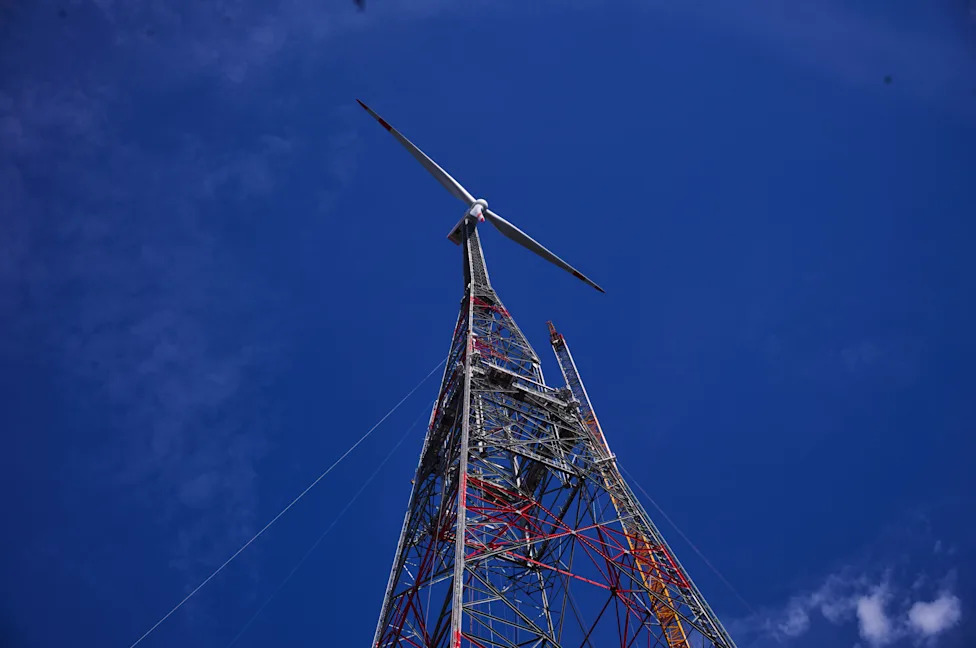
A newly constructed wind turbine, whose rotor tips reach a maximum height of 365 meters (1,198 feet), stands in Schipkau, Germany, Thursday, Oct. 1, 2026. (AP Photo/Markus Schreiber)(AP Photo/Markus Schreiber)
Prototype to Test Higher-Altitude Winds
The turbine’s hub sits at 300 meters (984 feet) and its rotor blades extend the total height to 365 meters, making it taller than the Eiffel Tower (330 meters / 1,083 feet) and nearly as high as Berlin’s television tower (368 meters / 1,207 feet). The prototype reached its full height this week and is due to be inaugurated on Nov. 19 after interior wiring is finished.
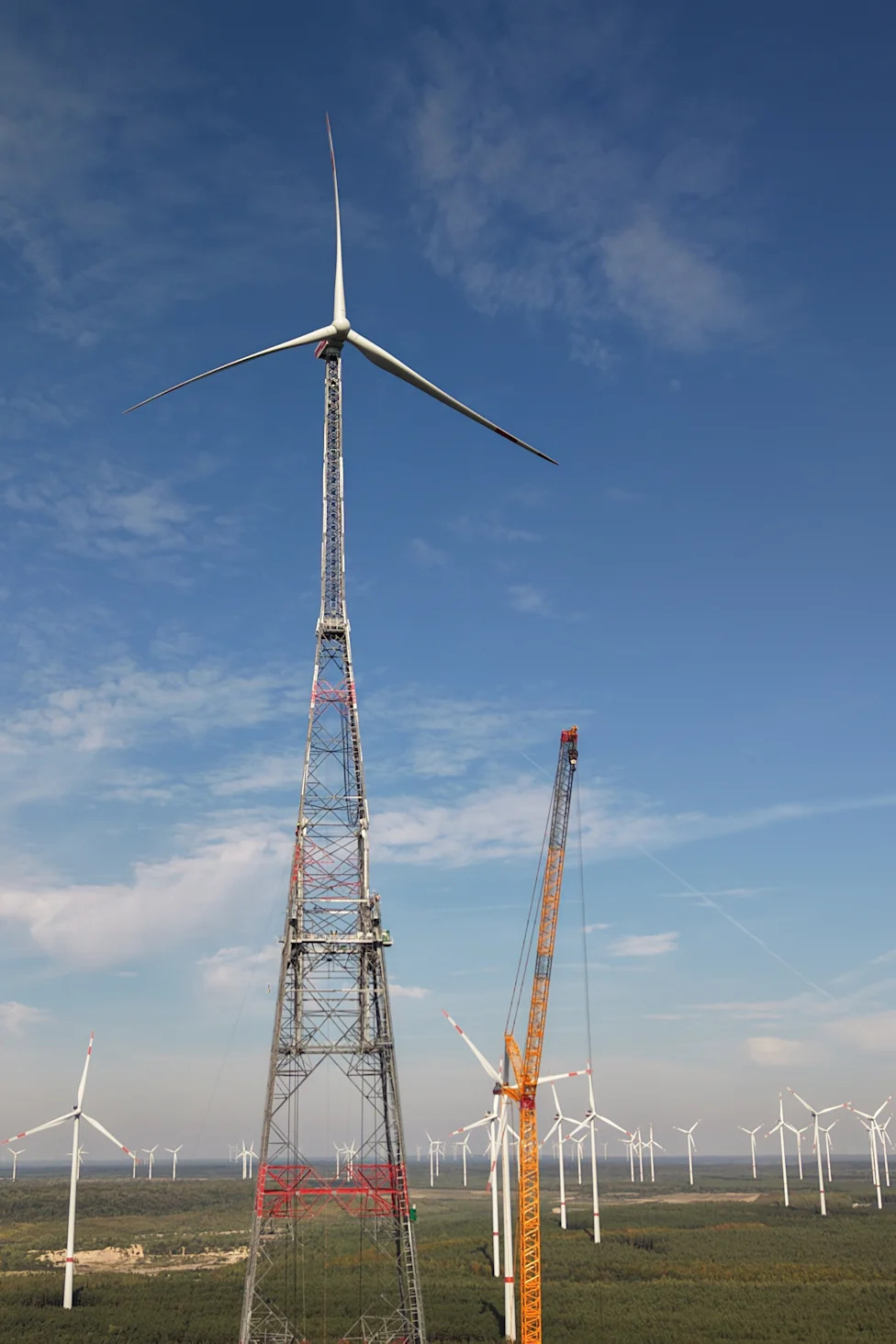
A newly constructed wind turbine, whose rotor tips reach a maximum height of 365 meters (1,198 feet), stands in Schipkau, Germany, Thursday, Oct. 1, 2026. (AP Photo/Markus Schreiber)(AP Photo/Markus Schreiber)
Why Height Matters
Jochen Grossmann, CEO of Dresden-based engineering firm Gicon, said the taller design is intended to capture stronger, more consistent winds available at higher altitudes. "At 300 meters, we have such constant and strong wind that we can produce more than twice as much electrical energy as with the same facility at today's heights," Grossmann said, adding that the machine can generate electricity for more of the year than conventional turbines.
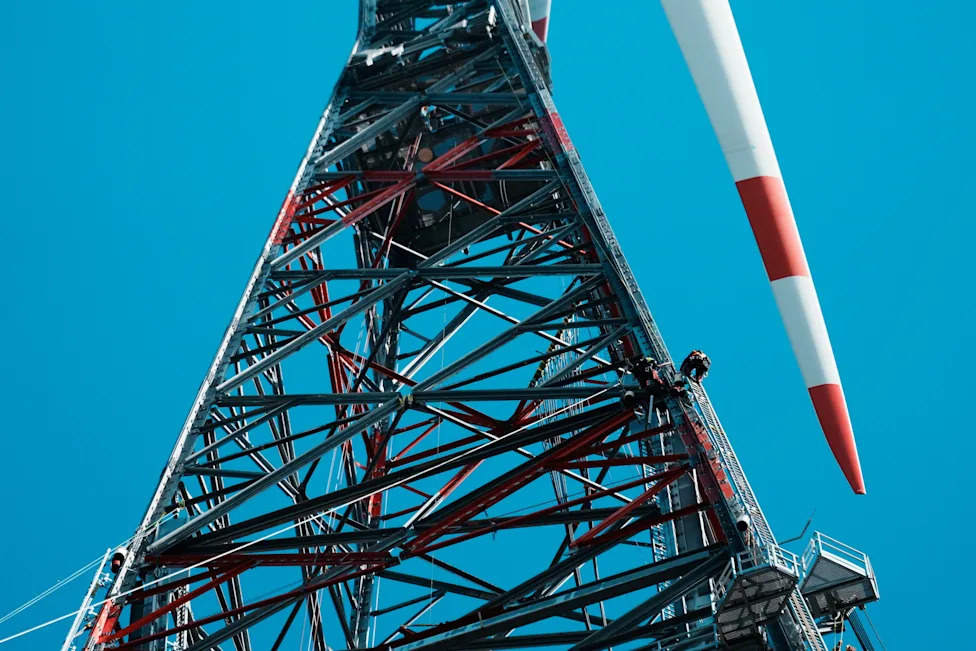
Two men work at a newly constructed wind turbine, whose rotor tips reach a maximum height of 365 meters (1,198 feet), in Schipkau, Germany, Thursday, Oct. 1, 2026. (AP Photo/Markus Schreiber)(AP Photo/Markus Schreiber)
"At 300 meters, we have such constant and strong wind that we can produce more than twice as much electrical energy as with the same facility at today's heights." — Jochen Grossmann, CEO, Gicon
The prototype’s primary role is to gather real-world performance and durability data at these heights. Gicon plans to use the findings to design a small wind farm of three to five ultra-tall turbines and to evaluate the feasibility of broader production.
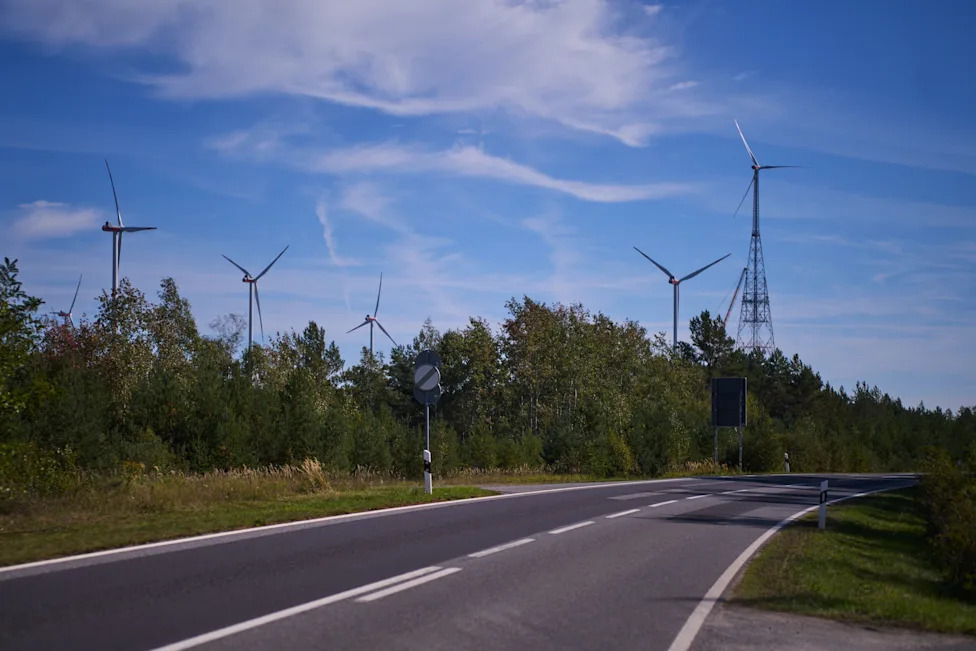
A newly constructed wind turbine, right, whose rotor tips reach a maximum height of 365 meters (1,198 feet), stands in Schipkau, Germany, Thursday, Oct. 1, 2026. (AP Photo/Markus Schreiber)(AP Photo/Markus Schreiber)
Land Use and Energy Transition
Grossmann also suggested that ultra-tall turbines could help ease land constraints by enabling "two-story" wind farms that combine shorter and taller machines on the same site, increasing output per hectare. The deployment aligns with Germany’s long-term energy transition: the country shut down its last nuclear plants in 2023 and plans to end coal-fired electricity generation by 2038.
According to the Federal Statistical Office, renewable sources accounted for 59.1% of Germany’s electricity production in the first half of 2026, with wind supplying the largest single share at 29.4%.
Work remains to complete internal wiring before the planned Nov. 19 inauguration. The project aims to demonstrate whether building turbines at such heights is a cost-effective and reliable way to expand wind power where land is constrained.
Note: This story corrects earlier inconsistent spellings of the company name Gicon. Geir Moulson in Berlin contributed to this report.
Help us improve.