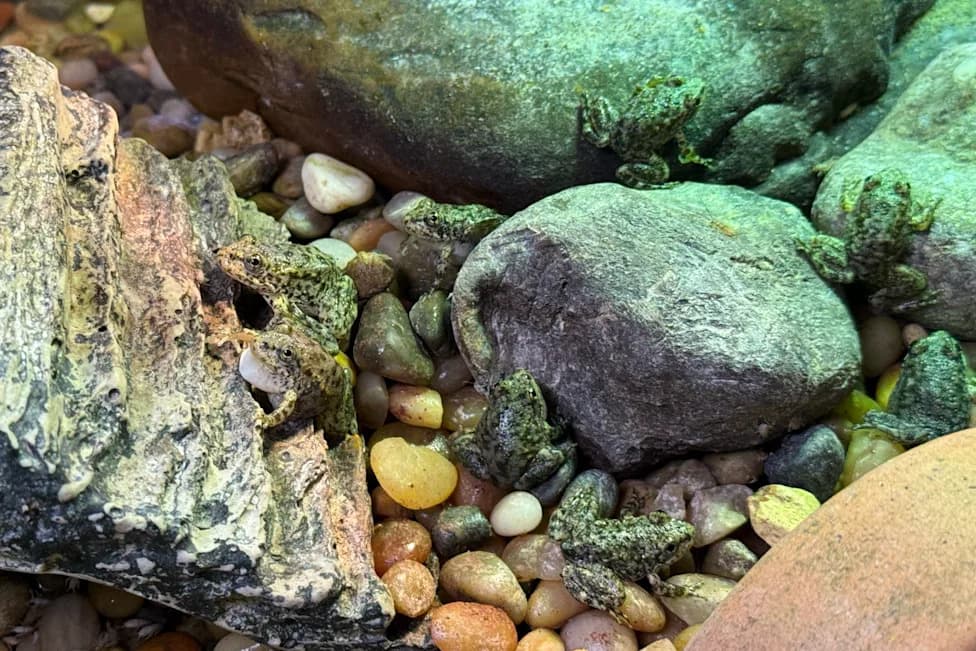
Researchers discovered a bacterium in the skin microbiome of the clay robber frog (Haddadus binotatus) that blocks the deadly chytrid fungus responsible for chytridiomycosis. In lab experiments, antibiotic suppression of skin bacteria made these frogs more susceptible to disease, while a second species (Ischnocnema henselii) showed no such protection. The team cultured and sequenced roughly 700 bacterial strains to identify protective microbes and now aim to learn how frogs recruit and maintain these beneficial bacteria to inform conservation strategies.
Tiny Ally: One Skin Bacterium Stops a Fungus That Has Wiped Out 500+ Frog Species
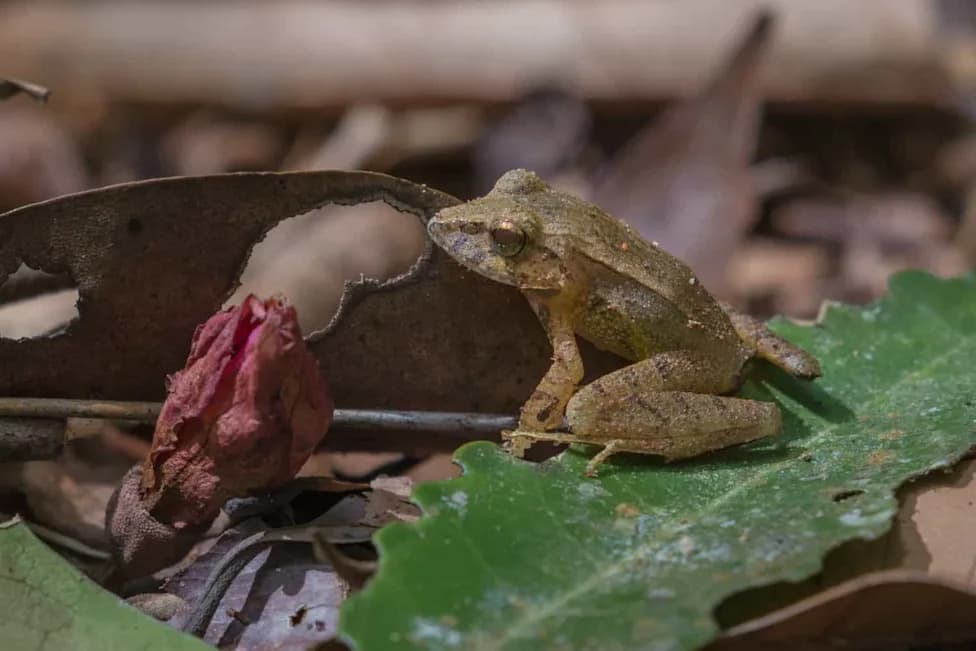
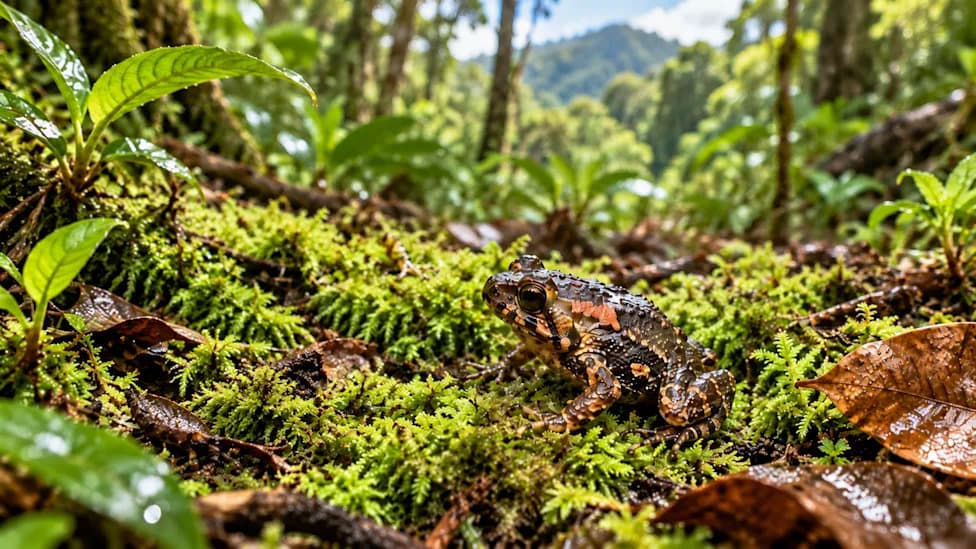
Clay Robber Frog (Haddadus binotatus) in the leaf litter on the forest floor in the Brazilian Atlantic Forest.© Eduardo Menezes/Shutterstock.com
There is a fungal pathogen—commonly called chytrid fungus—that has driven declines or extinctions in more than 500 amphibian species worldwide. The disease it causes, chytridiomycosis, damages amphibian skin and can lead to rapid physiological collapse and death. New laboratory research suggests hope: a bacterium living on the skin of the clay robber frog appears to prevent the fungus from establishing infection.
What Chytrid Fungus Does
Chytridiomycosis, caused by chytrid fungus, was first detected as an outbreak in Queensland, Australia, in 1993 and has since spread to populations on six continents. Infected amphibians often develop anorexia within days, become increasingly lethargic, and show characteristic skin changes—discolored, opaque patches and thickening—that compromise nutrient uptake, waste excretion, and skin-based respiration. These disruptions can quickly lead to death.
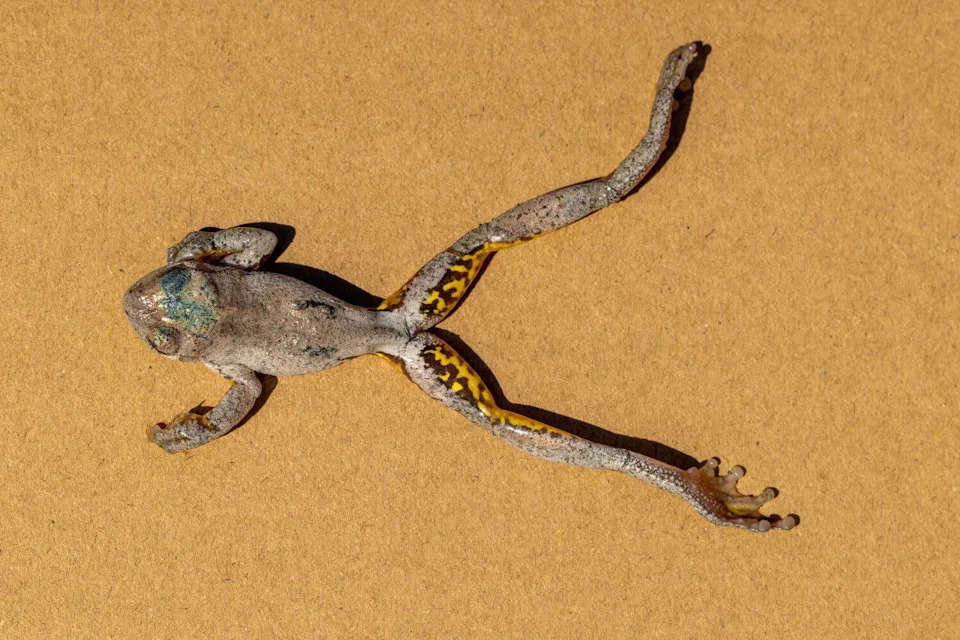
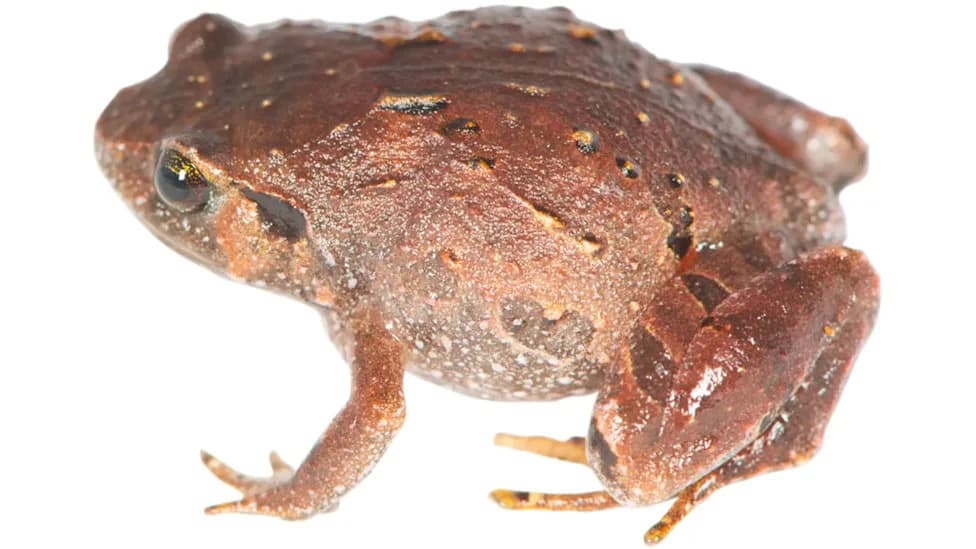
Chytrid fungus has led to the death or decline of over 500 species of amphibian across the world.©Ken Griffiths/Shutterstock.com
The Experiment That Identified a Protective Bacterium
Led by researchers at Penn State, a team conducted controlled laboratory experiments in Brazil using two frog species: Haddadus binotatus (the clay robber frog) and Ischnocnema henselii. Laura Schuck and colleagues cultured roughly 700 bacterial strains from frog skin, tested each strain's ability to inhibit chytrid growth, and DNA-sequenced the cultures to build a reference database of protective microbes.
Gui Becker, associate professor of biology and senior author, described the approach as twofold: a yes-or-no test of whether the microbiome defends against disease, followed by in-depth functional testing of individual bacterial strains to identify specific defense mechanisms.
Key Findings
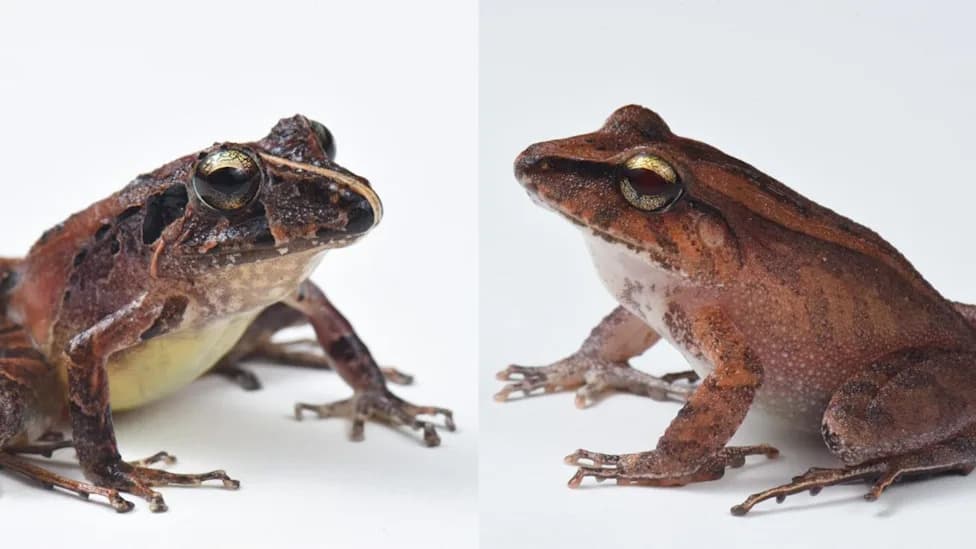
The team found that H. binotatus tolerated chytrid exposure when its natural skin microbiome was intact: resident bacteria prevented infection. When researchers suppressed the frogs' skin bacteria with antibiotics, the clay robber frogs became more likely to show disease symptoms, demonstrating a causal role for the microbiome in protection. By contrast, I. henselii remained susceptible to infection regardless of microbiome status, indicating that protective microbiomes are not universal across species.
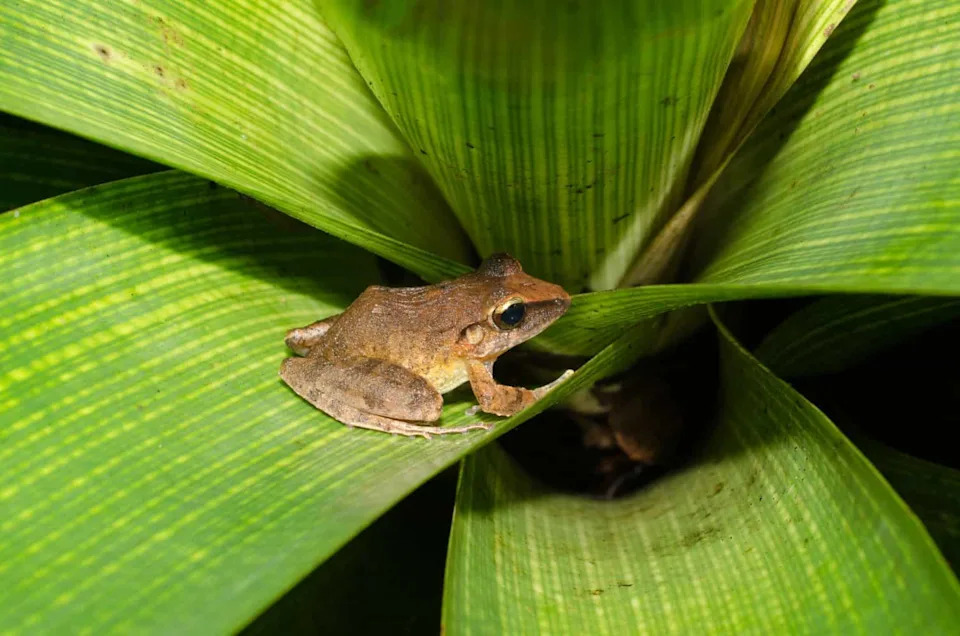
Researchers found that the natural skin microbiome of clay robber frogs protected them from chytridiomycosis infection.©Mendesbio/Shutterstock.com
Conservation Implications
Field observations had long suggested that clay robber frogs rarely contract chytrid disease; this study provides experimental evidence that their skin microbiome is a critical factor. The researchers now plan to investigate how these frogs recruit and maintain beneficial bacteria in the wild. Understanding those ecological and behavioral mechanisms could guide conservation strategies—such as habitat protection, microbiome-friendly management practices, or targeted probiotic approaches—to help other vulnerable amphibian populations.
While lab-based results are promising, translating them into scalable interventions for wild populations will require further research and careful ecological assessment. Still, this discovery highlights the potential of microbiome-based defenses as a tool in the fight to preserve amphibian biodiversity.
Help us improve.