New research in Animal Microbiome shows that some tropical frogs use skin bacteria to resist chytridiomycosis, the deadly disease caused by the chytrid fungus Bd. Laboratory experiments in Brazil found that Haddadus binotatus is protected by its native skin microbiome but becomes vulnerable when that community is suppressed, while Ischnocnema henselii remains susceptible regardless. Researchers cultured roughly 700 bacterial strains and built a database linking bacterial identity to antifungal strength to identify which microbes provide protection.
Frogs' Skin Bacteria Act as Living Armor Against Deadly Chytrid Fungus
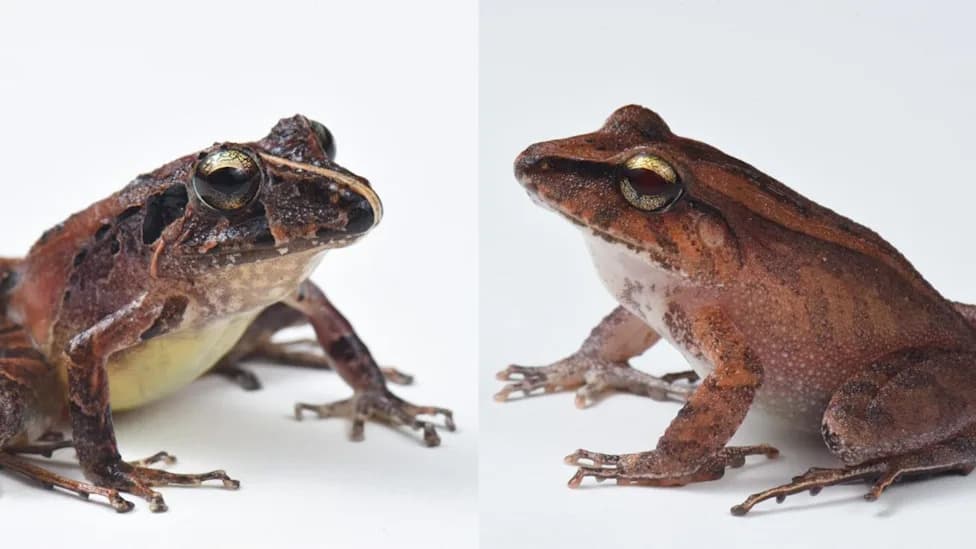
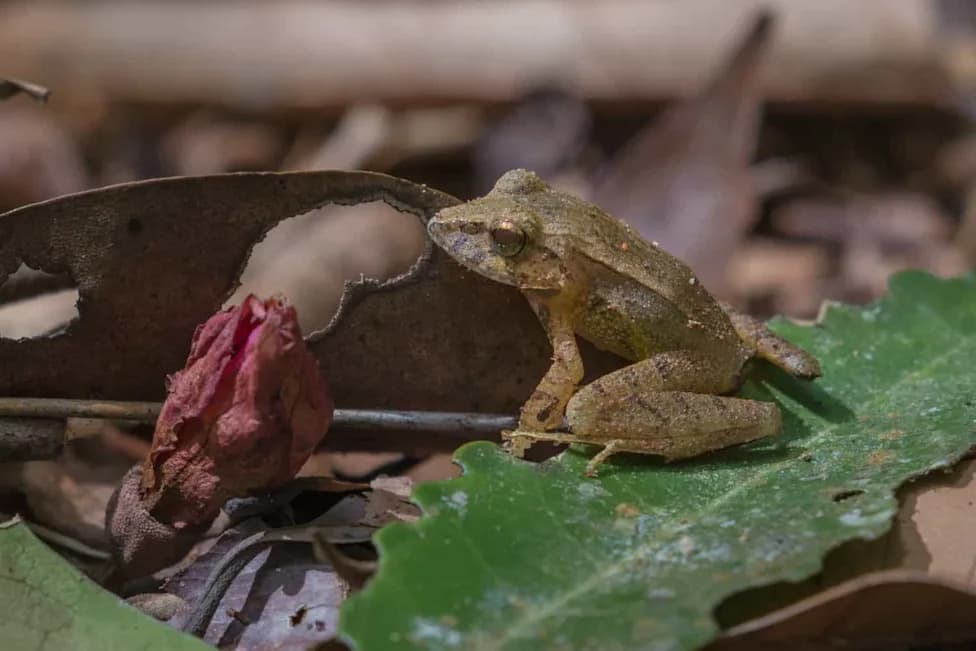
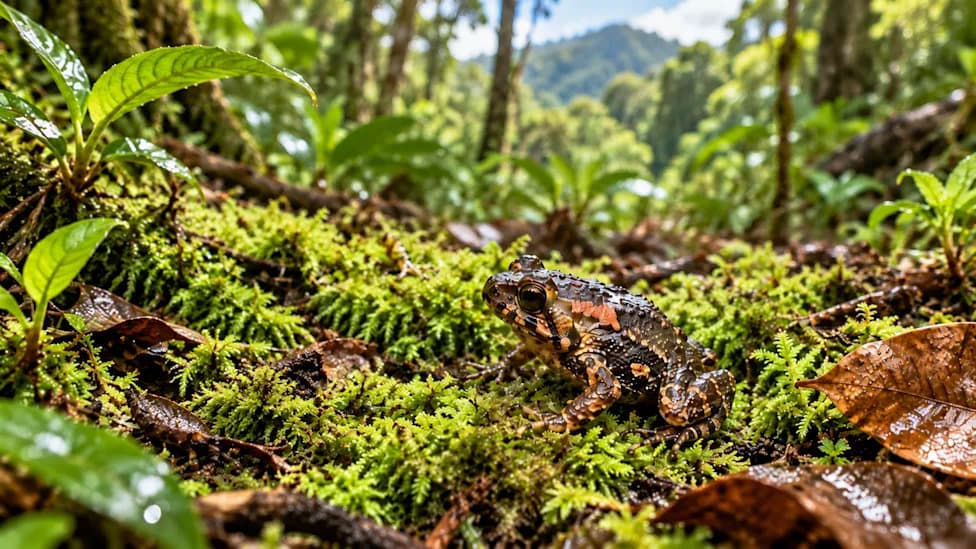
To test how skin-associated bacterial communities can protect tropical frog species against disease, the research team conducted a lab experiment in Brazil focusing on two frog species: 'Ischnocnema henselii' (left) and 'Haddadus binotatus' (right).
Some tropical frogs protect their permeable skin not with metal or fabric but with living bacteria that act like a biological suit of armor. New research published in the journal Animal Microbiome shows that certain frog species host skin microbes capable of shielding them from chytridiomycosis, the lethal disease caused by the chytrid fungus Batrachochytrium dendrobatidis (Bd). That pathogen has contributed to the extinction of at least 90 frog species and has been detected in more than 1,300 amphibian species worldwide.
Key Findings
Controlled laboratory experiments in Brazil compared two tropical frog species, Haddadus binotatus and Ischnocnema henselii, to test whether typical skin bacterial communities protect against Bd. The study found a striking contrast: H. binotatus resisted infection when its native skin microbiome was intact but became more vulnerable after the microbiome was suppressed with antibiotics. In contrast, I. henselii remained highly susceptible to Bd whether its skin bacteria were present or experimentally reduced.
"This is one of the clearest demonstrations that a host's natural skin bacteria can be a frontline defense against a pathogen that has devastated amphibian populations globally,"
Gui Becker, co-author and biologist at Penn State University, said in a statement. He added that the protective function of particular bacteria—not just overall microbial diversity—matters for resistance to disease.
How The Team Showed Protection
Lead author Laura Schuck, a doctoral student in ecology at Penn State, cultured roughly 700 bacterial strains from the frogs' skins. Each strain was grown in culture, and the chemical byproducts were exposed to Bd. Over one week the researchers tracked fungal growth to measure how strongly each bacterial strain inhibited the pathogen.
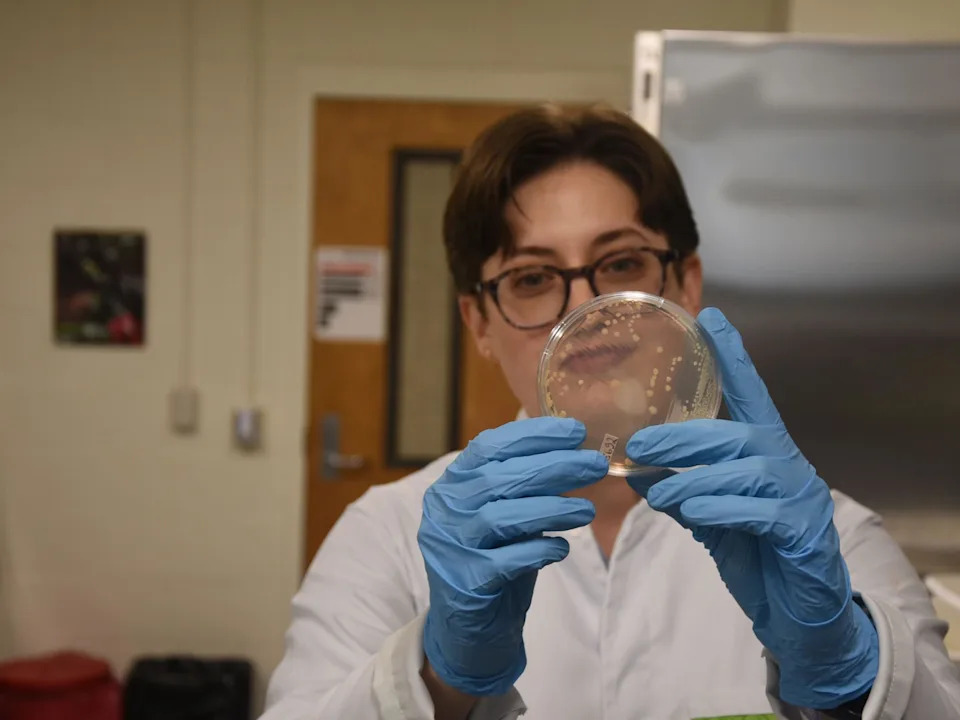
Laura Schuck, doctoral student in the Intercollege Graduate Degree Program in Ecology at Penn State and lead author of the study, cultured roughly 700 strains of bacteria from the frogs' skin to better understand how the animal's microbiome helped protect it from disease.Image: Sam Sholtis / Penn State.
They sequenced every cultured strain and compiled a custom reference database that links bacterial identity to antifungal potency. That resource let the team map which inhibitory bacteria were present on individual frogs and when, providing experimental evidence that certain microbes can help hosts survive infection.
Implications For Conservation
The study suggests different frog species rely on different defensive strategies: some recruit protective microbes that reduce disease risk, while others remain vulnerable despite hosting bacteria. Understanding how frogs acquire and maintain beneficial skin microbiomes could guide conservation efforts—such as protecting habitats that support helpful microbes or restoring environmental conditions that allow protective bacteria to thrive.
"If we understand how this frog recruits and maintains beneficial bacteria, we can begin to understand how the microbiome works as a natural defense and what we need to protect in the environment to keep those bacteria available to amphibians and other endangered vertebrates,"
Schuck said. Future work will examine environmental sources of protective microbes and the ecological processes that let frogs retain them over time.
Image credit: Sam Sholtis / Penn State
Help us improve.