The Aquarium of the Pacific in Long Beach raises hundreds of critically endangered mountain yellow-legged tadpoles until they develop limbs and lose their tails, then releases them into the wild. Since 2020 the program has returned about 1,000 frogs, after the Bobcat Fire destroyed most habitat and wild counts fell below 200 by 2021. Staff feed tadpoles multiple times daily, vary tank flows to strengthen limbs and group animals by genetic lineage; survival to release is about 60%–65%.
LA Aquarium’s Frog Nursery Raises 1,000 Endangered Mountain Yellow-Legged Frogs for Release
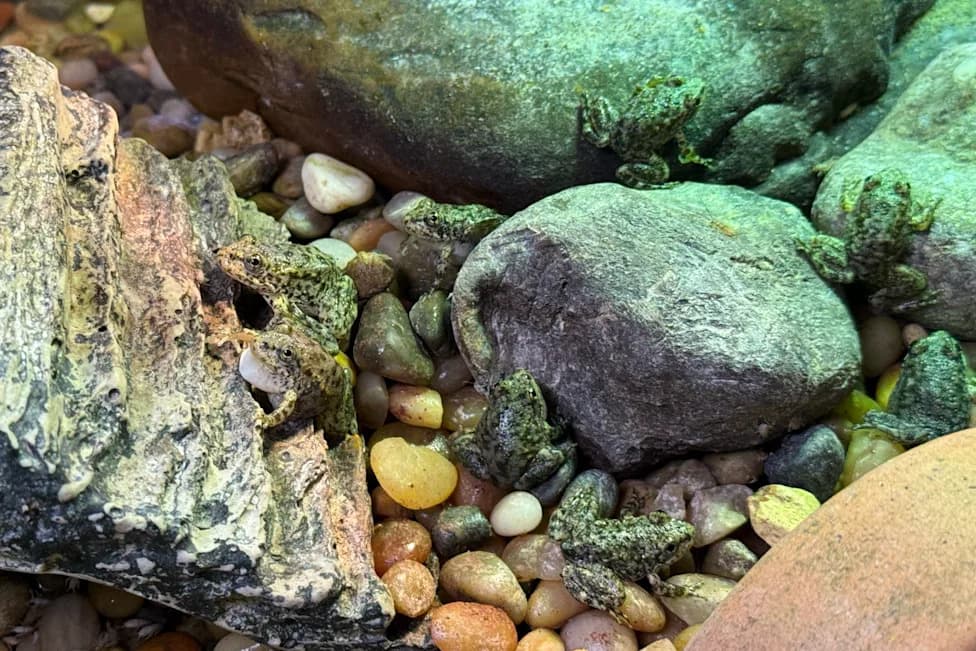
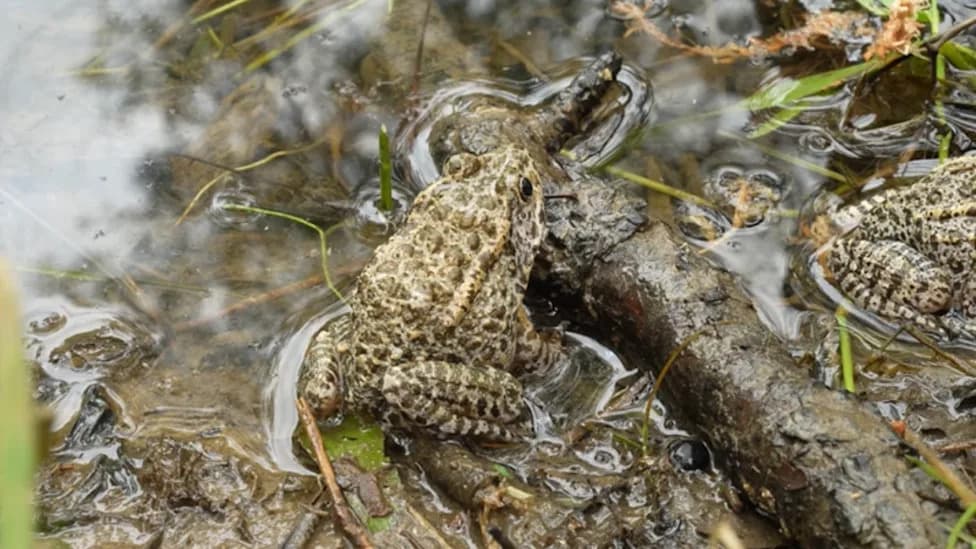
A group of mountain yellow-legged frogs sit in a tank at the Aquarium of the Pacific, Friday, Sept. 18, 2026 in Long Beach, Calif. (AP Photo/Jaimie Ding)(AP Photo/Jaimie Ding)
The Aquarium of the Pacific in Long Beach operates a dedicated frog nursery where conservation staff raise hundreds of critically endangered mountain yellow-legged frogs and tadpoles until they are ready to return to the wild. These captive-rearing efforts aim to rebuild populations that have plummeted after habitat loss, disease and introduced predators.
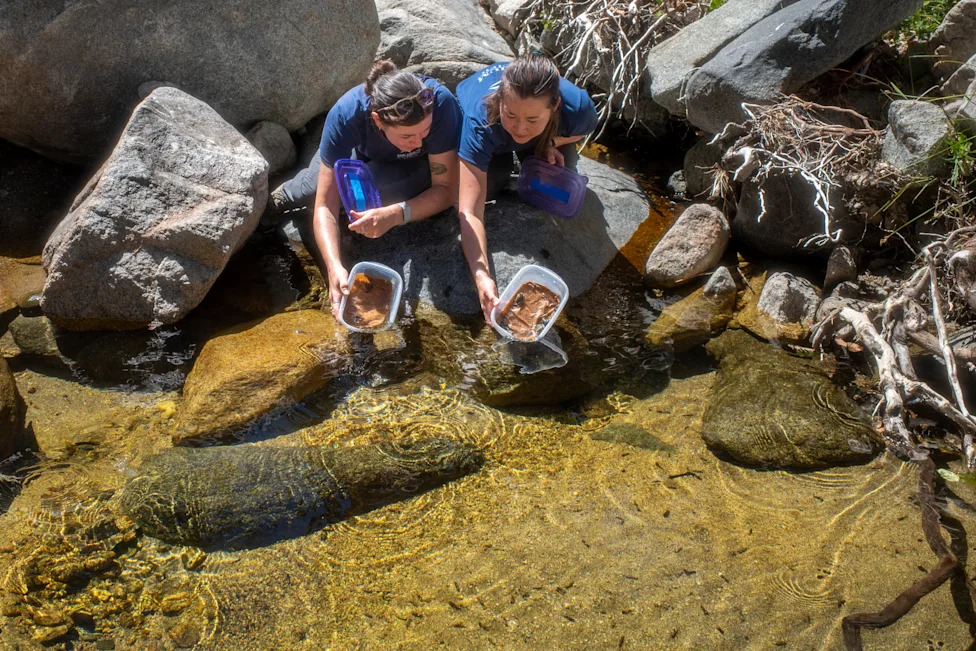
This photo provided by Aquarium of the Pacific shows Senior Animal Care Specialist Heather Cameron, left, and Conservation Initiatives Manager Erin Lundy release endangered mountain yellow-legged frogs raised at the Aquarium of the Pacific into their native habitat in the San Gabriel Mountains in Calif., Aug. 19, 2026. (Madeline Walden/Aquarium of the Pacific via AP)(Aquarium of the Pacific via AP)
Rescue Effort and Recent Releases
Since 2020 the aquarium has released roughly 1,000 frogs back into the wild, including more than 650 released in August alone. Nearly 400 of those August frogs were reared at the aquarium. Captive breeding and rearing programs, coordinated with the U.S. Fish and Wildlife Service and partner zoos, have been underway since the early 2000s.
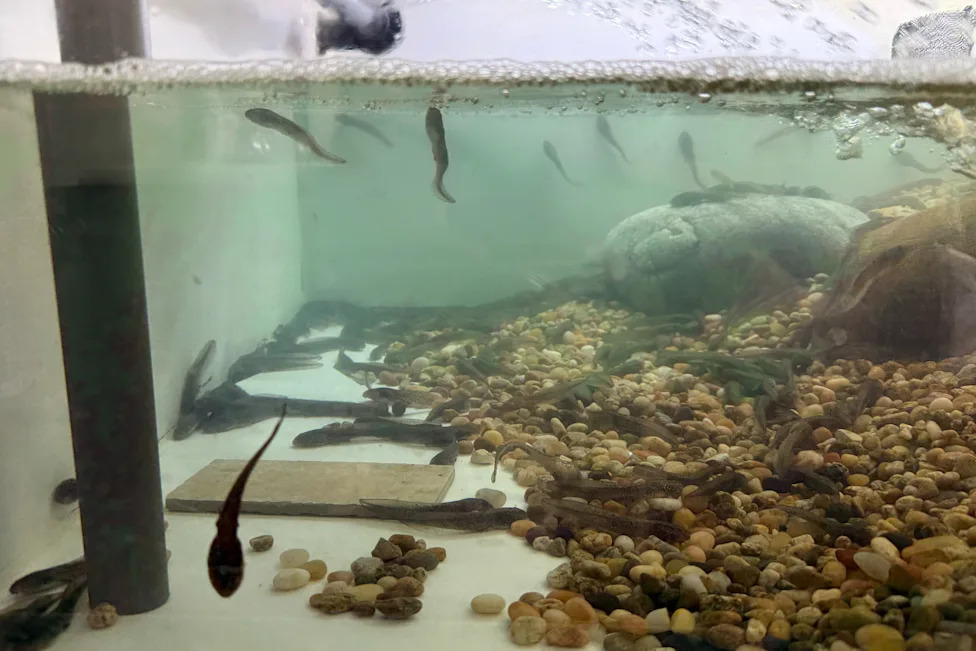
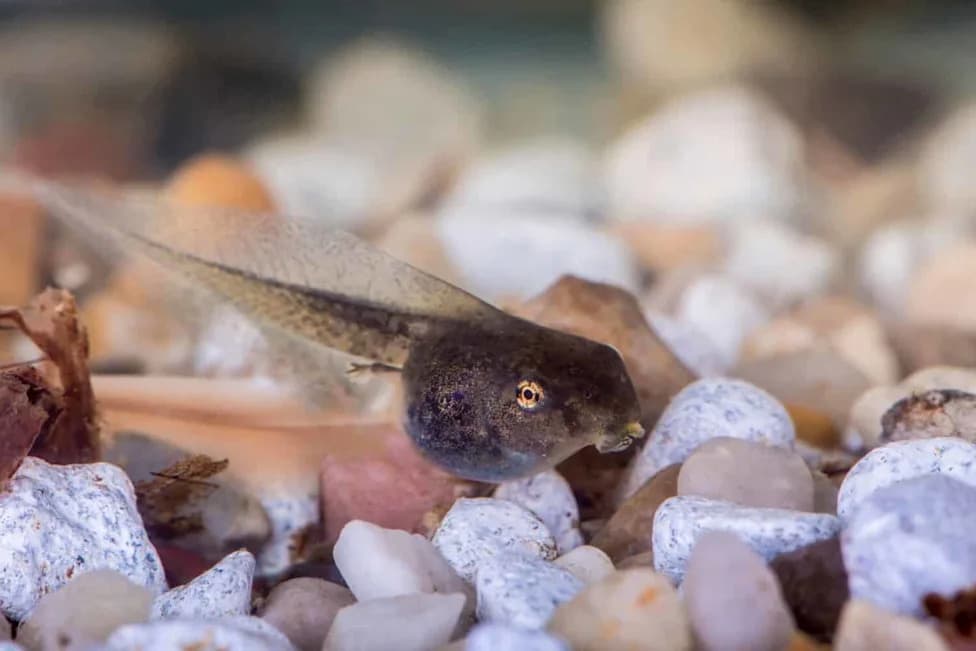
Mountain yellow-legged frog tadpoles swim in a tank at the Aquarium of the Pacific, Friday, Sept. 18, 2026, in Long Beach, Calif. (AP Photo/Jaimie Ding)(AP Photo/Jaimie Ding)
Why These Frogs Matter
Once among the most abundant vertebrates in their mountain stream habitats, mountain yellow-legged frogs play key ecological roles: as tadpoles they graze on algae and decaying material, helping keep waterways clean, and as adults they serve as prey for larger animals. By 2021, the wild population had dropped to fewer than 200 individuals.
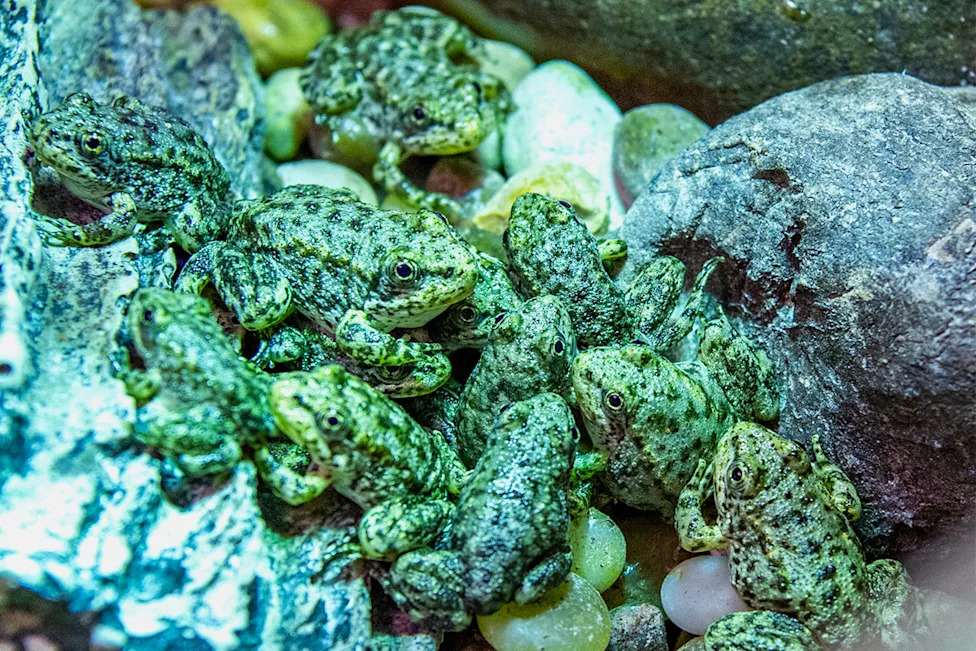
A group of mountain yellow-legged frogs pile on top of each other in a tank at the Aquarium of the Pacific, where they were being raised before being released into the local mountains, Tuesday, Sept. 15, 2026 in Long Beach, Calif. (Thomas R. Cordova/Long Beach Post via AP)(ASSOCIATED PRESS)
Major Threats
The species has suffered from multiple threats. Nonnative trout were introduced in the late 1800s for sport fishing and prey on tadpoles, driving local declines. Chytrid fungus, a deadly pathogen linked to global amphibian declines, has further decimated populations. The Bobcat Fire in fall 2020 destroyed roughly 95% of remaining habitat, and subsequent rains and mudslides worsened conditions; scientists salvaged a small number of tadpoles from the burn area, which were reared at the aquarium.
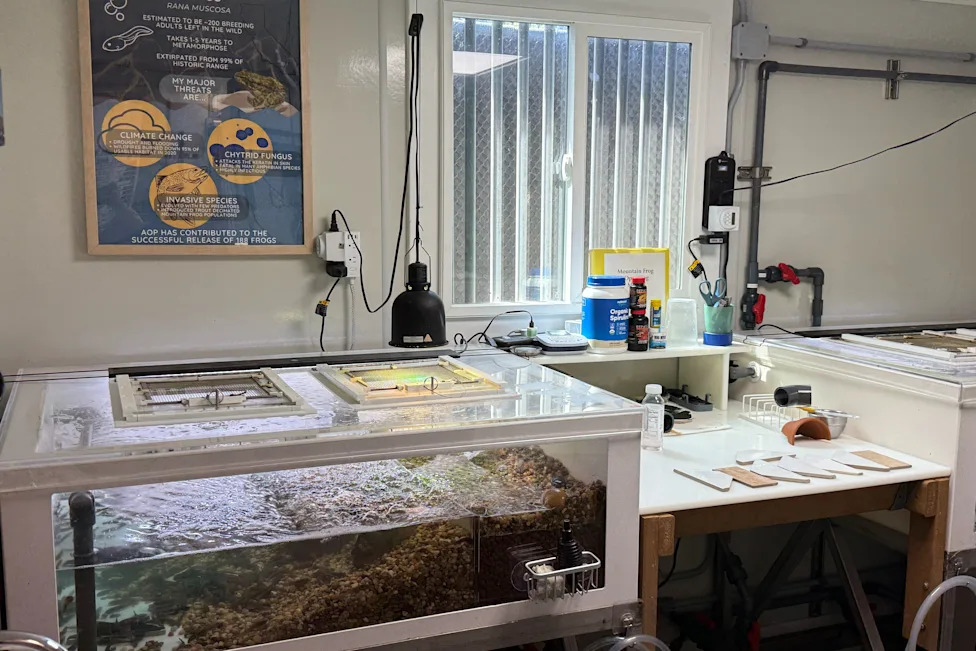
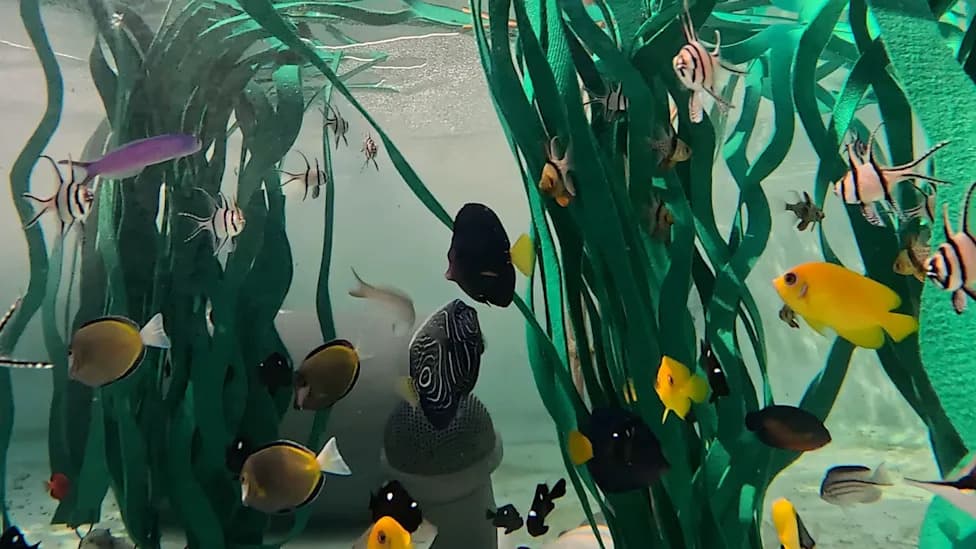
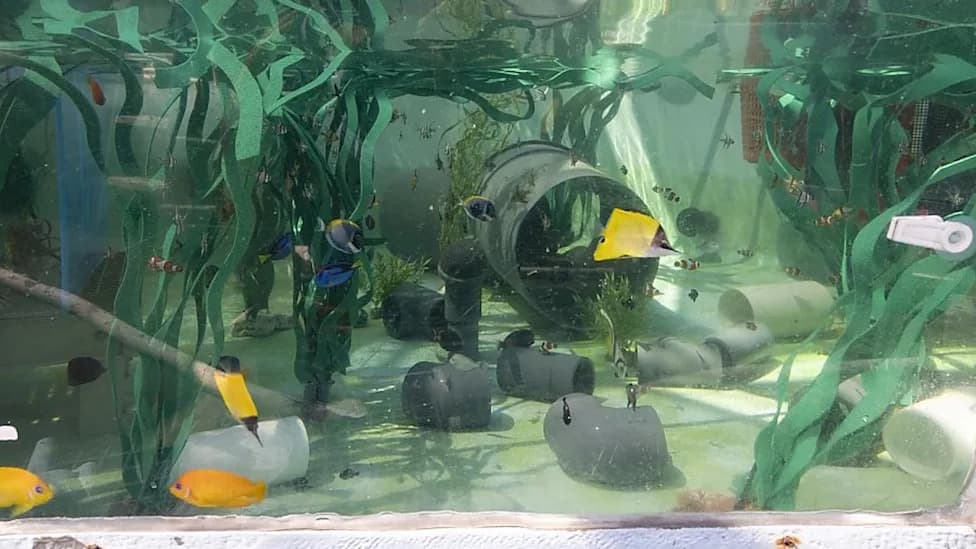
An aquarium tank runs in the frog nursery room at the Aquarium of the Pacific, Friday, Sept. 18, 2026 in Long Beach, Calif. (AP Photo/Jaimie Ding)(AP Photo/Jaimie Ding)
How The Nursery Prepares Tadpoles For Release
The Aquarium of the Pacific receives tadpoles bred at the Los Angeles and San Diego zoos. Recently, nearly 500 tadpoles arrived from the San Diego Zoo; some trace their lineage to the San Jacinto Mountains and others to the San Bernardino Mountains, so they are kept in separate groups to preserve subtle genetic differences.
Staff feed the tadpoles four to five times daily. At this stage they are voracious: keepers spread a mix of spirulina, fish food and calcium on small plates so the animals can graze much as they would on algae-covered rocks. Diets also include live crickets, fruit flies and occasional beetles to better mimic natural food items.
Care teams regularly vary water flow in tanks so developing frogs build strong limbs and adapt to different current conditions. About 60%–65% of tadpoles raised at the aquarium survive to the release-ready stage (all four limbs and no visible tail), a relatively high rate for captive-rearing programs.
"Although they're pretty slow growers, given the right conditions, frogs are pretty successful, so my hope is that we can get them back," said Erin Lundy, the aquarium's conservation initiatives manager.
From Nursery To Wild
Staff monitor frog behavior and fitness before release. Anecdotal moments — like a newly released frog immediately capturing and eating a housefly — underscore that many captive-reared individuals retain the instincts needed to survive in the wild. Continued habitat protection, removal of invasive trout where feasible, and disease management remain essential to long-term recovery.
What’s Next: Ongoing collaboration among zoos, federal agencies and conservation organizations aims to scale up breeding and release efforts while restoring and protecting mountain stream habitats to give released frogs the best chance to reestablish self-sustaining wild populations.
Help us improve.