The IDF issued a detailed rebuttal to the documentary NAZA, denying allegations of genocide and disputing claims about extreme civilian-to-combatant ratios and AI-directed targeting. The military said the film relies on interviews with personnel involved in preliminary intelligence work and omits legal and operational planners who authorize strikes. The IDF also described its "Lavender" system as an analyst tool, not a pre-approved hit list, and highlighted that human commanders make final strike decisions. However, the military has not published a comprehensive, on-record accounting of overall combatant-to-civilian casualty ratios.
IDF Rebuts 'NAZA' Film: Denies Genocide Claims, Disputes Civilian-Combatant Ratios and AI-Driven Targeting
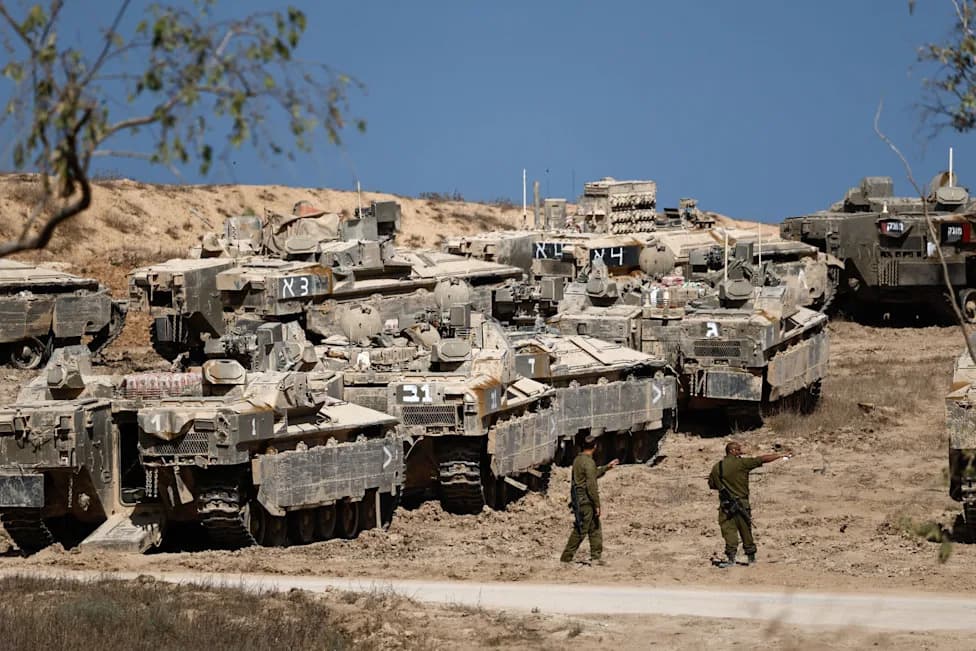
Israeli soldiers stand next to armored personnel carriers (APCs) near the Gaza border, in Israel, September 16, 2025 (photo credit: REUTERS/AMIR COHEN)
The Israel Defense Forces (IDF) on Thursday issued a detailed, point-by-point rebuttal to the documentary NAZA, rejecting its core allegations that the military committed genocide during the Gaza war and disputing several of the film’s central claims about targeting practices.
Key Rebuttals From the IDF
The IDF said its formal response was delayed because the filmmakers did not notify the military in advance and only recently allowed IDF representatives to view the film. After screening the documentary, the military released what it described as a comprehensive reply focused on three main points:
- Combatant-civilian ratios: The IDF rejects the film’s assertions that strikes produced civilian-to-combatant ratios as high as 500:1 or that attacks with 200:1 or 20:1 ratios were frequent.
- Artificial intelligence: The military says AI tools did not make autonomous strike decisions; human officers and operational commanders make final targeting and strike calls.
- Source credibility: The interviewees featured in the film, the IDF argues, were involved in preliminary intelligence work and did not participate in final strike planning or authorization.
On Reported Ratios and Targeting Documents
The IDF contends that documents mentioning theoretical ceilings (for example, references to 20:1 or 100:1 ratios) are not operational authorizations but are treated as maximums—analogous, the IDF says, to sentencing maximums in criminal law that are rarely applied in practice. The military explained that such internal thresholds do not automatically translate into the estimated civilian casualties of a planned strike; actual decisions may yield much lower estimated ratios once strike planning, precision munitions, warnings and other measures are taken into account.
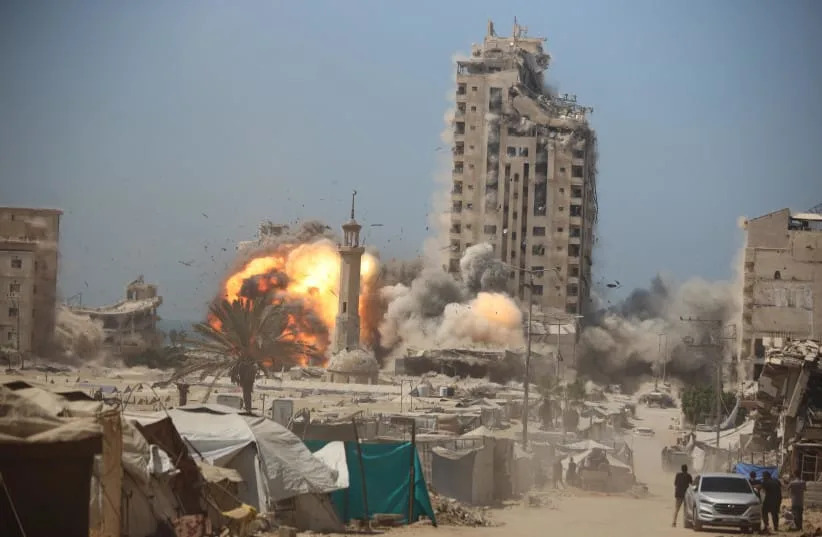
IDF precision strike brings down a Hamas-used high-rise in Gaza City, shortly after residents were ordered to evacuate, September 5, 2025. (credit: TPS-IL)
On AI And The 'Lavender' System
The IDF described "Lavender" as a database and analyst-assistance tool—not a pre-approved hit list—and insisted that AI has never independently selected targets. According to the statement, target identification, strike planning and legal review remain human-led processes carried out by qualified analysts, operational planners and commanders.
Who Was Interviewed?
The film features 24 interviewees described as former or current IDF intelligence personnel. The IDF argues these individuals spoke from a "midstream" intelligence perspective—identifying potential targets and flagging them for follow-up—but were not part of the legal and operational cells that finalize strike plans, weigh proportionality, or cancel or modify operations to limit civilian harm.
"The film presents a distorted, misleading, and unrealistic picture of the IDF's target planning and strike processes," the IDF said, accusing the documentary of selective editing and omission of context.
Investigations, Oversight And Unanswered Questions
The military highlighted its internal review processes, saying it has opened more than 150 criminal investigations and over 3,000 disciplinary probes related to conduct during the Gaza operations. At the same time, the IDF acknowledged it has not provided an on-record, comprehensive accounting of aggregated combatant-to-civilian casualty ratios.
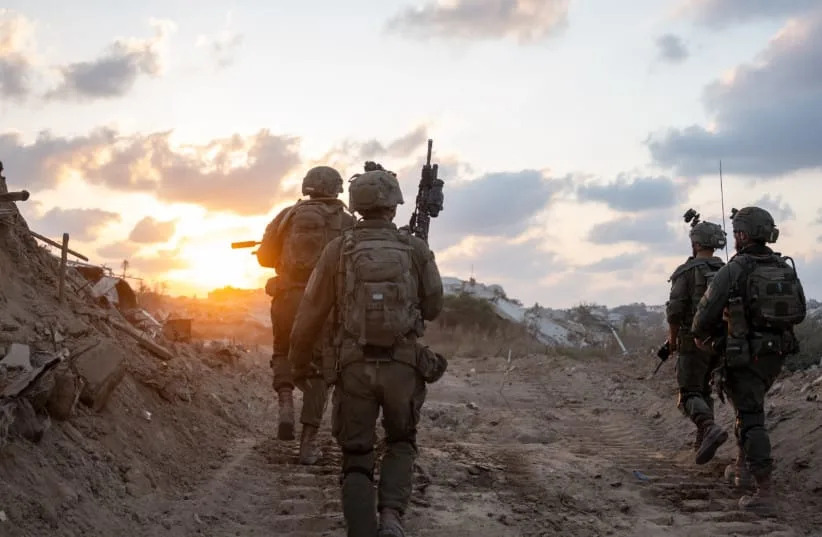
IDF Paratroopers Brigade operating in the Gaza Strip. Pictures released on August 24, 2026. (credit: IDF SPOKESPERSON'S UNIT)
Independent reporting referenced by the Jerusalem Post estimates that roughly 25,000 of those killed in Gaza were Hamas members, with an additional anecdotally cited 3,000–5,000 killed by errant rocket fire or internal repression—leaving a substantial remaining death toll that likely includes many civilians. The IDF’s statement did not provide a different aggregated civilian-casualty figure.
Conclusion
The IDF concluded that NAZA omits essential context—such as legal review, operational planning and repeated precautions intended to reduce civilian harm—and therefore presents a one-sided narrative that the military called manipulative. The Jerusalem Post has requested a response from the NAZA filmmakers.
Image captions in the original report referenced IDF operations and released photos; those images and captions were retained by the original outlet.
Help us improve.