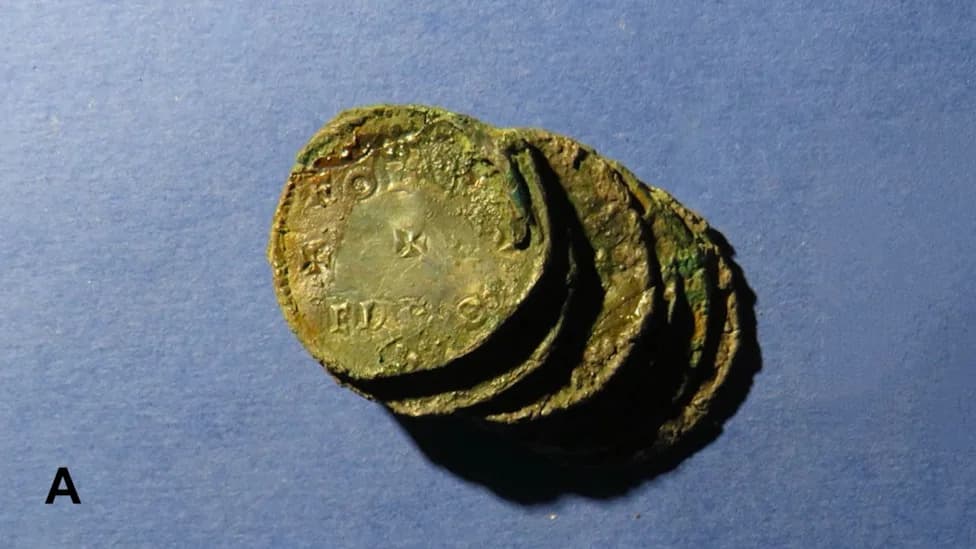
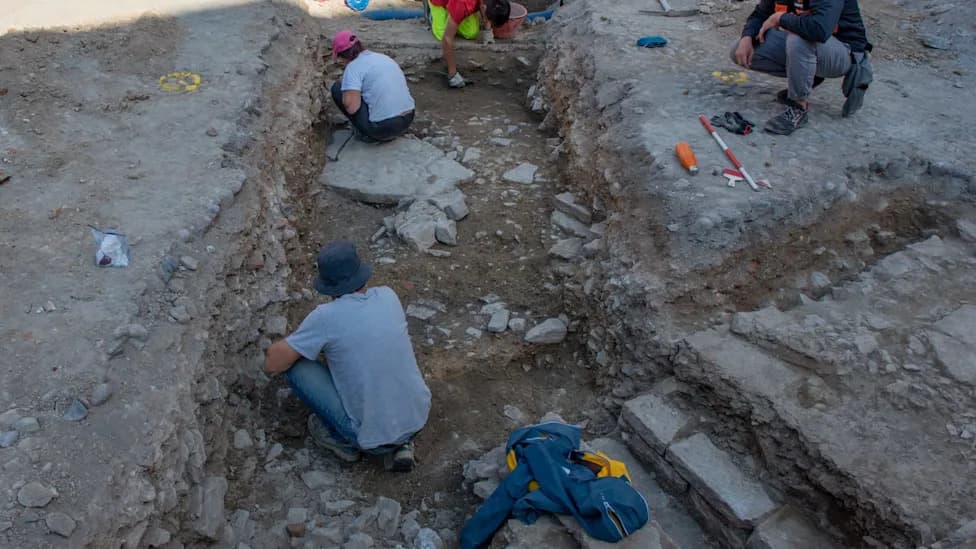
Excavations at Corent in central France have uncovered evidence that may identify one of the largest ancient mints of its era. Finds include furnaces, flint, water access, and a lead test disc whose punches match Arvernian staters—suggesting on-site design testing and possible gold and silver production. If confirmed by further metallurgical analysis led by Lumière University Lyon 2, the site could be reinterpreted as the Arverni tribe's economic center before Roman conquest.
Ancient Mint at Corent? New Finds Suggest a Massive Gold and Silver Coin Workshop
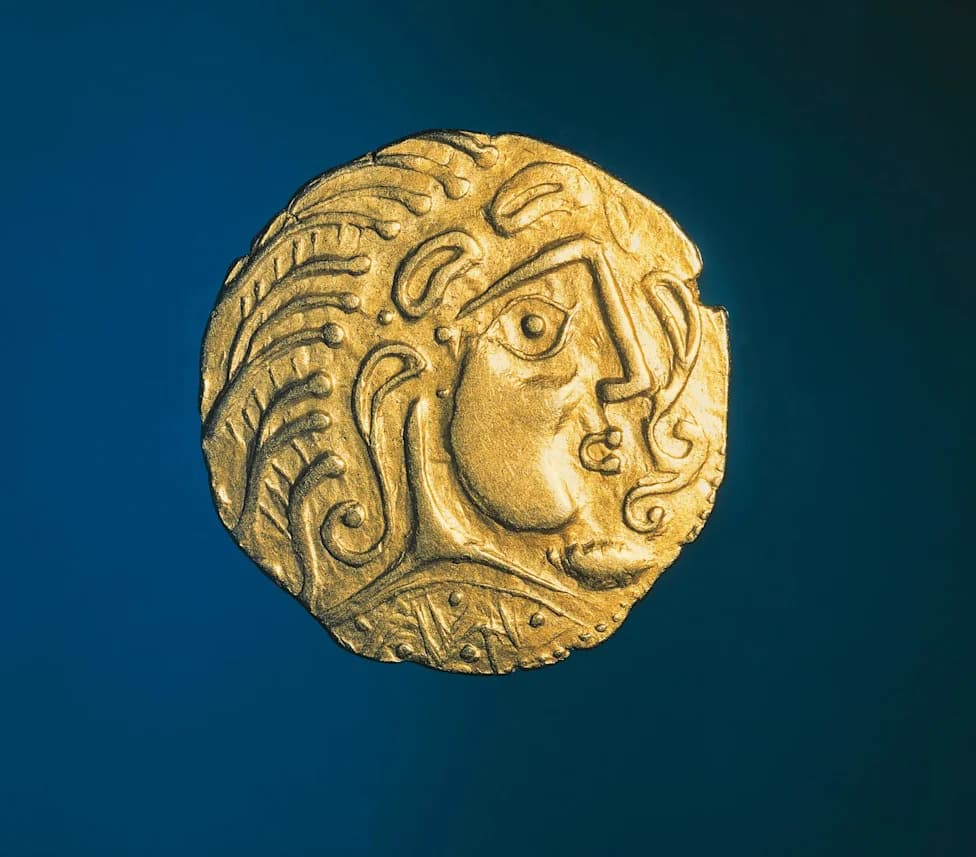
A Mysterious Lead Disc Could Rewrite Money HistoryDEA PICTURE LIBRARY - Getty Images
New archaeological evidence from Corent, a pre-Roman Gallic town in central France, suggests the site may have hosted one of the largest coin-production operations of its time. Excavations beside a stone wall—locally up to two feet thick—have uncovered features and debris that point to large-scale minting of gold and silver coins as well as bronze.
What Researchers Found
Teams working on the roughly 5,000-square-foot area, excavated intermittently for about two decades, uncovered furnaces, water access, concentrations of flint, and a cluster of metalworking traces. Early work in 2024 revealed bronze coin blanks, a coin-die fragment, and metal waste, but 2026 brought evidence that stretches beyond bronze: gold and silver production now appears likely.
"I believe this discovery offers not only the largest known coin workshop in Celtic Europe, but in the entire ancient world,"
— Matthieu Poux, excavation director, as reported in Le Monde
Key Artifact: The Lead Test Disc
The most tangible 2026 discovery is a lead disc bearing punch impressions that match designs on Arvernian staters—the gold or silver coins that underpinned Celtic trade. The impressions show a horse and rider, a wheel, and a head, consistent with known Arvernian motifs. Specialists interpret the lead disc as a low-cost model used to test new dies before striking coins in precious metal.
Evidence of On-Site Metal Processing
Archaeologists also found notable quantities of flint near the work areas. In combination with furnaces and nearby water, this suggests workers may have refined and processed precious metals on-site. Flint and salt are known to be used in metal processing, and the relative lack of scrap metal from the site's apparent production peak suggests recycling of spent metal back into coin blanks.
Why This Matters
If confirmed by further analysis led by researchers from Lumière University Lyon 2, these finds could recast Corent as a major economic center for the Arverni tribe and an important seat of pre-Roman Gallic power. The scale and organization inferred from the remains may force historians to rethink patterns of Celtic coin production and trade before Roman conquest.
Open Questions
Despite two decades of work, many questions remain. Key next steps include metallurgical analysis to confirm on-site refining of gold and silver, detailed study of the lead disc and die fragments, and contextual analysis to establish the workshop's precise chronology and output scale relative to contemporary mints.
Even now, Corent continues to yield surprises—and may yet reveal whether it was one of the ancient world's greatest mints.
Help us improve.