Oatly is printing messaging from Covering Climate Now's "89 Percent Project" on its oat milk cartons to highlight a global finding that most people want stronger government action on climate. The campaign references a 2024 Nature Climate Change study of nearly 130,000 people in 125 countries that found 89% support for intensified political action. Supporters say the effort corrects an underreported majority view; critics warn it blurs the line between journalism and advocacy and raises concerns about media–corporate ties. Oatly expects the packaging to reach U.S. stores by January.
Oatly Prints '89 Percent Project' Climate Message on Cartons, Sparking Debate Over Journalism and Advocacy
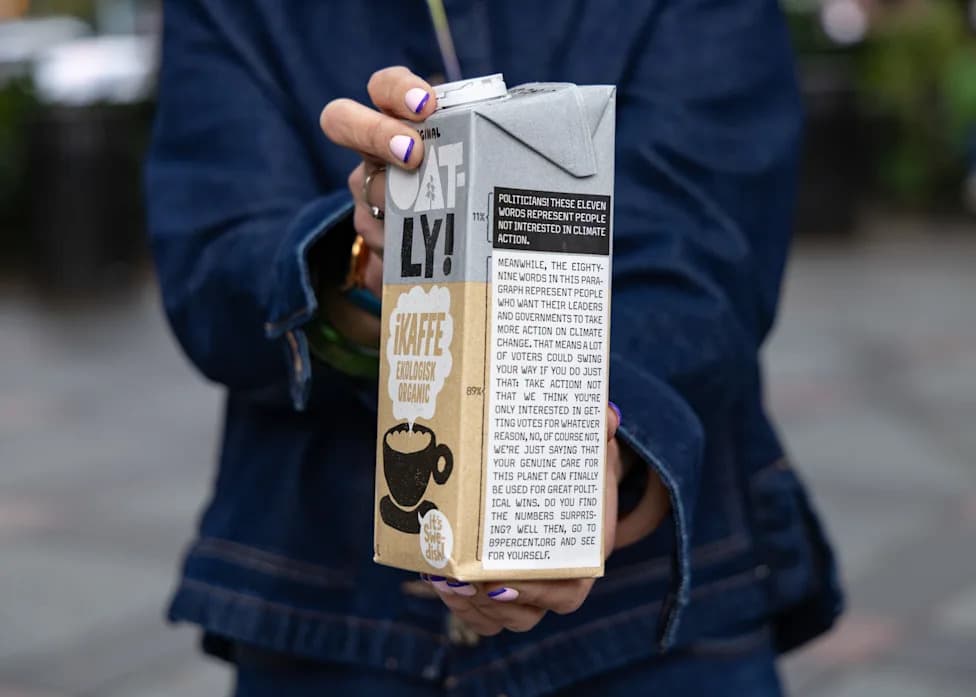
Caroline Reid, with the Swedish oat milk company Oatly, shows a sample of the company's new milk carton climate campaign for New York Climate Week on Wednesday, Sept. 23, 2026, in New York. (AP Photo/Anton L. Delgado)(AP Photo/Anton L. Delgado)
Oatly, the Swedish oat-milk maker, has started printing messaging from Covering Climate Now's "89 Percent Project" on its cartons, asking shoppers to note that a large majority of people worldwide want governments to act on climate change.
What Appears on the Cartons
The packaging features two stacked text boxes on one side: a small top box addressed to politicians and a larger lower box containing an 89-word statement arguing that most people back stronger government climate action and that such action can produce political benefits. Oatly first released the cartons in Sweden and has since expanded distribution to Belgium and Germany; the company expects the packaging to be available in U.S. stores by January, according to Caroline Reid, Oatly's senior sustainability director.
About the "89 Percent Project"
The initiative was launched by Covering Climate Now, a global journalism nonprofit that promotes collaborative climate reporting, training and awards. Its name references a 2024 study published in Nature Climate Change that surveyed nearly 130,000 people across 125 countries and found that 89% of respondents want intensified political action on climate change.
'Most people who want climate action don't realize they are in the "silent majority," ' said Mark Hertsgaard, executive director of Covering Climate Now. 'Elements of civil society all around the world are picking up this 89% message and spreading it themselves.'
Support, Motivation and Corporate Alignment
Reid said she first read about the project in The Guardian and that the campaign aligns with Oatly's mission to encourage consumers to choose dairy alternatives and support systemic shifts toward lower-carbon food systems. 'Companies should be taking much more responsibility,' she said at an event during New York Climate Week, urging businesses to reduce their footprints and use their platforms to promote a positive future.
Journalism, Advocacy and Concerns
While some praise the effort for amplifying an underreported public consensus, experts warn it blurs traditional boundaries between journalism and advocacy. Seth Stern of the Freedom of the Press Foundation noted that economic pressures have broadened the forms journalism can take, creating room for advocacy-minded projects. By contrast, Clay Calvert, a First Amendment scholar at the University of Florida, cautioned that newsroom collaborations with companies can create risks of self-censorship or preferential coverage of partners.
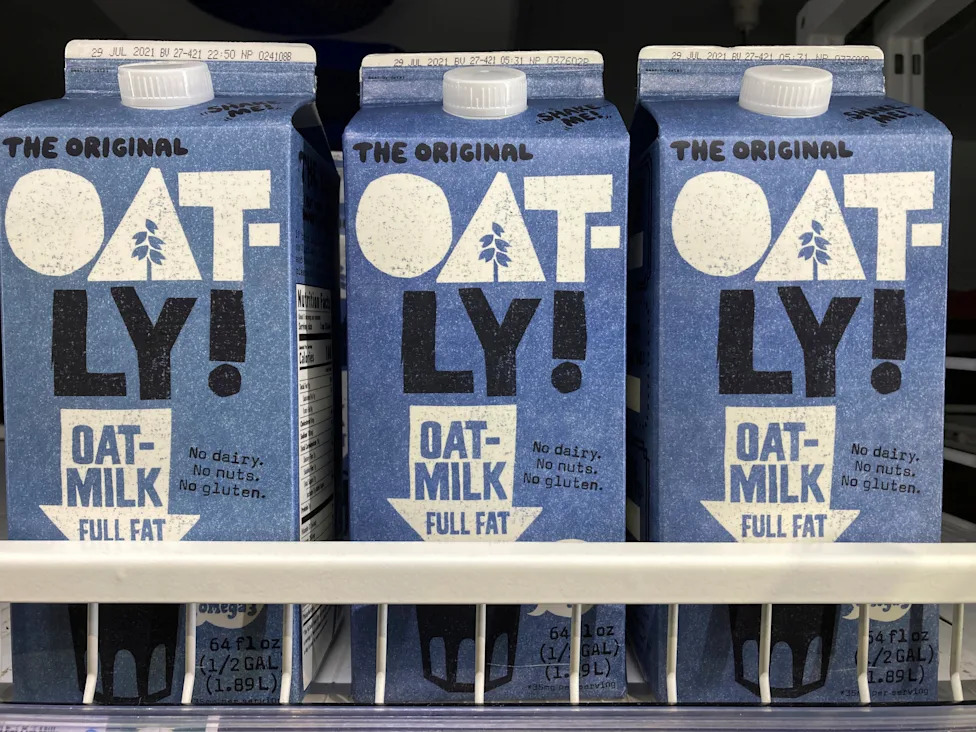
FILE - Oatly containers are displayed at a grocery store May 18, 2021, in North Miami, Fla. (AP Photo/Marta Lavandier, File)(AP Photo/Marta Lavandier)
Hertsgaard said Covering Climate Now has not received payment from Oatly and called the company an 'ally.' 'As a journalist, I feel like we have to have the courage to not just report the facts, but to draw the connections,' he added.
Political Context
The campaign arrives amid intensified political debate over climate policy. President Donald Trump has repeatedly criticized climate initiatives and, during the 2025 U.N. General Assembly, called climate change a 'con job' and labeled renewable-energy efforts a 'Green Scam,' positions at odds with the scientific consensus that human-caused greenhouse-gas emissions are driving global climate change. That rhetoric has prompted some organizations to take clearer public stances in support of climate solutions.
The move by Oatly — a consumer brand placing a journalism-backed message on its product packaging — raises broader questions about the role companies can play in civic conversations and how news organizations should manage partnerships while preserving editorial independence.
Associated Press writer Jennifer McDermott contributed to this report.
The Associated Press' climate and environmental coverage receives financial support from multiple private foundations. The AP is solely responsible for all content.
Help us improve.