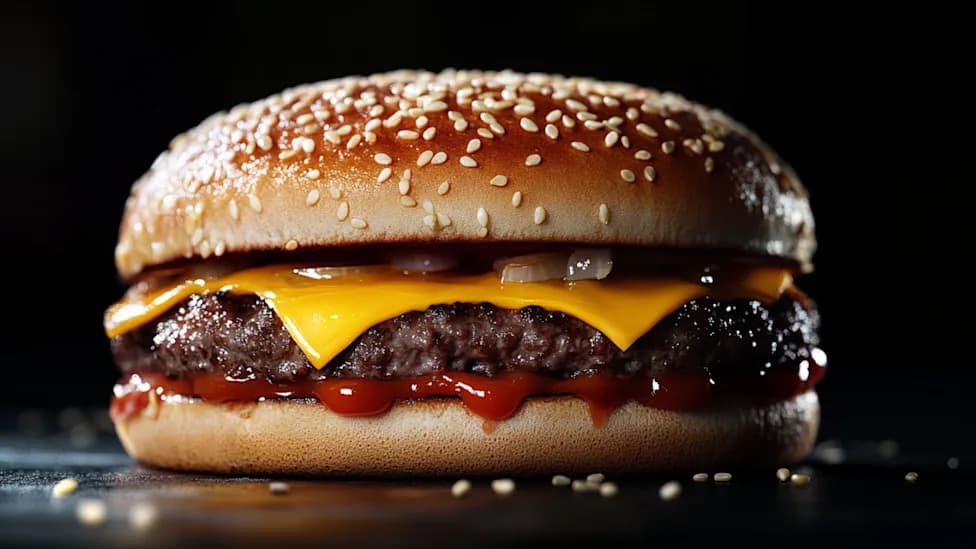
In an online randomized trial of more than 10,000 U.S. adults, several climate-focused menu labels modestly reduced the share of participants choosing high-emission fast-food entrées. Compared with a QR-code control (53% choosing high-impact items), rates fell to 49% (environmental cost), 48% (climate grade), 46% (grade plus scale), 45% (simple high-impact tag), and 47% (warning label). The largest effects came from the plain high-impact marker and the grade-with-scale design, and people already concerned about climate change responded most. The study was hypothetical and online, so real-world results could differ, but clear, contextual labels appear promising as a simple nudge.
Tiny Climate Labels on Fast-Food Menus Nudged Some U.S. Diners Toward Lower‑Impact Choices

Photo Credit: iStock
A small visual cue on a menu can change what people order — even at fast-food restaurants. A randomized online study published in JAMA Network Open and reported by ScienceAlert found that several types of climate-focused menu labels modestly nudged some U.S. adults away from higher-carbon entrées.
Study Design
More than 10,000 U.S. adults completed an online experiment in which each person chose one item from a simulated 16-item menu modeled after a major fast-food chain. Participants saw just one labeling format: a QR-code control, an environmental "cost" value, a climate grade, a climate grade paired with a contextual scale, a simple "high climate impact" marker, or a warning-style "high climate impact" notice.
Key Results
Choices differed modestly but consistently across label conditions. In the QR-code control group, 53% of participants selected a high-climate-impact item. That share fell to:
- 49% with the environmental-cost label
- 48% with the climate-grade label
- 46% with the climate-grade-plus-scale design
- 45% with the simple high-impact marker
- 47% with the warning-style label
The largest declines came from the plain "high climate impact" tag and the climate grade paired with a visual scale. Researchers also found no evidence that participants were trading away nutrition to choose lower-emissions items.
Who Responded Most?
Participants who already expressed greater concern about climate change were more likely to change their order in response to the climate grade and high-impact labels. Demographic factors such as age, gender, and political affiliation showed no meaningful effect on label responsiveness.
Limitations
The study has important constraints: it was conducted online rather than in real restaurants; participants selected a single entrée from a short menu; no real prices were attached; and the emissions estimates were based on a menu modeled after a single fast-food chain. Because of these factors, effects in real-world dining environments could differ.
'This randomized clinical trial's findings suggest that using climate labels on restaurant menus, particularly climate grade plus scale designs, may decrease climate impact and improve nutrition of restaurant orders.'
Implications
For restaurants and food brands seeking to steer customers toward lower-impact meals, the evidence favors clear, easy-to-read labels. Simple visual cues — like a contextual grade or an obvious high-impact tag — may function like current nutrition facts: quick comparison tools that help diners make lower-carbon choices without extra decoding. The authors and commentators also emphasize that modest menu nudges are only one part of reducing food-related emissions; broader habits such as reducing high-emission meats, increasing plant variety, and cutting food waste remain crucial.
Bottom line: Straightforward climate labels can slightly reduce selection of high-emission fast-food items in an online setting, with the largest effects from simple high-impact tags and grades accompanied by a scale, but real-world impact needs further study.
Help us improve.