In an online randomized trial of more than 10,000 U.S. adults, simple climate labels on a 16-item simulated fast-food menu nudged diners toward lower-emission options. The most effective labels—a climate grade with a scale and a plain "High Climate Impact" tag—reduced selections of high-impact items from 53% to about 45–46%. Nutrition quality (Nutrient Profile Index) did not worsen, and effects were stronger among participants already concerned about climate change. Results are promising but limited by the online, simulated setting.
Tiny Climate Labels on Fast-Food Menus Nudged 10,000+ People to Choose Lower-Carbon Meals
Scientists Discover a Vagus Nerve Signal That Links Food Directly to Memory Formation
New research suggests that a small, easy-to-read climate label on a fast-food menu can change what people order. In an online randomized clinical trial of more than 10,000 U.S. adults, simple labels indicating a meal's climate impact nudged some diners toward lower-emission options without worsening overall nutrition quality.
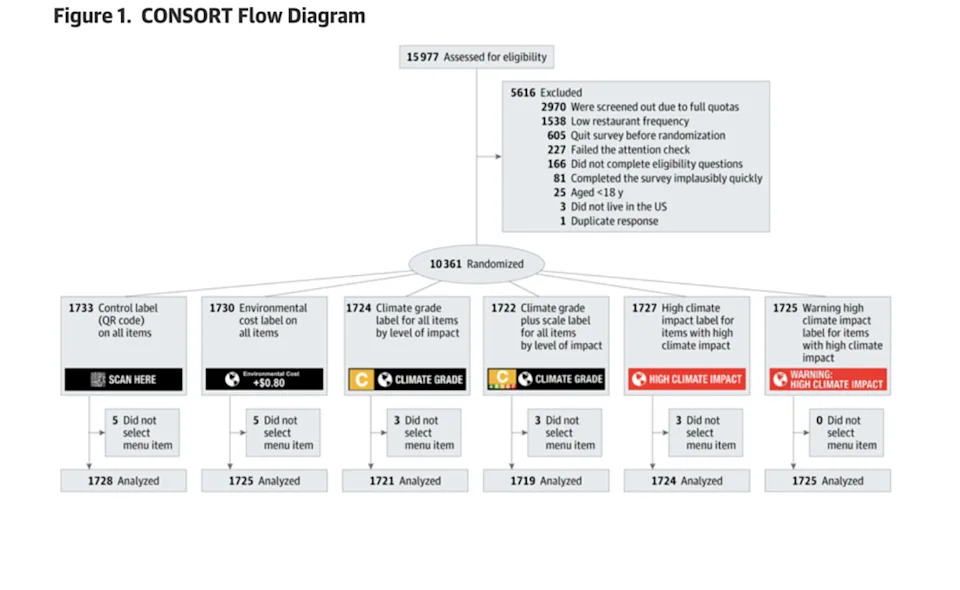
An example of the types of labels that were shown in the study assessing whether climate labels might change behavior for fast-food diners. (Reimold et al.,JAMA Network Open, 2026.)
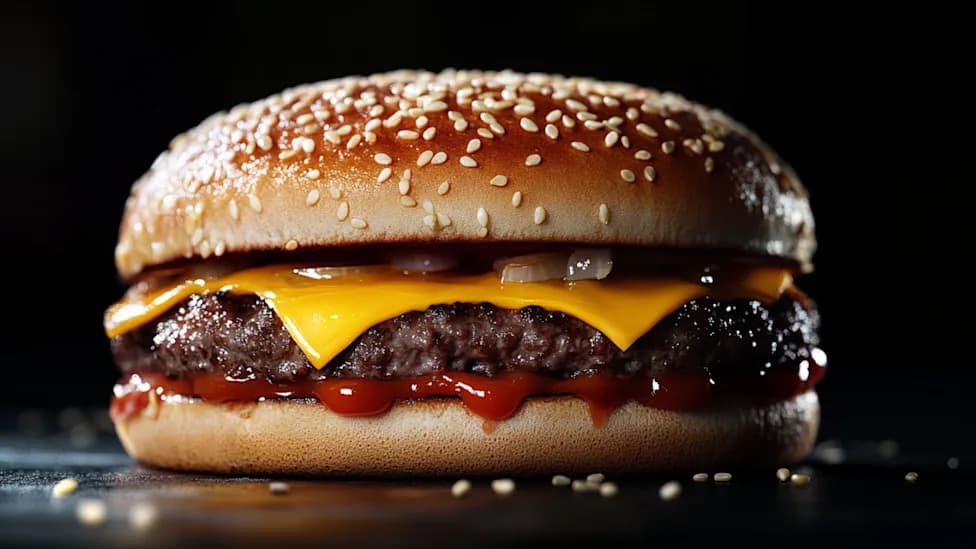
Study Design: Researchers recruited a quota sample broadly representative of the U.S. population by gender, race and ethnicity, age, and education. Participants selected one item from a 16-item simulated fast-food menu modeled on a popular U.S. chain. Menu items included beef burgers, chicken, fish, salads, and a plant-based burger.

(Matthew Ennis/Shutterstock)
The team randomly assigned participants to view one of six label conditions alongside each menu item: a QR code (control); an environmental "cost" expressed in dollars; a climate grade; a climate grade plus a grade scale; a simple "High Climate Impact" tag on the highest-emission items; and a more emphatic "Warning: High Climate Impact" label.

YouTube Thumbnail
Key Findings
In the control group (QR code only), 53% of participants chose an item classified as having a high climate impact. Compared with that baseline, the shares selecting high-impact items were:

Subscribe to ScienceAlert's free fact-checked newsletter
- Climate Grade: 48%
- Grade + Scale: 46%
- Simple "High Climate Impact" Tag: 45%
- Warning Label: 47%
- Environmental Cost (dollars): 49% (not statistically different from control)
Although the changes were modest, the climate grade plus scale and the plain "High Climate Impact" label produced the largest reductions in high-impact selections.
Nutrition and Subgroup Results
The study also measured nutrition quality using the Nutrient Profile Index (a composite of calories, saturated fat, sodium, sugar, and beneficial components such as fruits, vegetables, nuts, and fiber). There were no significant differences in overall nutrition scores across label groups, which suggests the nudges toward lower-emission options did not lead to worse nutritional choices.
Labels were most effective among participants who already reported greater concern about climate change. Effects did not differ meaningfully by age, gender, or political affiliation.
Limitations
Important caveats apply: the experiment was conducted online (not in real restaurants), participants chose a single entrée with no real money spent, emissions values were estimated, and the menu represented one fast-food chain with a limited item range. A change in a simulated online choice may not translate exactly to in-person restaurant behavior.
Implication: Small, well-designed climate labels—especially clear grades with contextual scales or simple high-impact tags—can modestly shift consumer choices. If deployed at scale, even small individual changes could add up given that roughly one-third of U.S. adults eat fast food on a typical day.
Source: Reimold et al., JAMA Network Open (2026). The trial demonstrates promise for menu-based climate labeling but calls for real-world field tests to confirm effectiveness and design optimization.
Help us improve.