The study analyzed data from 93 countries and found that higher domestic cat density correlates with higher national happiness scores, a pattern most evident in Nordic nations with about 1,700–2,000 cats per 10,000 people. However, higher prevalence of the parasite Toxoplasma gondii was associated with lower happiness, and in those countries the cat–happiness link weakened. The authors stress these are country-level associations, not proof of causation, and call for further research that combines socioeconomic, ecological and public-health perspectives.
Countries With More Indoor Cats Tend To Be Happier — But A Parasite Complicates The Story

Countries with more indoor cats are happier, but there’s a catch
New research suggests a surprising link: countries with higher densities of indoor pet cats tend to report greater national happiness — but that pattern weakens in nations with higher rates of a common cat-borne parasite, Toxoplasma gondii.
Study Overview
Mexican researchers analyzed data from 93 countries, combining measures of household income, GDP, healthcare expenditures, domestic cat density and national prevalence of Toxoplasma gondii. Their results, published in PLOS One, reveal country-level associations between cat density, parasite exposure and reported well‑being.

Larry drops a dead mouse from his mouth, outside 10 Downing Street (AFP via Getty)
Key Findings
Cat Density and Happiness: Nations with more indoor cats generally scored higher on national happiness indices. The trend is most visible in Nordic countries — Finland, Denmark and Sweden — which reported roughly 1,700–2,000 cats per 10,000 people and occupy top positions on global happiness lists.
Toxoplasma Prevalence Weakens the Link: Where exposure to Toxoplasma gondii was higher, the positive relationship between cat density and happiness largely disappeared. Countries including Lebanon, Yemen, Gabon and Ethiopia had some of the highest parasite prevalence and were nearer the bottom of the happiness rankings. Saudi Arabia and Brazil, however, were notable exceptions with relatively high parasite prevalence but still comparatively high happiness scores.

Volunteers check whether a stray cat is neutered or not at a park in Jakarta (AFP via Getty)
"Countries with more cats tended to report higher levels of happiness while countries with higher exposure to Toxoplasma gondii tended to report lower levels of happiness," the authors write. They emphasize these are associations at the country level and do not establish causation.
Possible Explanations
Researchers suggest the patterns arise from interacting social, economic and ecological factors rather than a direct causal effect of pets or parasites on happiness. Cat ownership is often associated with higher income, better access to healthcare and urban living conditions that can both increase well‑being and reduce infectious disease risk. Conversely, higher Toxoplasma prevalence often reflects poorer sanitation, limited healthcare access or environmental conditions that favor transmission.
Why It Matters
The study highlights the value of integrating biological and ecological variables into social-science research on well‑being. Understanding population-level happiness may require considering not only economic and healthcare indicators but also human–animal interactions and infectious-disease ecology.
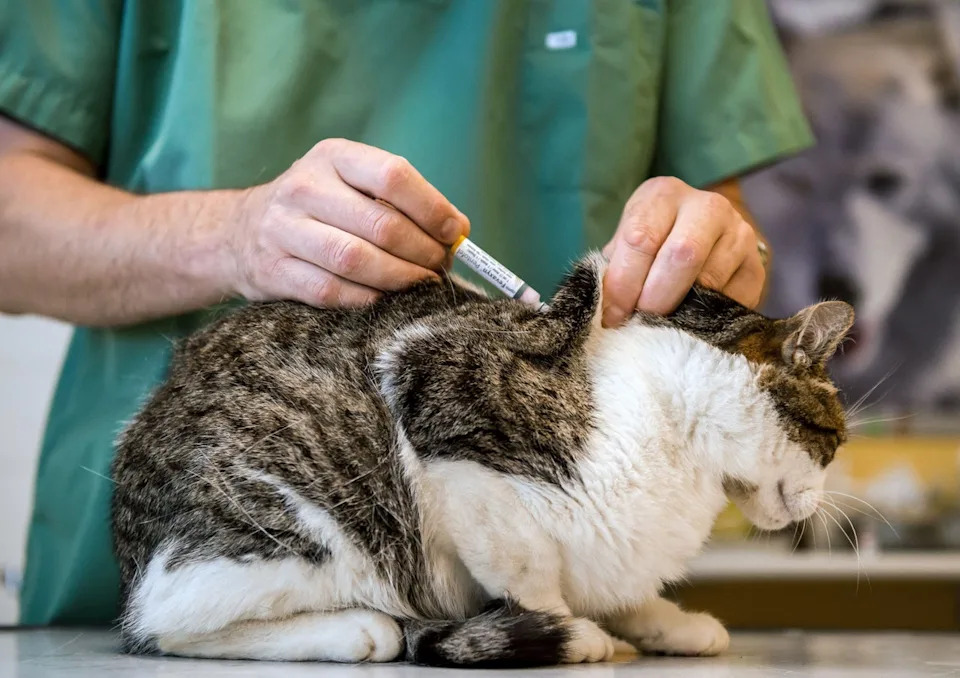
A cat is vaccinated (AFP via Getty)
Next Steps: The authors call for follow-up research to probe mechanisms behind these associations, ideally using longitudinal and individual-level data to test causality and to explore how public-health measures, pet care practices and environmental conditions shape both parasite exposure and well‑being.
Visuals reported alongside the study included everyday human–cat interactions, such as a cat named Larry outside 10 Downing Street and volunteers checking neutering status of stray cats in Jakarta — concrete reminders that human–animal relationships vary widely across countries.
Help us improve.