The PLOS One study analyzed data from 93 countries to explore links between national happiness, cat density, and exposure to the parasite Toxoplasma gondii. Countries with more cats generally reported higher happiness, while greater T. gondii exposure correlated with lower happiness. Unexpectedly, higher cat density tended to align with lower parasite exposure, likely reflecting differences in pet care, sanitation and socioeconomic conditions. The authors emphasize these are country‑level associations and call for individual longitudinal studies to assess causation.
Global Study Links Higher Cat Density With Greater National Happiness — Unexpected Twist on Parasite Exposure

(Elena Zaretskaya/Moment RF/Getty Images)
If you want a simple way to potentially boost household well‑being, owning a cat may be worth considering. An international team of researchers analyzed publicly available data from 93 countries to investigate links between national happiness scores, domestic cat density, and exposure to the parasite Toxoplasma gondii, for which felines are the primary host.
The study, published in PLOS One (2026), examined country‑level measures of reported happiness alongside estimates of cat density and population exposure to T. gondii. The authors also included national wealth indicators to account for socioeconomic differences that strongly influence quality of life.
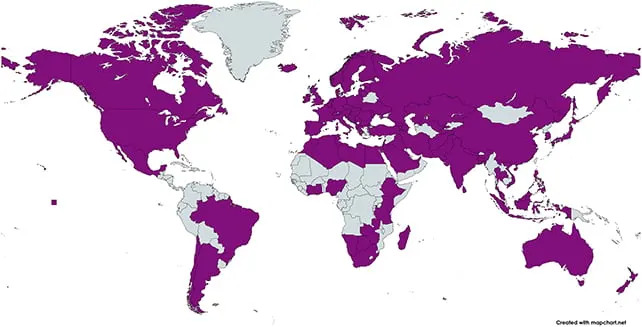
Data from the shaded countries were used in the study. (Borráz-León et al.,PLOS One, 2026)
Key Findings
The main associations reported were:
- Countries with higher cat density tended to report higher national happiness scores.
- Countries with greater estimated exposure to T. gondii tended to report lower happiness scores.
- Contrary to a simple expectation, higher cat density at the country level was generally associated with lower estimated T. gondii exposure.
These patterns are correlations at the national level and do not establish causation. The researchers stress that some countries can disproportionately influence cross‑national analyses — for example, China showed a relatively high happiness score despite lower cat density than many other countries in the sample.

YouTube Thumbnail
Why the Unexpected Parasite Pattern?
Because cats are the principal host of T. gondii, one might expect more cats to mean more parasite exposure. The study suggests several reasons that might explain the opposite association at the country level:
- Wealthier countries tend to have higher pet ownership but also better pet management (indoor cats, regular veterinary care, commercial diets), which can reduce parasite transmission.
- T. gondii is transmitted through multiple routes — not only direct contact with cats but also undercooked meat, contaminated water or soil — so national exposure depends on food safety, sanitation and other environmental factors.
- Differences in surveillance, testing and reporting across countries can affect estimated exposure levels.
"What we found is that countries with more cats tended to report higher levels of happiness, while countries with higher exposure to Toxoplasma gondii tended to report lower levels of happiness," the authors summarized in a press release. Biologist Javier I. Borráz‑León added that the results "go against the simple assumption that having more cats necessarily means greater parasite exposure" and highlight the role of pet management, sanitation and socioeconomic conditions.
Public Health and Research Implications
Population happiness affects public health and social functioning: higher stress and poorer mental health are linked to reduced productivity and greater demand for healthcare. The study contributes to a growing body of evidence that human–animal relationships and ecological factors can be part of that picture.
The authors recommend follow‑up research using individual‑level and longitudinal designs to clarify whether pet ownership directly affects well‑being and how parasite exposure and other confounders interact over time. Tracking cat owners and non‑owners within countries would help assess causation and mechanisms more robustly.
The research is published in PLOS One (Borráz‑León et al., 2026).
Help us improve.