California has enacted Assembly Bill 1954 — the PAR (Protecting Access to Reservations) Act — which makes it illegal for third-party brokers to list or resell tee times at publicly owned golf courses without a written permission agreement. The law, carried by Assemblymember Chris Ward and sponsored by the California Alliance for Golf, follows 2024 reports of brokers hoarding municipal tee times and a 2025 FBI indictment tied to roughly $1 million in unreported income. The measure applies only to public courses and does not increase the number of available tee times; it clarifies that bookings should be made directly through a course or an authorized partner.
California Signs 'PAR' Act, Banning Tee-Time Brokers From Public Golf Courses

California GolfGetty Images
Weekend golfers across California often know the frustration: you try to reserve a municipal tee time and seconds later the slot is gone. Lawmakers say the culprit in many cases was not a rush of players but third-party brokers who scooped up public tee times to resell at a markup. A new state law aims to stop that practice at publicly owned courses.
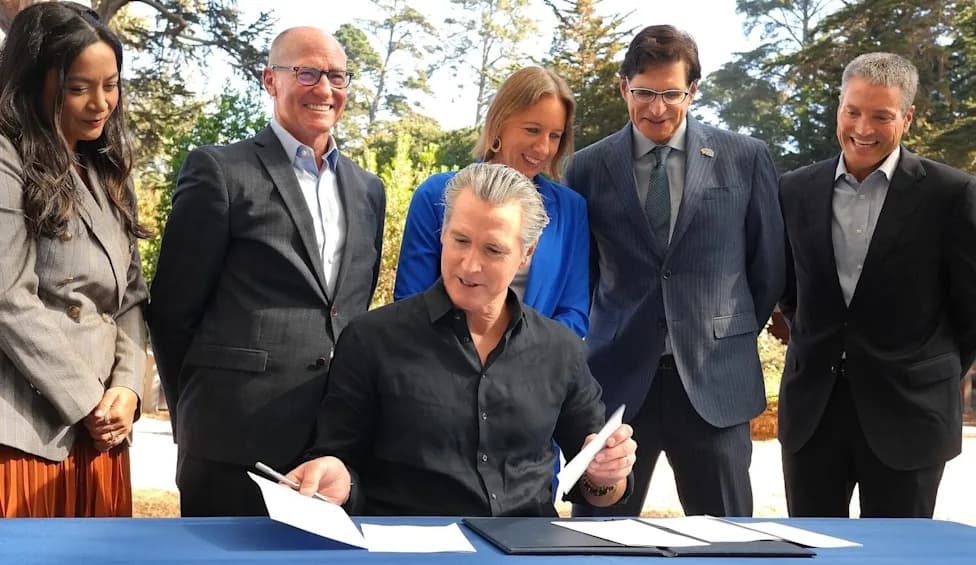
On Sunday, September 27, Governor Gavin Newsom signed Assembly Bill 1954, commonly called the PAR (Protecting Access to Reservations) Act. The statute prohibits third-party websites and brokers from listing, advertising, promoting, selling, or transferring tee times for publicly owned golf courses unless they have a written permission agreement from the course.
The bill was carried by Assemblymember Chris Ward (D–San Diego) and sponsored by the California Alliance for Golf, an advocacy group run by the Southern California Golf Association. Supporters say the law preserves access to public recreational resources for local residents, seniors, students and families.
How the Practice Came to Light
Reports in 2024 revealed brokers reserving large blocks of municipal tee times and reselling them on social media and messaging apps, often charging an additional broker fee of $30–$40 per slot on top of the green fee. Golf content creator Dave Fink documented one such transaction on social platforms, drawing wider attention. The Los Angeles Department of Recreation and Parks opened an investigation into tee-time brokering after those reports.
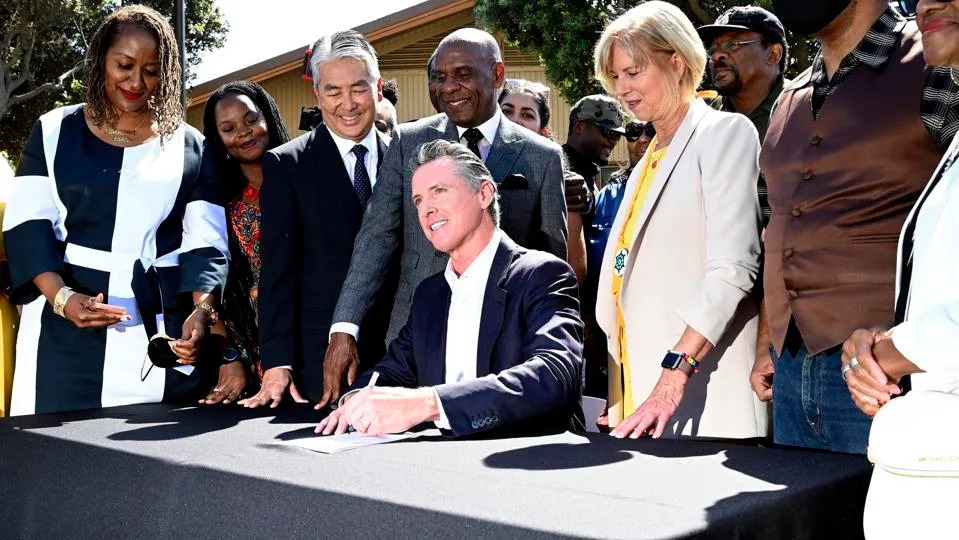
Gavin Newsom signs bill into law.
Federal authorities later pursued criminal charges. In 2025, two individuals who brokered tee times were indicted by the FBI for failing to report slightly more than $1 million in income to the IRS; prosecutors said roughly $700,000 of that income came from reselling tee times between 2021 and 2023. During the probe, one defendant, Ted Kim, told investigators,
"It's not like I'm taking advantage of technology. I'm booking myself. I'm not doing anything illegal."
What's In The Law
The PAR Act is part of a broader consumer-protection package that also restricts resale of restaurant reservations. Key points:
- The law applies only to publicly owned golf courses; private clubs, resorts and nonpublic daily-fee courses are not affected.
- It does not create additional tee times at overcrowded courses — it simply restricts who may resell or advertise public tee times.
- Authorized partners with written agreements can continue to list tee times; anyone reselling public tee times without permission will be operating illegally.
What This Means For Golfers
For now, the simplest guidance is to book tee times directly through the golf course or through authorized partners listed by the course. The law aims to make municipal tee-time access fairer for residents and reduce the artificial scarcity created by brokered blocks of reservations.
Bottom line: California’s PAR Act closes a loophole that allowed third-party brokers to monopolize and resell public tee times without permission, strengthening public access to community golf courses.
Help us improve.