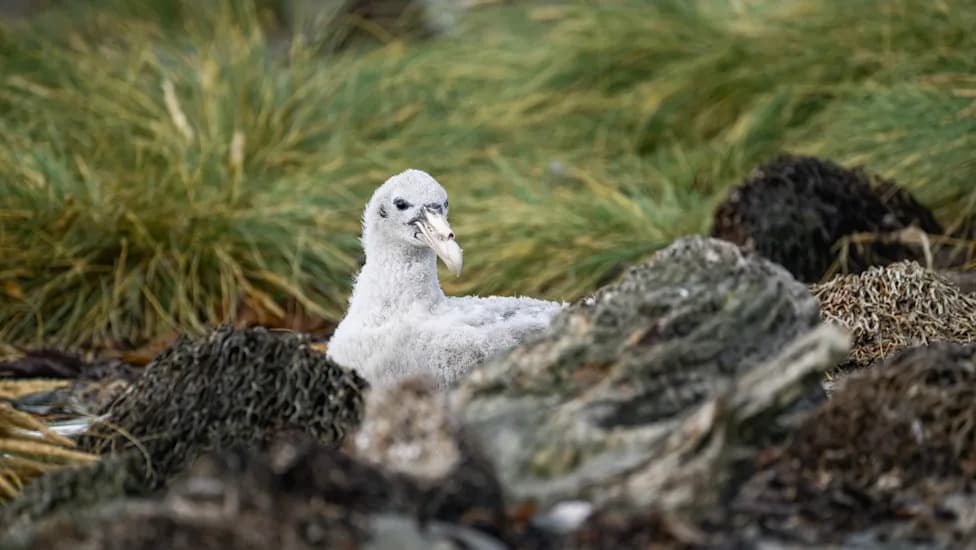
Pygoscelis kerguelensis, the southeastern gentoo, has been described as a distinct species after broad genomic testing revealed four separate gentoo lineages. The southeastern population is centered on Kerguelen Island and likely split from other gentoos 300,000–500,000 years ago due to geographic isolation and oceanographic barriers like the Polar Front. Climate models project severe habitat loss by 2050 for three of the four gentoo species, highlighting urgent conservation concerns.
Scientists Identify a New Gentoo Penguin Species — Pygoscelis kerguelensis
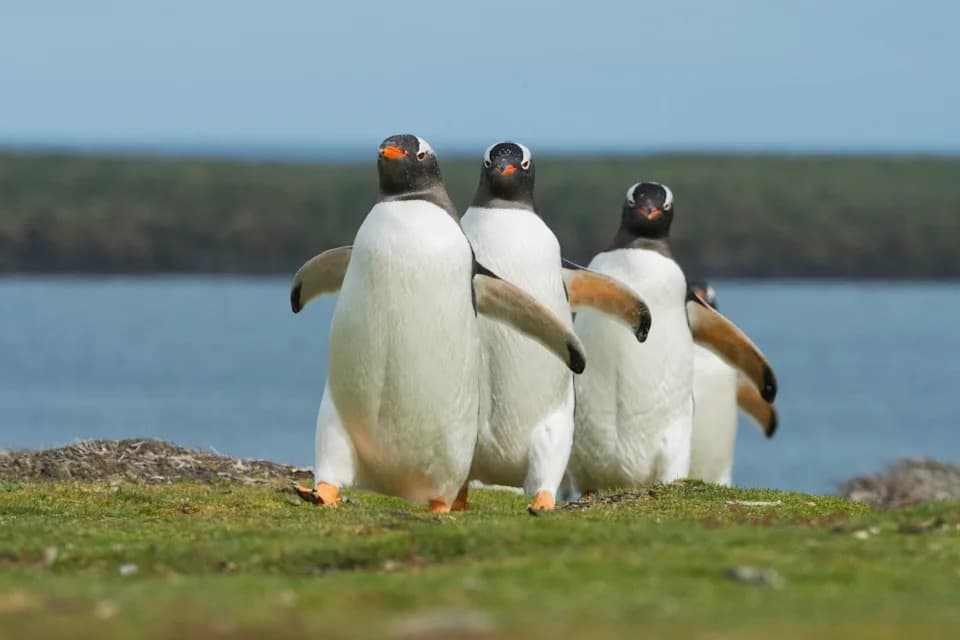
Gentoo penguins in a lineKevin Schafer / Getty Images
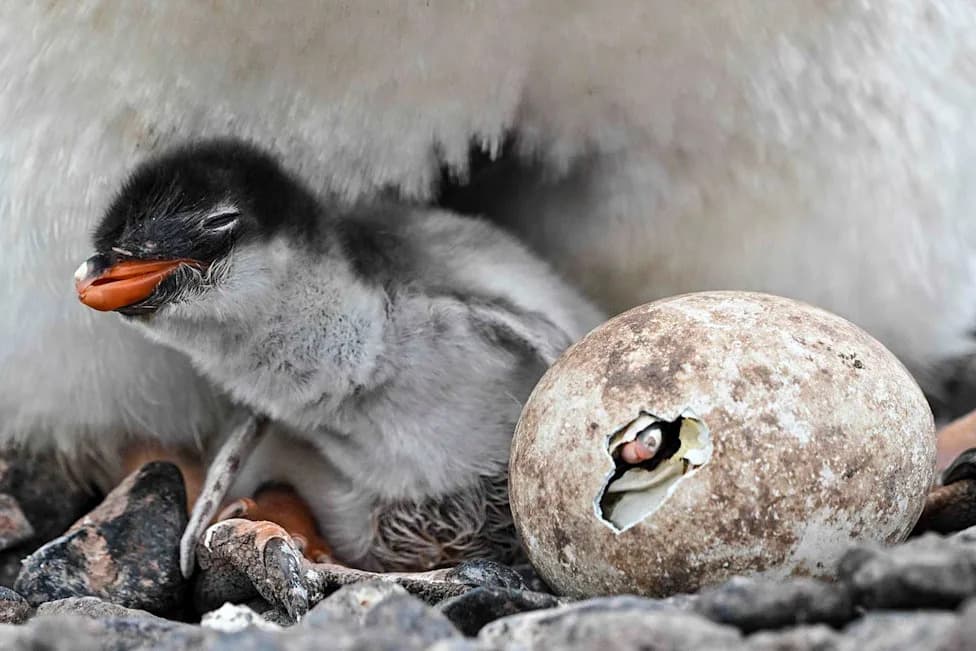
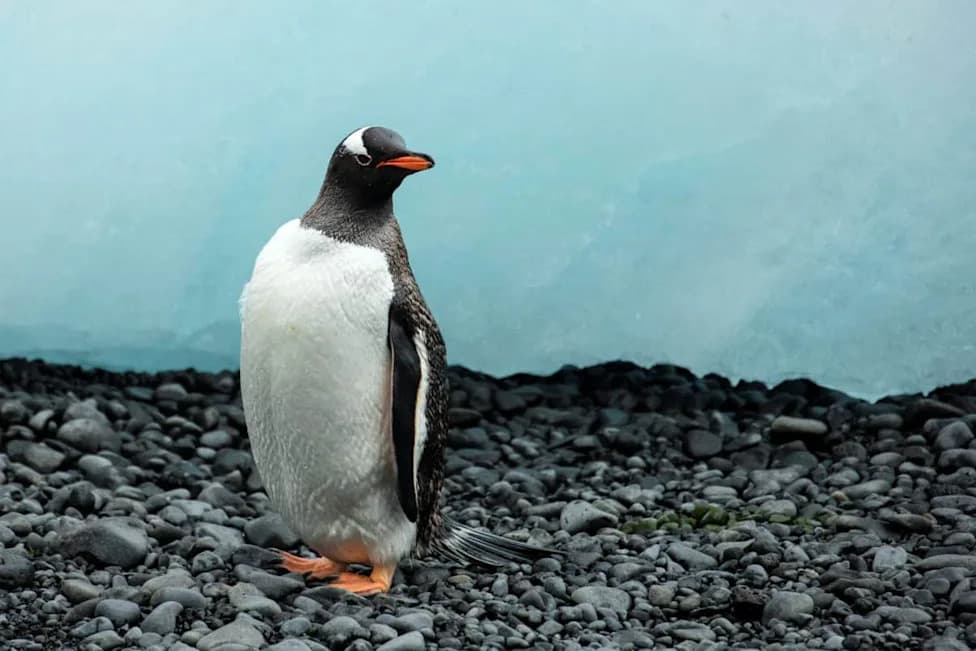
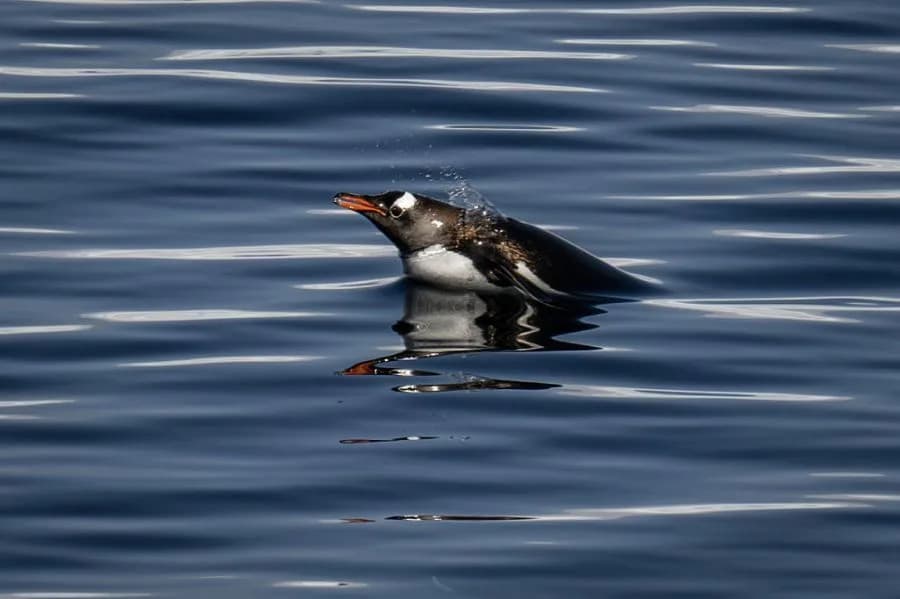
Researchers have confirmed a previously hidden gentoo penguin lineage as a distinct species: Pygoscelis kerguelensis, the southeastern gentoo. Extensive genomic analyses show that what was long considered a single gentoo species is actually four genetically distinct species, and this newly recognized taxon is the first penguin species described in roughly a century.
What the Study Found
Teams from the University of Chile (Santiago) and the University of California, Berkeley, led by graduate student Daly Noll, analyzed broad swaths of the gentoo genome from multiple breeding colonies. Their results revealed four clear lineages — southern, northern, eastern, and southeastern — with the southeastern lineage (P. kerguelensis) genetically distinct enough to warrant species status.
Where the Southeastern Gentoo Lives
The southeastern gentoo is centered on Kerguelen Island in the southern Indian Ocean and is suspected to also occur on nearby Heard Island. The southern gentoo remains the only lineage that breeds on the Antarctic mainland; the other three are primarily island-based across the Southern Ocean.
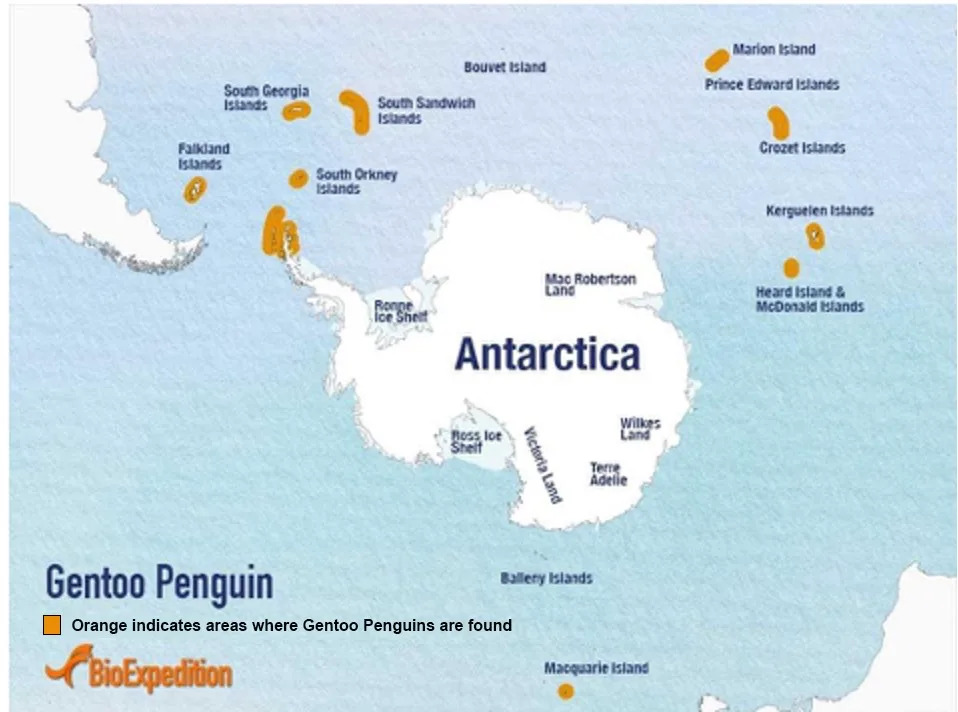
Map of gentoo penguin habitatImage via Polar Literacy
How They Became Separate Species
Genetic dating suggests these gentoo lineages diverged relatively recently — roughly 300,000–500,000 years ago. The most likely drivers are geographic isolation and distinct oceanographic conditions. In particular, the Polar Front — the oceanic boundary between warmer, saltier waters and colder, fresher waters — appears to act as an ecological barrier that reduces mixing among populations.
Conservation Outlook
The research team also ran climate-model projections to 2050 for each gentoo lineage. Across multiple scenarios, three of the four gentoo groups are projected to suffer severe, and in some cases near-complete, habitat loss. The southern gentoo may gain more accessible breeding areas as Antarctic ice and land exposure change with warming, but overall the findings highlight major conservation concerns for many gentoo populations, including the newly described southeastern species.
Why This Matters
This discovery underscores how cryptic species — populations that look similar but are genetically distinct — can hide biodiversity from view. Recognizing these separate species is critical for accurate conservation assessments and targeted protections as climates and ocean conditions change.
Help us improve.