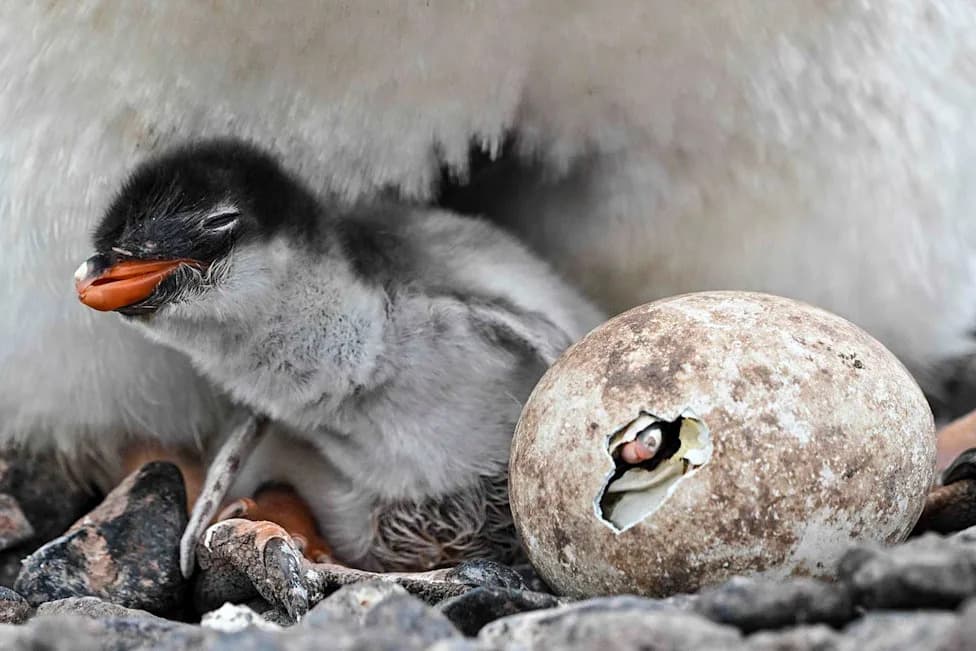
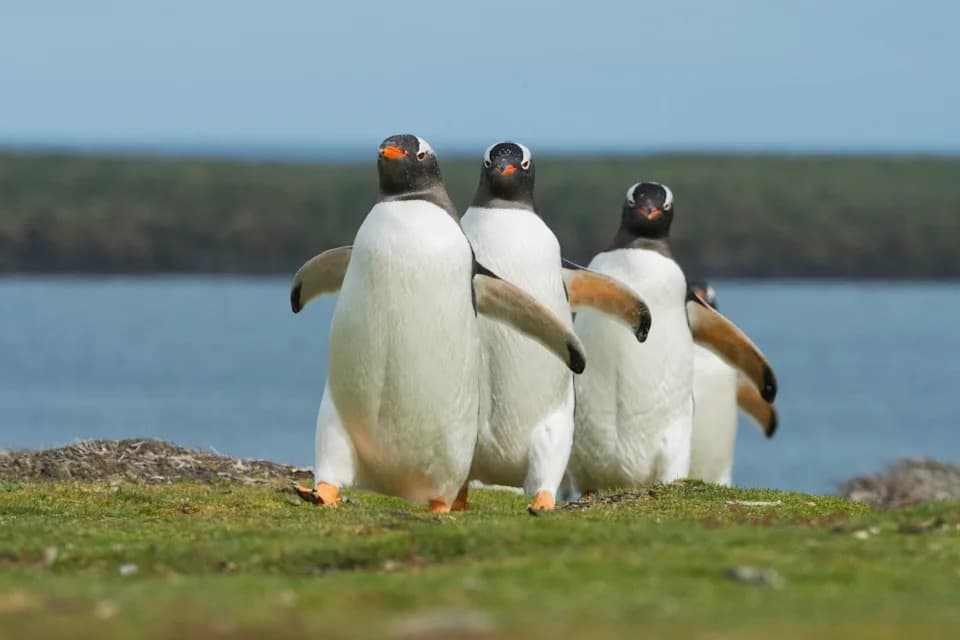
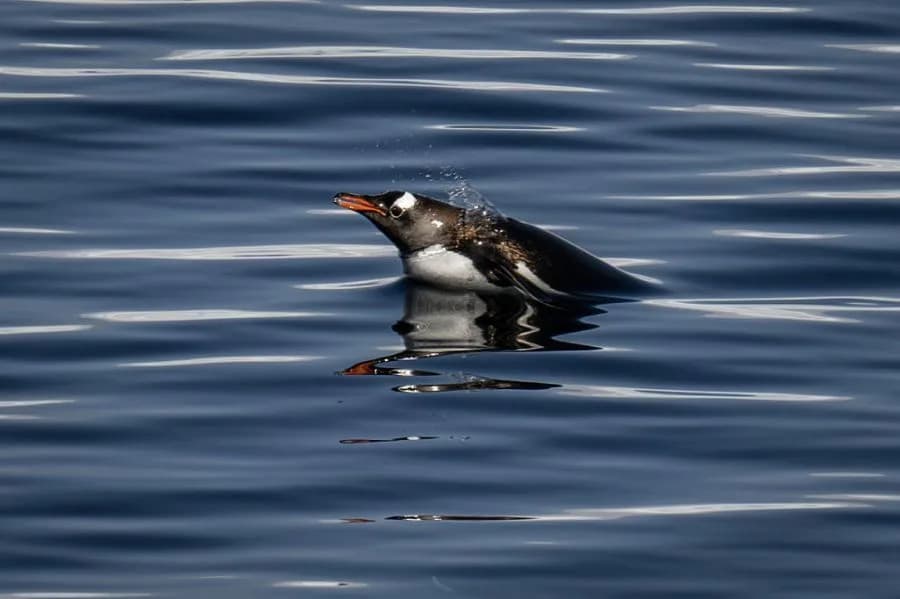
Scientists have described the southeastern gentoo penguin (Pygoscelis kerguelensis), the first penguin species named in over a century. An international team of 22 researchers used genomics, morphology and ecology to split gentoo penguins into four species, elevating three former subspecies and describing one new species. The study also reclassified a 2020 South Georgia proposal as a subspecies rather than a new species. The team attributes the divergence — dated to roughly 300,000–500,000 years ago — to site fidelity, diet-driven limited migration and oceanic barriers like the Antarctic Polar Front.
Scientists Name First New Penguin Species in Over a Century — Southeastern Gentoo Identified
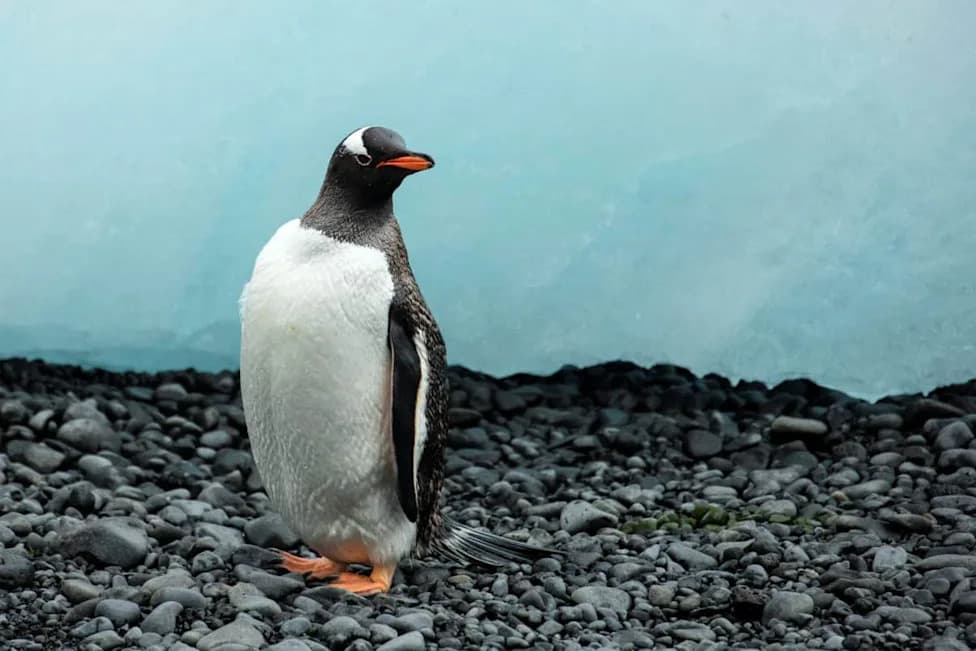
A gentoo penguin photographed on the Antarctic Peninsula. A new genomic study has split gentoos into 4 distinct species | ©Image Credit: Andrew Shiva / Wikipedia, CC BY-SA 4.0
Researchers have described a new penguin species — the first formally named in more than 100 years. The bird, the southeastern gentoo penguin (Pygoscelis kerguelensis), is found on the Kerguelen Islands and Heard Island in the southern Indian Ocean.
An international team of 22 scientists, coordinated from Chile and the University of California, Berkeley, combined genomic analyses, morphological measurements and ecological data to demonstrate that what was once treated as a single "gentoo" species actually comprises four distinct species.
What the Study Found
The study, published in Communications Biology, elevates three previously recognized subspecies to full species status — the northern gentoo (P. papua), the southern gentoo (P. ellsworthi) and the eastern gentoo (P. taeniata) — and formally describes the southeastern gentoo (P. kerguelensis) as a new species. Visually, these forms are very similar; the separation is supported primarily by genetic differences, consistent ecological patterns and subtle morphological distinctions.
“There's probably no species of penguin where the taxonomy has been more debated than the gentoo penguin,” said Rauri Bowie, curator and professor at UC Berkeley's Museum of Vertebrate Zoology. “For over 100 years it's been controversial as to how many species or how many subspecies there are. What this paper does is try to address that question using cutting-edge integrative approaches.”
Taxonomic Clarifications
The research also revisited a 2020 claim that proposed a new species from South Georgia, Pygoscelis poncetii. With expanded genomic sampling, the team found that population is better treated as a subspecies of the southern gentoo, leaving P. kerguelensis as the only newly validated species from the recent revision.
Why These Populations Diverged
The investigators argue that the gentoo's opportunistic diet — feeding on locally available fish, krill and squid — reduces the need for long-distance migration. High site fidelity (returning to the same nesting grounds each season) kept island populations largely isolated. Over many generations, genetic differences accumulated, reinforced by geographic separation and oceanographic barriers such as the Antarctic Polar Front. The team estimates the four species diverged roughly 300,000–500,000 years ago.
Implications
This taxonomic revision clarifies a long-standing debate and has potential conservation implications: recognizing distinct species can change how populations are monitored and protected. The authors emphasize that integrative approaches — combining genomics, morphology and ecology — are critical for resolving complex species boundaries in widely distributed seabirds.
Sources: Communications Biology; Tyler et al. (2020); Ecology and Evolution; iNaturalist; UC Berkeley News; New York Post.
Help us improve.