Archaeologists have uncovered ditches, ramparts and a fortified wall at Oued Beht, Morocco, dated to about 3,500–4,000 years ago — the oldest known defensive structures of their kind in North Africa outside the Nile Valley. The site, located some 80 km east of Rabat, also contains dozens of bell-shaped grain storage pits, suggesting it served as an agricultural and storage centre for a wider territory. Published in Libyan Studies, the findings highlight organized labour, local social complexity and new perspectives on connections across the Strait of Gibraltar during the second millennium BC.
4,000-Year-Old Fortifications Found in Morocco — Oldest in North Africa Outside the Nile Valley
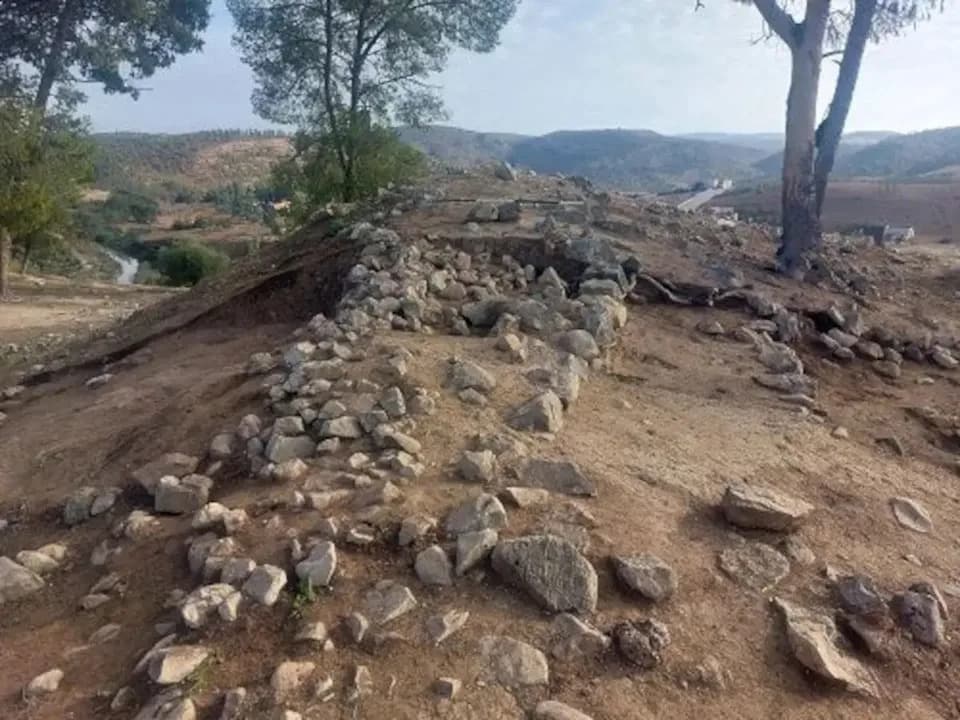
The largest defensive wall at Oued Beht. Archaeologists think its base was constructed about 4,000 years ago. | Credit: G. Lucarini, Oued Beht Archaeological Project
Archaeologists working at Oued Beht in Morocco have uncovered an extensive system of ditches, ramparts and walls whose base dates to roughly 3,500–4,000 years ago, making them the oldest known defensive structures of this type in North Africa outside the Nile Valley.
The excavations, led by Giulio Lucarini and an international team from Italy, Morocco and England, were published Sept. 7 in the journal Libyan Studies. Oued Beht sits in a river valley about 50 miles (80 km) east of Rabat and appears to have been an important local centre during the second millennium BC.
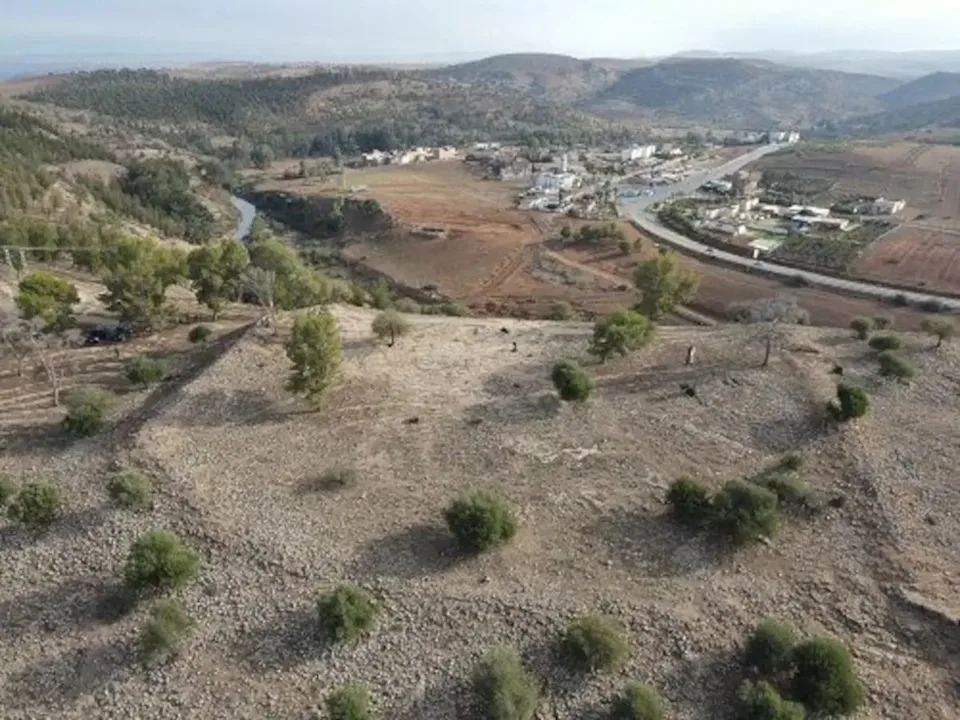
The Oued Beht archaeological site surrounded by defensive structures, with the modern Moroccan village of Aït Siberne in the background. | Credit: A. Garcia-Molsosa and T. Wilkinson, Oued Beht Archaeological Project
Evidence of An Agricultural Hub
Researchers documented a heavily fortified wall on the site’s southern edge, built from layered clay, ash, silt and stone, together with surrounding ditches and ramparts. Dozens of bell-shaped, stone-lined pits were also found and are interpreted as large grain-storage facilities. The number and scale of these storage pits suggest the site stored surpluses well beyond the needs of a single household, implying Oued Beht may have served a wider territory as an early farming and storage hub.
Organization, Labour and Local Change
Such constructions required planning, labour coordination and control of strategic locations. The team suggests the defences reflect not only protection from possible attacks but also increased competition for land and resources, control of movement through the landscape, and emerging forms of leadership and social organisation.
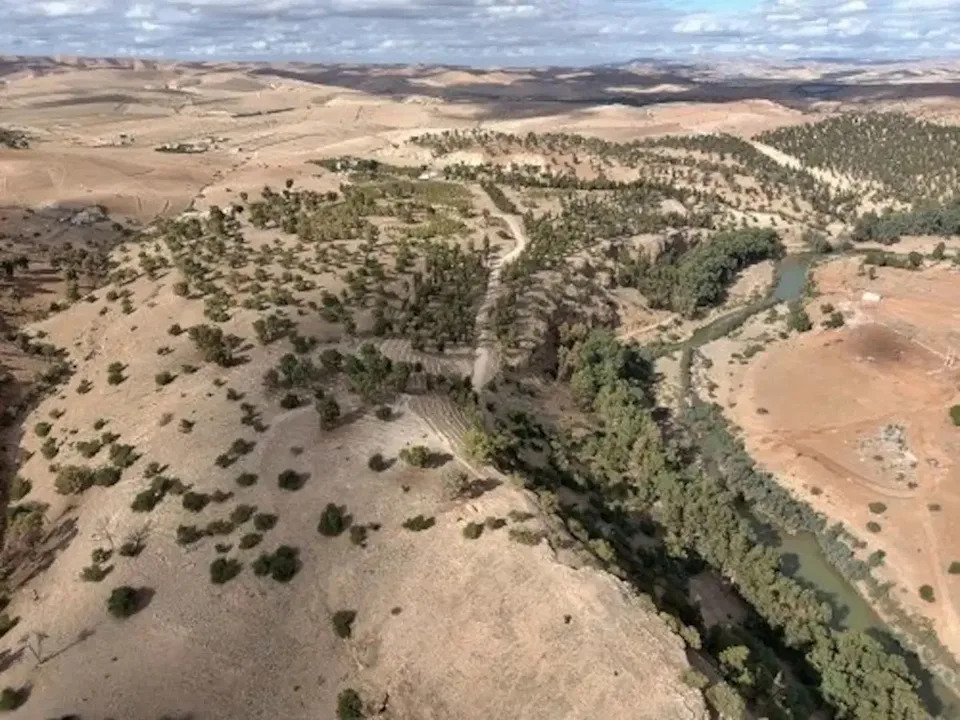
The region is an ancient river valley that connected inland areas with the Atlantic Ocean. | Credit: A. Garcia-Molsosa and T. Wilkinson, Oued Beht Archaeological Project
Wider Significance for Maghreb Prehistory
These discoveries help fill a long-standing gap in knowledge about the Maghreb — the northwestern Mediterranean region of Africa — which for decades was underrepresented in narratives of later Mediterranean prehistory. The finds complement recent ancient DNA and archaeological research indicating long-distance contacts across the Strait of Gibraltar and earlier movements into the region.
Comparative evidence from contemporary Iberian sites shows both similarities and contrasts: while Bronze Age Iberian settlements often feature large hilltop forts, planned architecture, bronze wealth and elite burials, Oued Beht’s defensive complex is smaller in scale but demonstrates significant collective investment and complexity on the African shore.
"The communities of the north-western Maghreb in the second millennium BC were capable of conceiving and carrying out major construction works on a scale that had not previously been documented," the researchers note, emphasizing that Oued Beht reshapes our understanding of regional social developments.
Independent experts not involved in the project say the site challenges diffusionist assumptions that social complexity and substantial architecture in North Africa must have arrived from elsewhere, underscoring local innovation and regional interaction in the western Mediterranean.
Publication and Context: Excavation results were published in Libyan Studies (Sept. 7). The work follows related field discoveries in Morocco, including the prehistoric village at Kach Kouch in the Rif Mountains, and highlights ongoing multinational collaboration in Maghreb archaeology.
Help us improve.