Freedom Economy and a coalition of investors sued the Treasury Department and the CDFI Fund after $289 million intended for community lenders — critical to many Black- and minority-owned businesses — was not obligated or publicly disclosed before a Sept. 30 fiscal deadline. Plaintiffs say award notices were issued but funds were not distributed, prompting layoffs, exhausted credit lines and program cuts. They also warn the administration may try to attach unauthorized anti‑DEI conditions to awards. The suit targets fiscal 2025 funding and signals concern about 2026 and beyond.
Black Businesses at Risk as $289M in CDFI Funding Is Held Up; Freedom Economy Sues Treasury

WASHINGTON, DC - MARCH 07: U.S. Secretary of Treasury Scott Bessent and U.S. President Donald Trump look on during The White House Digital Assets Summit in the State Dining Room of the White House on March 07, 2025 in Washington, DC. (Photo by Anna Moneymaker/Getty Images)
Nearly $300 million in congressionally approved funding intended for community development financial institutions (CDFIs) — a critical lifeline for many Black- and minority-owned businesses — remains tied up amid a legal dispute with the Trump administration as a Sept. 30 fiscal deadline approaches.
Last week, a coalition of justice and sustainability investors, led by the Freedom Economy Business Association, filed suit in the U.S. District Court for the District of Columbia asking for a temporary restraining order and a preliminary injunction against the U.S. Department of the Treasury and the CDFI Fund. Plaintiffs say the agencies issued award notices to community lenders but have not obligated or distributed the $289 million, and they have not publicly disclosed award recipient lists or assistance agreements as has been customary in recent years.
Why It Matters
The Community Development Financial Institution Fund was established by Congress in 1994 to promote economic revitalization in distressed neighborhoods. CDFIs often serve businesses that traditional banks decline, which makes them especially important to Black entrepreneurs and other underserved borrowers.
Legal Claims and Transparency Concerns
Plaintiffs contend that, despite court filings by the federal government asserting the funds had been obligated, no formal public disclosure has confirmed that obligation — creating uncertainty that the money could lapse at the end of the fiscal year. The lawsuit seeks to force the Treasury and CDFI Fund to either obligate the funds or make clear their status before the Sept. 30 deadline.
Alphonso David, lead counsel for Freedom Economy Business Association and president and CEO of The Global Black Economic Forum, said: "The community funding that we're fighting for here really goes to the heart of marginalized communities."
Reported Harms
Advocates say the funding delay has already caused tangible harm. According to plaintiffs and community leaders, lenders and borrowers expecting the funds have had to lay off staff, draw down letters of credit, take on additional debt and suspend community programs. "They're losing millions of dollars in lending capacity, and they've had to discontinue programs for communities," David said.
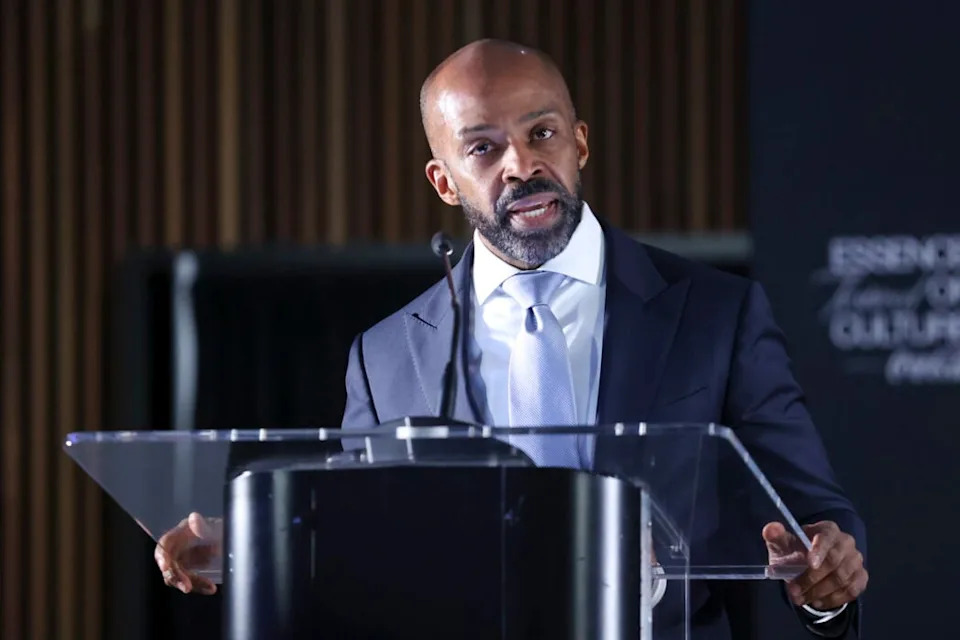
NEW ORLEANS, LOUISIANA – JUNE 5: Alphonso David speaks during a press conference at 2026 ESSENCE Festival Of Culture at Caesars Superdome on June 5, 2026 in New Orleans, Louisiana. (Photo by Peter Forest/Getty Images)
Board chair Tynesia Boyea-Robinson of the Freedom Economy Business Association added that the ripple effects reach beyond lenders: "It goes to affordable housing. It goes to clinics. It goes to the neighborhood store that provides you with food because the big grocery store won't come to your neighborhood. These dollars support everyday Americans who are already struggling to make ends meet."
Broader Context and Administration Actions
Advocates also raised concerns that the administration may attempt to attach new conditions to CDFI awards tied to anti-DEI directives. Freedom Economy argues that any such new conditions would be unauthorized by Congress and could further limit access to capital for underserved communities.
Plaintiffs noted that ongoing economic pressures — including higher costs tied to tariff policies and global instability — have already strained small and minority-owned businesses, making timely CDFI support especially urgent.
Looking Ahead
The litigation specifically targets the fiscal 2025 funding at issue, but plaintiffs say they remain vigilant about future funding cycles, including fiscal 2026, which they fear could be used to test new restrictions. The court's decisions in the coming days and weeks may determine whether the funds are formally obligated or at risk of lapse.
Photo caption: Alphonso David speaks during a press conference at the 2026 ESSENCE Festival of Culture in New Orleans. (Photo by Peter Forest/Getty Images)
Help us improve.