Australia is intensifying military preparedness amid rising US–China strategic competition, staging joint exercises like Southern Jackaroo and expanding interoperability with American and Japanese forces. At the same time Canberra must manage deep economic ties with China — its largest trading partner — despite recurring diplomatic frictions. Public opinion is increasingly skeptical of both powers, leaving Australia to pursue a careful balancing strategy that preserves security ties with Washington while protecting economic links to Beijing.
Caught Between Superpowers: How Australia Balances Security Ties With the US and Economic Links to China
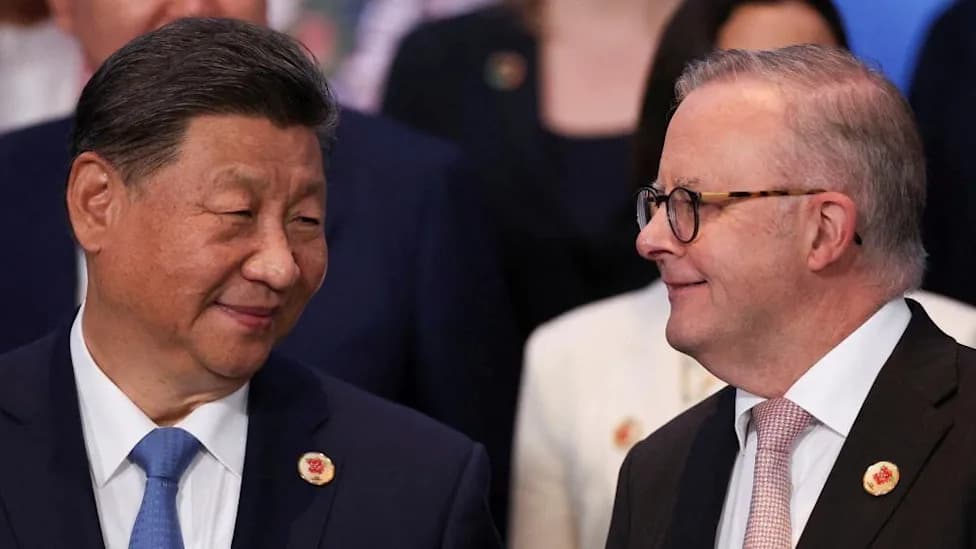
China's Xi Jingping and Australia's Anthony Albanese in 2024. Relations between the two countries have been rocky in recent years [Reuters]
Sniper fire cuts through the stillness of the Australian bush. Missiles lift plumes of smoke into the sky, drones begin to hum and helicopters roar past. Every kind of military equipment is on display. But this is not an active battlefield — Townsville has not seen combat since World War II. What unfolds is a large-scale demonstration of force and readiness.
Military Drills and Deepening Alliances
“We live in a volatile world,” says Australian Army Brigadier Ben McLennan, explaining the need for realistic preparation. “Training an army to be prepared to fight a war that is potentially more likely than it has been previously is very important.”
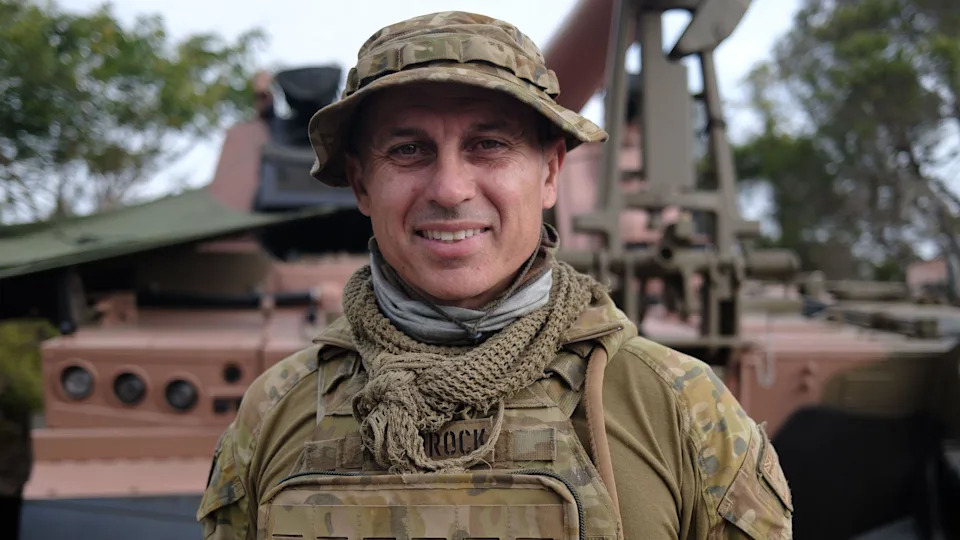
Australian Army Brigadier Ben McLennan says Australia is rehearsing for "the worst type of war" [BBC: Katy Watson]
The scenario is part of Southern Jackaroo, a major joint exercise involving Australian, American and Japanese forces designed to strengthen defence cooperation across the Indo-Pacific. Australian officials describe the training as rehearsal for "the worst type of war" — deliberately vague about any specific adversary.
US presence in Australia has grown markedly: about 200 US Marines rotated through Australia in 2012; today roughly 2,500 Marines deploy on rotations. Northern bases such as RAAF Tindal in the Northern Territory have been upgraded to host long-range U.S. assets, including B-52 bombers. The trilateral Aukus pact with the United States and the United Kingdom — which will provide Australia with nuclear-powered submarines — is the most consequential example of deeper security integration.
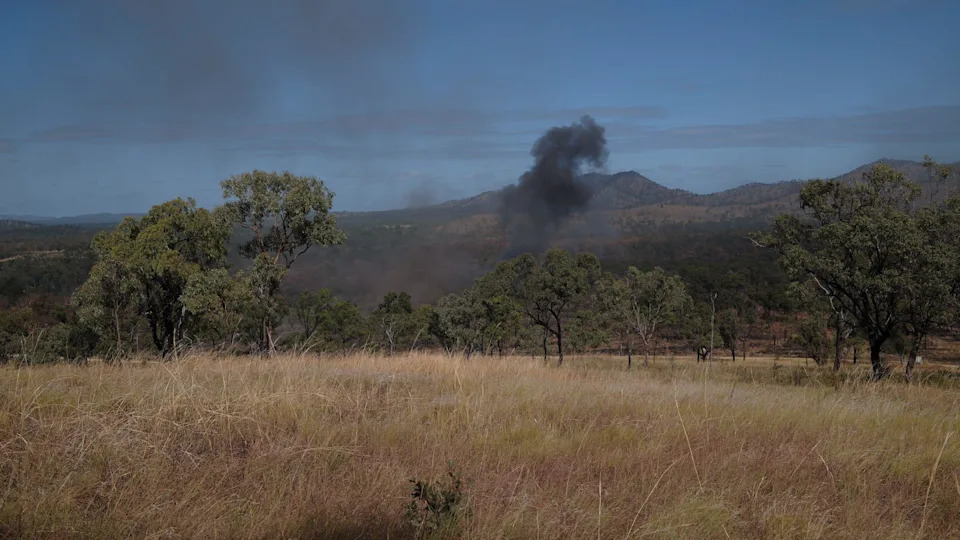
The Southern Jackaroo exercises are aimed at improving defence cooperation in the Indo-Pacific [BBC: Katy Watson]
Australia’s 2026 National Defence Strategy warns that “intense competition between major powers — principally the United States and China — will be an enduring feature of our strategic environment,” and notes that “China continues to undertake the largest military build-up in the world today, without the transparency or strategic reassurance the region expects.”
Economic Ties With China and Diplomatic Frictions
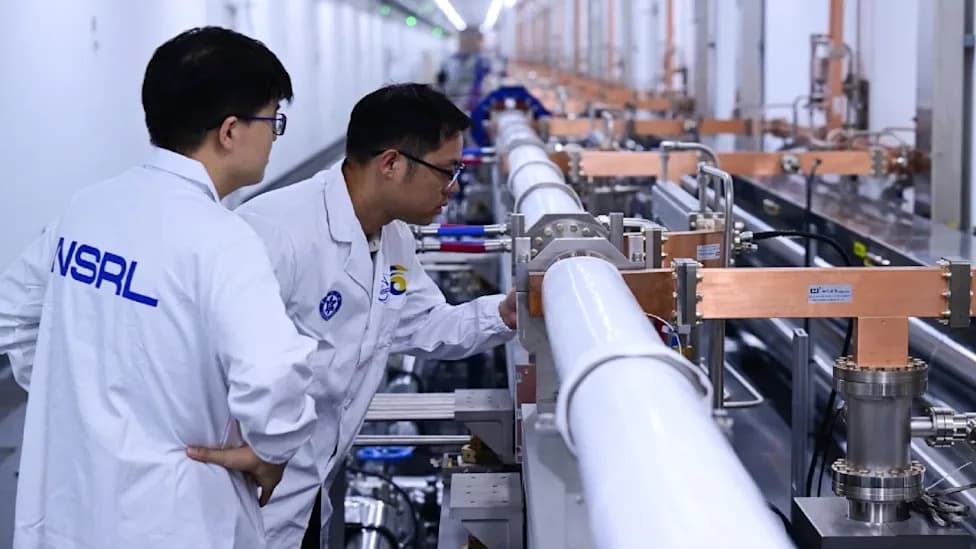
At the same time as Canberra tightens security ties with Washington, Beijing remains Australia’s largest trading partner. Diplomatic relations between Australia and China began in 1972, and by the early 2010s China had become the country’s top export market. A 2015 free trade agreement cemented economic links.
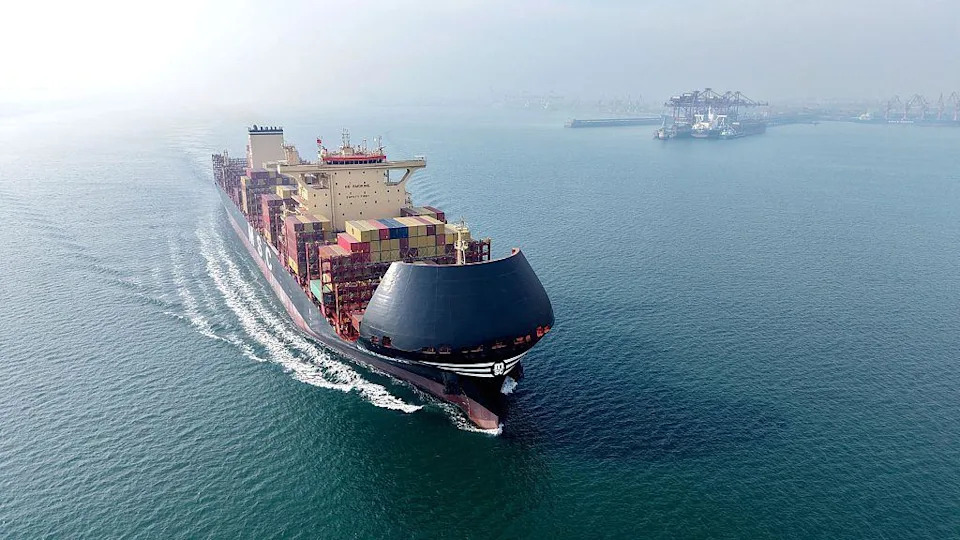
China is Australia's biggest export market [Getty Images]
Relations have since been uneven. Canberra’s 2020 call for an investigation into the origins of Covid-19 prompted Chinese tariffs and other trade measures. In 2021 Victoria cancelled its Belt and Road Initiative agreement with China, and several Australians were detained in China in recent years — notably journalist Cheng Lei, who was released in 2023 after more than three years in custody. In June this year China imposed steep tariffs (around 55%) on Australian beef despite the free trade agreement.
Public Opinion And The Strategic Dilemma
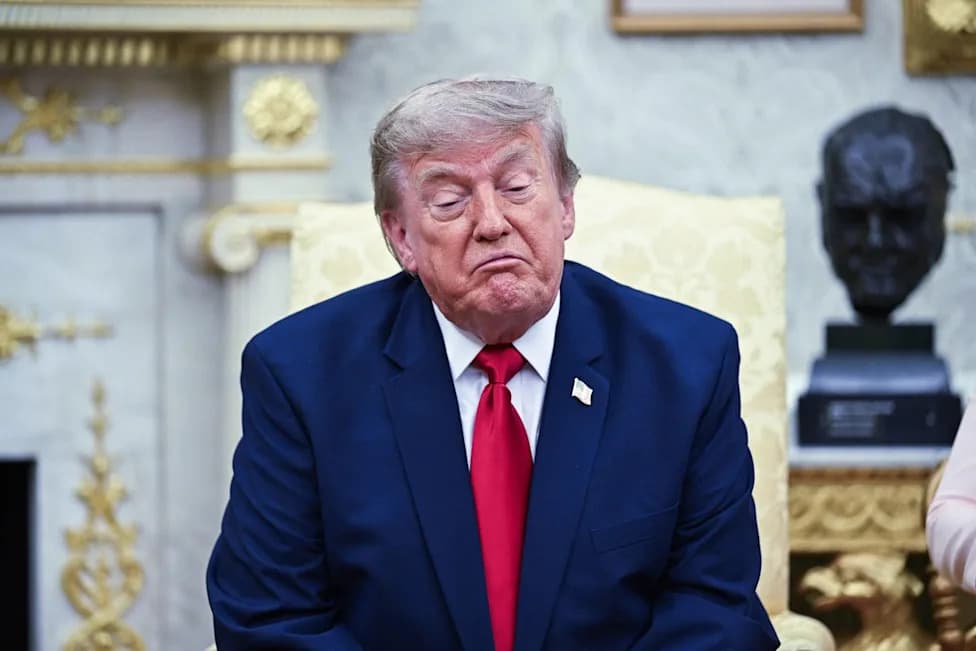
Polls show Australians growing wary of both superpowers. The Lowy Institute’s annual survey found only 31% of Australians trust the United States to act responsibly in the world, while 28% trust China. Yet 61% now view China primarily as an economic partner rather than a security threat — an 11-point increase from the previous year — and a slim majority (51%) say Australia’s relationship with China is more important than its relationship with the United States.
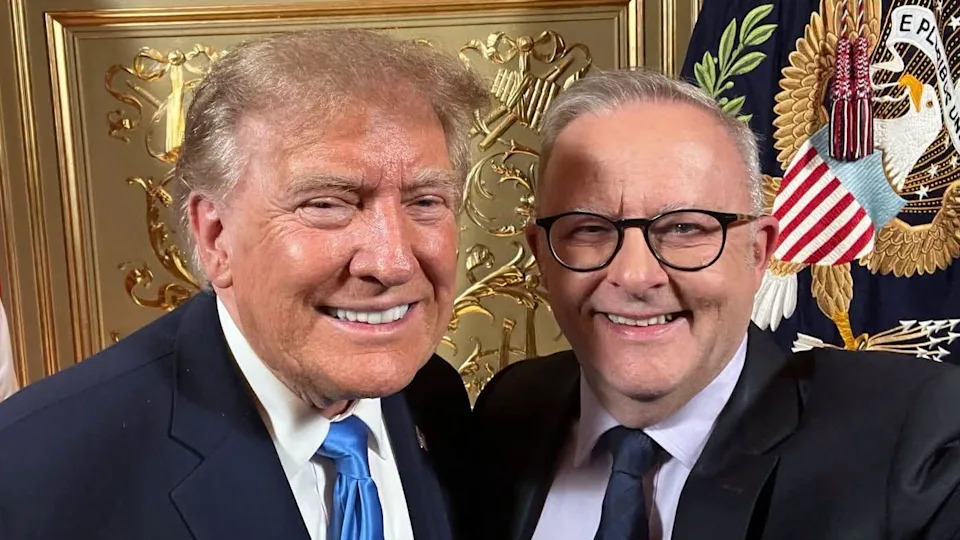
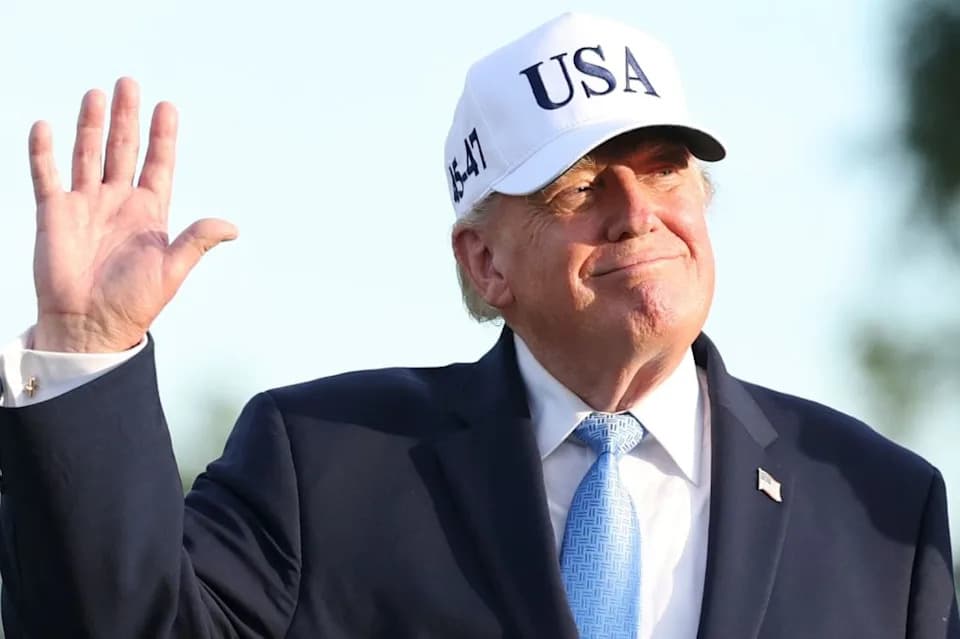
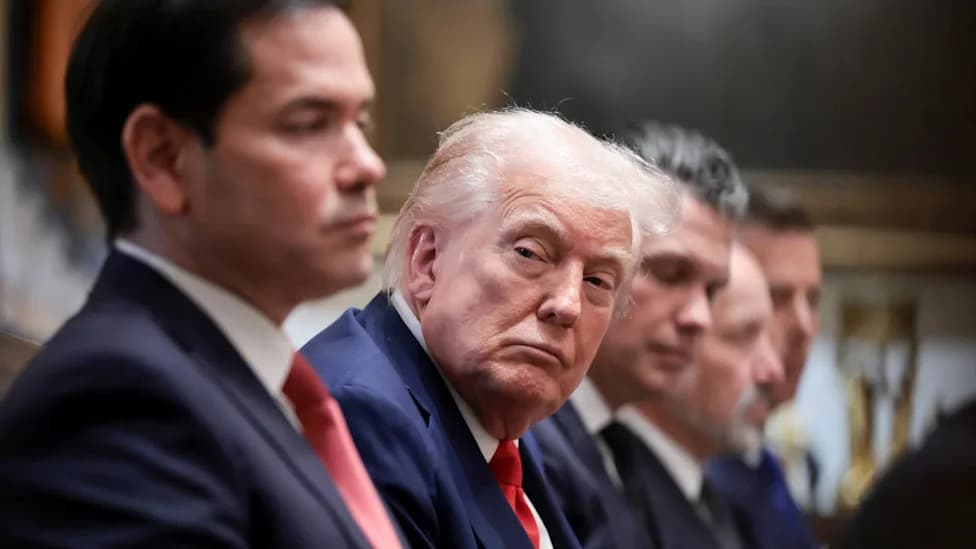
US President Donald Trump and Anthony Albanese. Australians have cooled on their relationship with the US under Trump [PMO Australia]
Former prime minister Kevin Rudd has warned of "radical changes" reshaping national security as China rises while the US debates its global role. Dr Marina Yue Zhang of the University of Technology Sydney says many Australians are questioning whether the US remains the reliable "big brother" it once was.
President Xi Jinping has referenced the idea of the "Thucydides Trap" — the theory that rivalry between a rising power and an established one can become dangerously inevitable. Whether or not that framing holds, the competition between Beijing and Washington shapes Canberra’s choices.
Conclusion: A Delicate Balancing Act
Australia faces a clear strategic paradox: it must deepen defence cooperation with the United States to address rising regional insecurity, while preserving vital economic ties with China. Canberra’s approach is not to choose between Washington and Beijing but to manage a difficult balance — strengthening deterrence and interoperability with allies while defending trade relationships and economic interests.
Key facts: joint drills such as Southern Jackaroo; a growing US military footprint in Australia; Aukus submarines; China as Australia’s largest export market; persistent trade frictions and shifting public opinion.
Help us improve.