The U.S. Fish and Wildlife Service has launched a 12-month review to determine whether the plains spotted skunk should be listed under the Endangered Species Act after detections fell in parts of the Great Plains. Recent fieldwork in 2022–2023 — including about 600 camera traps in Kansas that recorded no skunks — and a July 2025 petition from Grasslands Unlimited prompted the action. Researchers say population estimates remain uncertain because the species has only received sustained study in the last two decades. The review will evaluate threats such as extreme weather, climate change and grassland conversion, and could lead to increased habitat protection and monitoring.
‘Handstand’ Skunk Under Federal Review After Sightings Decline Across the Great Plains
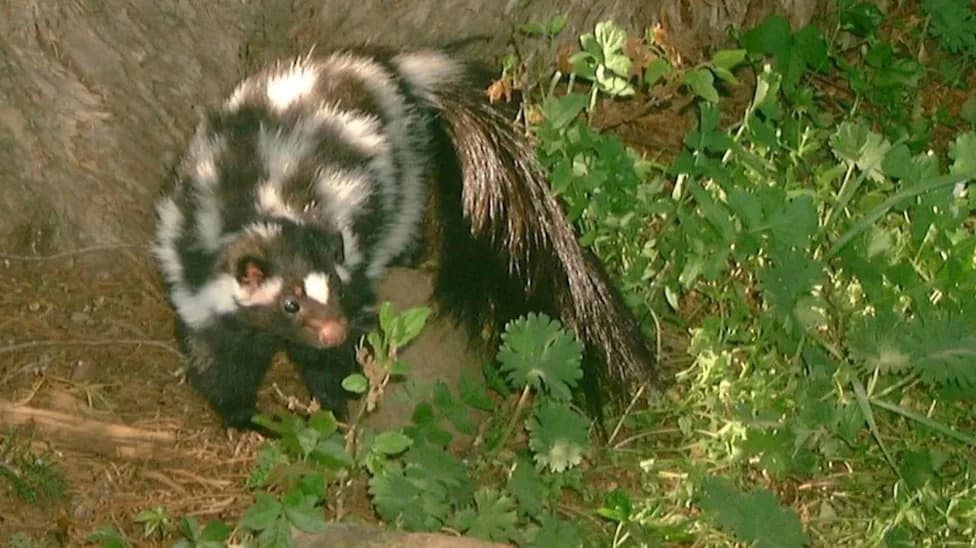
Photo Credit: Blake Sasse / Arkansas Game and Fish Commission /U.S. Fish and Wildlife
The U.S. Fish and Wildlife Service has opened a 12-month status review to decide whether the plains spotted skunk — a small black-and-white prairie mammal known for doing a defensive "handstand" when threatened — should be listed under the Endangered Species Act. The move follows reports that sightings have become rarer across parts of the Great Plains, prompting concern among researchers and conservation groups.
Why the Review Was Launched
The review was prompted by a July 2025 petition from prairie-restoration group Grasslands Unlimited, which cited recent studies from Nebraska, Kansas and South Dakota suggesting the skunk has disappeared from locations where it was once recorded. Grasslands Unlimited sued after the agency missed an earlier review deadline; a previous petition in 2012 did not result in federal protections.
What Scientists Have Found — And What They Still Don’t Know
Researchers acknowledge substantial gaps in the species’ population data because the plains spotted skunk has only received sustained scientific attention in the past two decades. A 2023 Fish and Wildlife Service determination found the species was not facing extinction based on then-available evidence, but field surveys conducted in 2022 and 2023 have raised new concerns.
For example, University of Missouri urban ecologist Christine Brodsky reported that roughly 600 camera traps deployed across Kansas in 2022–2023 failed to record any plains spotted skunks. Still, other surveys have documented the species in intact habitats: Oklahoma State University researcher Danielle Brosend found plains spotted skunks at about 30 sites in the Ouachita National Forest in southeastern Oklahoma, suggesting remnant populations persist where habitat remains intact.
“During the upcoming status review, the Service will fully evaluate potential threats to the species and review the best scientific and commercial information available,” the Fish and Wildlife Service said in a July 13 press release. “This review will determine whether listing the species under the Endangered Species Act is warranted, not warranted, or warranted but precluded.”
Danielle Brosend said the skunk has only attracted significant scientific attention in the last 20 years, leaving reliable population estimates uncertain. “They're really cute,” she added. “They're so small. Not many people know about them. Also, they do handstands, which is really neat for an animal that occurs in some people's backyards.”
Threats And Conservation Implications
The new petition and recent studies highlight several potential threats: isolated extreme weather events, long-term climate change, and large-scale conversion of grasslands to intensive agriculture. A federal status review could direct more resources toward habitat protection, prairie restoration and coordinated monitoring to better define the skunk’s range and abundance.
As the review proceeds, scientists will compile the best available evidence to determine whether federal protections are warranted. If listed, the plains spotted skunk could gain stronger habitat safeguards and targeted recovery efforts across its range in 11 central U.S. states.
Help us improve.