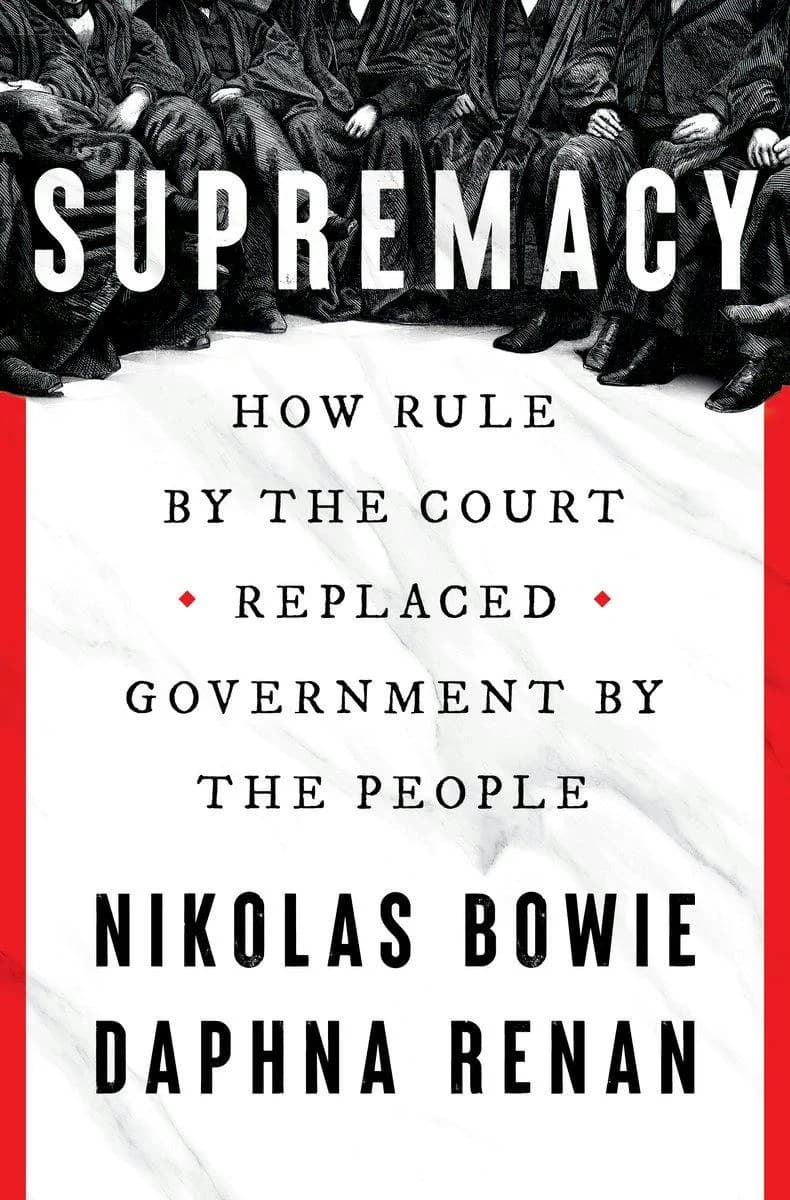
Thesis: Left-wing anger at the Supreme Court often misdiagnoses the United States' deeper problem: a legislative design that favors obstruction. While Nikolas Bowie and Daphna Renan make a persuasive case for limiting "horizontal" judicial review and advancing "democratic constitutionalism," the author contends Congress, not the Court, is usually the structural barrier to large-scale reform. Historical evidence and political-science research show the Court often defers to elected branches and depends on them for enforcement. Progressives should prioritize social movements, presidential leadership, and state-level innovation to compel congressional action rather than focusing primarily on curbing judicial review.
Don’t Blame the Court — Fix Congress: Why Judicial Reform Misses the Bigger Problem
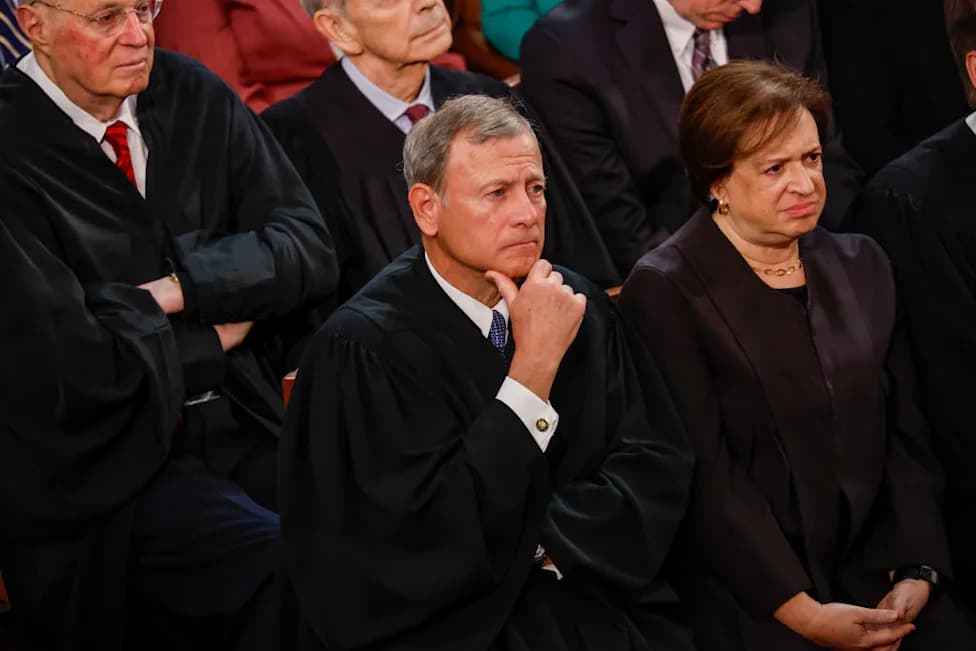
WhenRoe v. Wadewas overturned, Democrats didn't apologize for fifty years of failing to protect abortion access; they accused the Supreme Court of treachery. But it shouldn't have been up to the court in the first place. (Chip Somodevilla / Getty Images)
Across much of the political Left there is growing disillusionment with the Supreme Court of the United States. That reaction, intensified after decades under Chief Justice John Roberts and a sustained 6–3 conservative majority, is understandable. But focusing primarily on the Court risks misdiagnosing the deeper constitutional and political problem: a legislative design that often privileges obstruction over action.
What Bowie and Renan Argue
Nikolas Bowie and Daphna Renan — Harvard law professors and former clerks to progressive justices — call for a different approach. They challenge the near-universal assumption that the Supreme Court must be the final arbiter of all constitutional disputes and promote what they call "democratic constitutionalism." Their central proposal is to curtail "horizontal" judicial review (the power to invalidate acts of Congress) while preserving "vertical" review of state and local laws.
Author's Critique
Their book is forceful and historically rich, but it risks exaggerating the Court’s role in producing the United States’ contemporary political impasse. The Court has at times frustrated progressive change — for example in Dred Scott (1857) and other nineteenth-century rulings — but many episodes of judicial intervention occurred in political contexts where elected branches had repeatedly deferred or failed to act. In short: power is frequently thrust upon the Court by politicians who prefer to offload hard choices.
Historical Dynamics
Bowie and Renan marshal important historical examples: the Dred Scott decision; the late nineteenth-century alignment between reactionary politics and the judiciary; clashes over New Deal legislation and Franklin D. Roosevelt’s court-packing plan; the 1954 Brown v. Board of Education decision; and the twentieth-century reliance by many on the federal judiciary to protect rights. They rightly note that Democrats’ confidence in the Court’s protection of abortion rights—especially after the 1973 decision and later developments—helped displace efforts to codify protections legislatively.
"The problem is not simply the Court: it is a constitutional structure that frequently rewards delay and obstruction in the legislature."
What the Broader Scholarship Shows
Political scientists going back to Robert Dahl have documented the Supreme Court’s responsiveness to public opinion and to the political branches. The Court depends on elected institutions to implement and enforce rulings; it lacks control of the purse and sword, as Alexander Hamilton observed in Federalist No. 78. Historically the Court has invalidated relatively few federal statutes compared with state and local laws and has often exercised deference to Congress in horizontal review.
Where the Current Court Actually Hurts Progressive Goals
The contemporary Roberts Court has made decisions that harm progressive objectives — notably in voting-rights doctrine, campaign finance, and constraints on the administrative state. Many recent rulings have limited state policies that help labor and public safety: decisions about public-sector union agency fees, property-takings doctrines used against union access, and state gun-safety laws are examples of harms produced through vertical review or anti-administrative-state reasoning. Limiting judicial review over acts of Congress would not remedy these concrete harms.
Why Congress, Not the Court, Deserves the Spotlight
The Framers designed a legislature that divides power between a majoritarian House and a deliberately insulated Senate. That structure makes federal lawmaking difficult. Other democracies confronted similar obstacles with institutional fixes; the United States has no easy mechanism to force synchronized renewal of both chambers or to overcome chronic Senate obstruction. As a result, many urgent reforms — universal health care, paid parental leave, living wages — have been stymied by congressional inaction, not judicial fiat.
What Progressives Should Do
If the goal is large-scale progressive reform, three pressure points matter most:
- Social Movements: Sustained grassroots pressure has historically compelled Congress to act (labor movements, civil-rights activism).
- The Presidency: A mobilized president can coordinate party action, set an agenda, and use rhetorical power to shift public opinion — think FDR’s era.
- State Innovation: Progressive federalism and state-level experimentation can produce policy models that spread and make national action politically feasible.
These levers are imperfect and sometimes uncomfortable to rely on, but they more directly address the root cause of policy stagnation than an institutional crusade to eliminate horizontal review.
Conclusion
Bowie and Renan offer a provocative corrective to judicial supremacy and remind us of the democratic costs of uncritical reliance on courts. But attacking horizontal review is a blunt instrument that risks diverting energy from the more difficult — and more necessary — task of reforming and pressuring Congress, strengthening popular politics, and using state and presidential power strategically. The pressing constitutional project for progressives should be to build the political capacity to translate public commitments into federal law.
Help us improve.