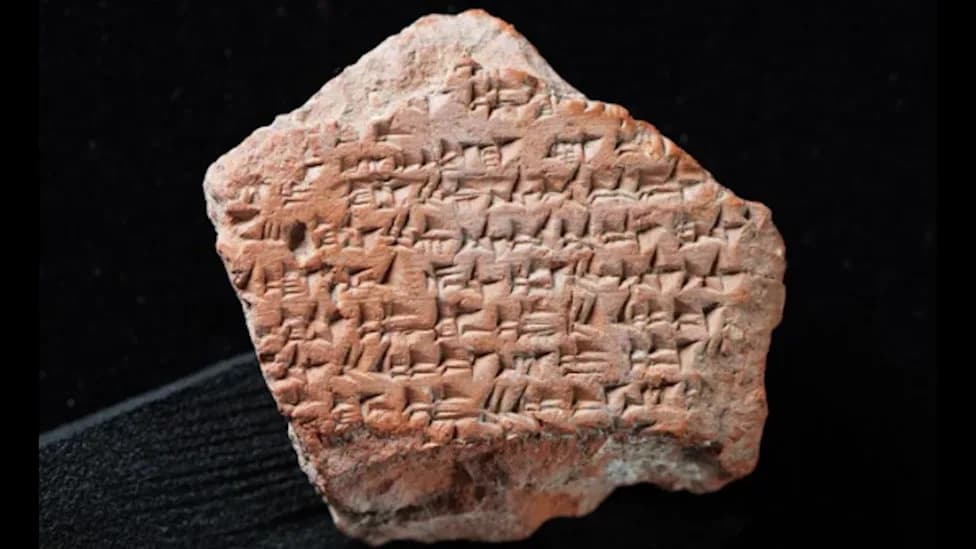
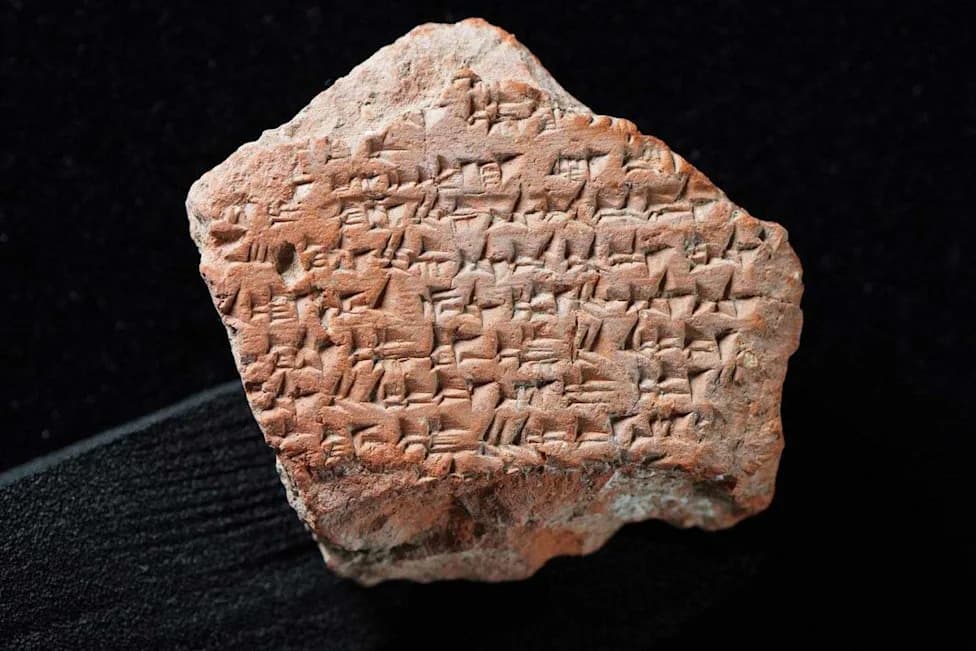
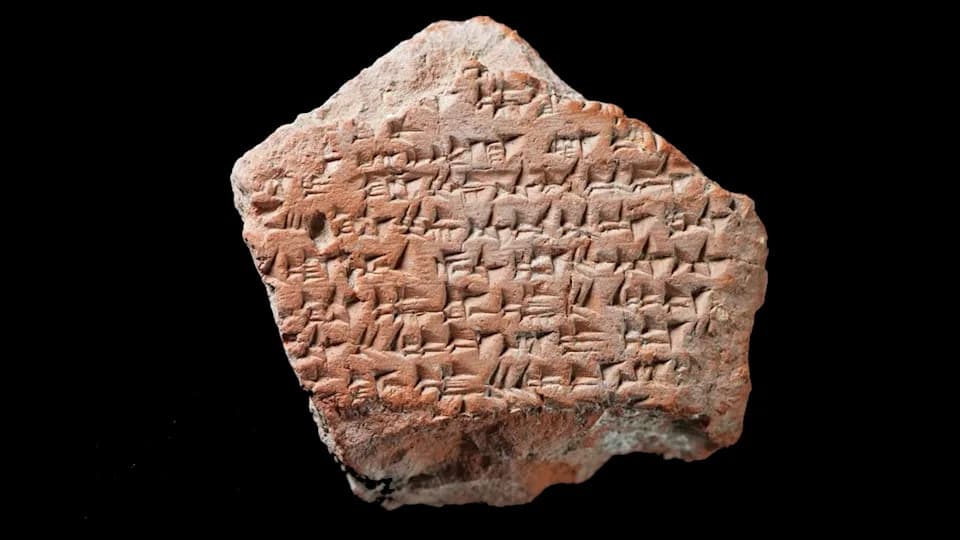
A clay fragment uncovered at Boğazkoy/Hattusha in 2025 has been identified as part of the ancient Egyptian–Hittite peace treaty, containing clauses on people fleeing between Egypt and Hatti and protections for homes. Researchers matched the piece to the front side of an Akkadian cuneiform copy of the treaty, adding to fragments discovered at Hattusha in the early 20th century. Known as the Eternal or Silver Treaty, it was negotiated between Hattusili III and Ramesses II around 1259 BCE and remains the oldest surviving peace agreement.
Turkey Uncovers New Cuneiform Fragment From World’s Oldest Peace Treaty at Hattusha
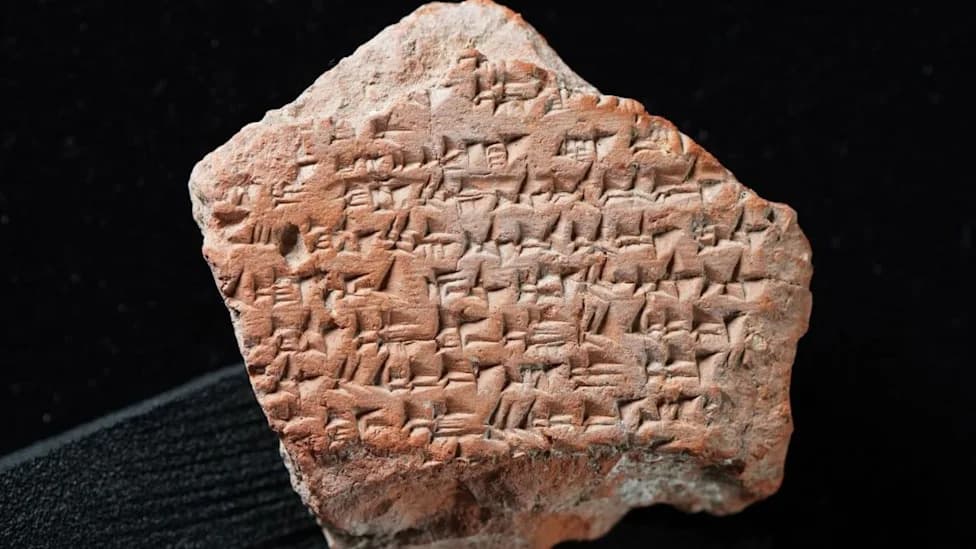
Fragment of Egypt-Hittite peace treaty found in Hattusha, Turkey, September 25, 2026. (photo credit: Screenshot/X/@MehmetNuriErsoy)
A newly identified clay fragment from the ancient Hittite capital of Hattusha has been confirmed as part of the millennia-old Egyptian–Hittite peace treaty. The Turkish Culture and Tourism Ministry announced that the fragment, recovered during excavations at Boğazköy/Hattusha in 2025, contains provisions addressing people fleeing between Egypt and Hatti and clauses about protecting homes from destruction.
The Discovery
Archaeologists working at the Boğazkoy/Hattusha site in Çorum's Boğazkale district uncovered the piece during the 2025 field season. Researchers determined the inscription is from the front side of one of the treaty’s Akkadian cuneiform tablet copies, adding an important piece to the corpus of texts documenting ancient diplomacy.
"We have discovered the millennia-old traces of peace in the soil of Anatolia," wrote Culture and Tourism Minister Mehmet Nuri Ersoy on X/Twitter, noting the ministry first shared the finding publicly on September 21, World Peace Day.
What the Fragment Says
Legible lines on the fragment explicitly refer to people fleeing from Egypt and from the land of Hatti and include language aimed at safeguarding houses from destruction. These provisions reinforce known treaty clauses that regulated asylum, cross-border fugitives, and the protection of property between the two states.
Historical Context
Known as the Eternal Treaty or the Silver Treaty, and sometimes referred to as the Treaty of Kadesh, this agreement is the oldest surviving peace treaty. It was negotiated between Hittite King Hattusili III and Egyptian Pharaoh Ramesses II around 1259 BCE to end a prolonged conflict between the two powers. The famous Battle of Kadesh (1274 BCE) is related historically but is not explicitly mentioned in the treaty text.
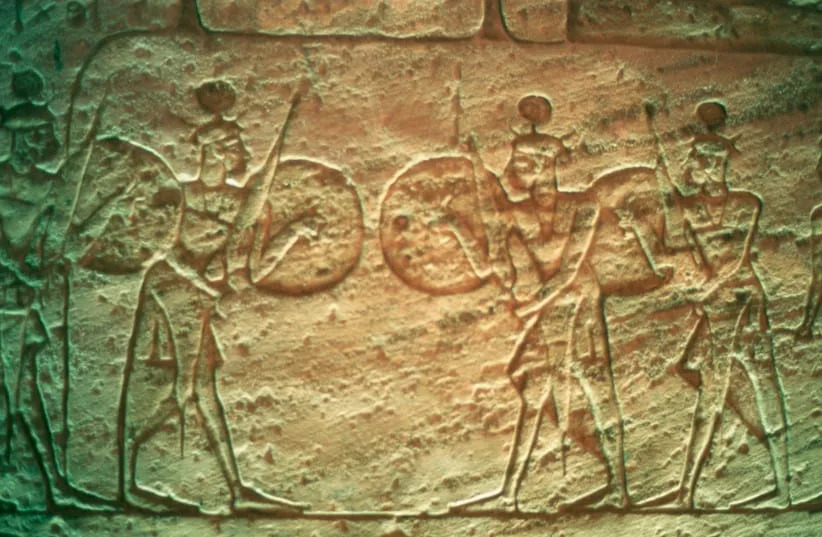
Limestone relief showing Hittite soldiers, Temple of Abu Simbel, Egypt, 14th-13th century BCE. (credit: Ann Ronan Pictures/Print Collector/Getty Images)
The Egyptian version of the treaty was inscribed in hieroglyphs on two monuments of Ramesses II at Thebes — the Ramesseum and the Precinct of Amun-Re at Karnak — while Akkadian-language clay tablet copies were discovered at Hattusha during early 20th-century excavations (1906–1912).
Where Previous Fragments Are Held
Fragments of the treaty’s Akkadian tablets are curated in several major institutions, including:
- Istanbul Archaeology Museums
- Museum of Anatolian Civilizations (Ankara)
- Berlin Museum of the Ancient Near East
- Hermitage Museum, St. Petersburg
A copy of the treaty is also displayed on a wall at United Nations headquarters, underscoring its enduring symbolic value for diplomacy and international law.
Next Steps
Turkish authorities say the new fragment will help efforts to reconstruct the full set of Akkadian clay copies found at Hattusha. Future excavations at the site aim to locate additional missing fragments and clarify the text further.
Credits: The discovery was announced by Turkey's Culture and Tourism Ministry. Photo references and period reliefs help contextualize the find for modern audiences.
Help us improve.