Archaeologists at Turkmen Karahoyuk in Turkey uncovered a rare Early Christian gold amulet (4th–5th century CE) containing a 0.1 mm gold sheet believed to hold a biblical passage. The team also found an approximately 3,500‑year‑old stone seal inscribed in hieroglyphic Luwian bearing the name "Kurunti‑ziti," linked to the Hittite rural deity Kurunta. Additional copper seals and a clay impression were recovered, supporting the view that the site served as an important Bronze Age administrative center.
Rare Early Christian Gold Amulet Containing Biblical Scrap and 3,500‑Year‑Old Luwian Seal Unearthed in Turkey
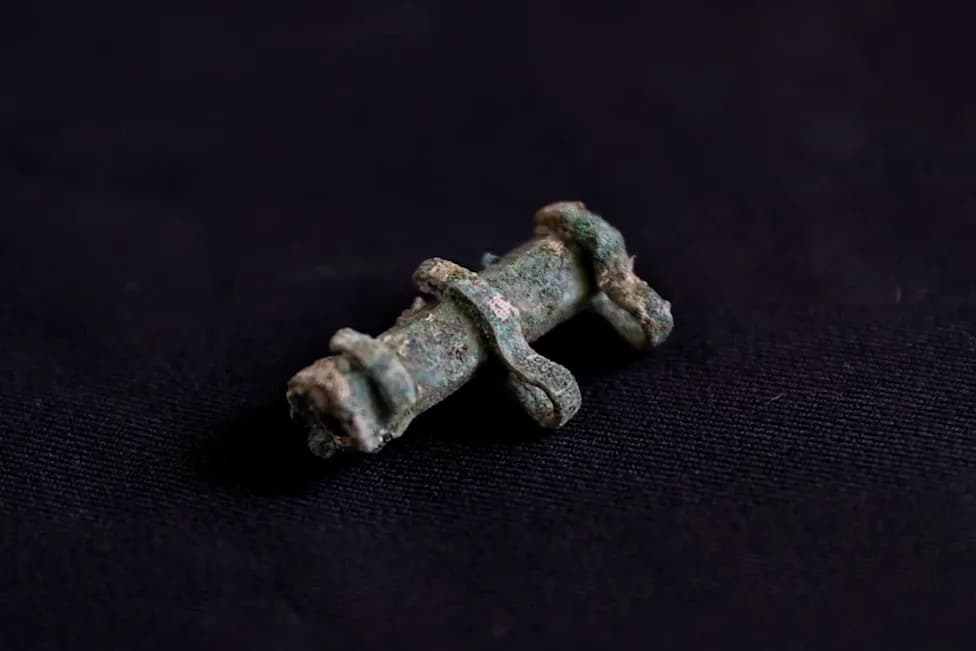
A close-up shows the exterior of the copper amulet container uncovered at Turkmen Karahoyuk in Konya, Turkey, July 26, 2026. (photo credit: screenshot/x/@anadoluajansi)
Turkish archaeologists have unearthed two remarkable and very different artifacts at Turkmen Karahoyuk: a rare Early Christian gold amulet likely bearing a biblical passage, and an approximately 3,500‑year‑old stone seal inscribed in hieroglyphic Luwian.
Excavations in the third season at the Turkmen Karahoyuk site were led by teams from Bilkent University, the University of Chicago and Bilecik Şeyh Edebali University. The finds shed light on both late antiquity devotional practices and the site’s much earlier Bronze Age administrative role.
The Christian amulet. The pendant, dated to the fourth or fifth century CE, was recovered within a small copper container. Inside researchers found an extremely thin gold sheet — only 0.1 millimetres thick — that is thought to bear a passage from the Bible. Michele Ruzgar Massa of Bilkent University told Turkiye Today that the object "most likely" carries a biblical passage and that the pendant probably belonged to a small child. She compared it to a nazar boncuğu, a traditional evil‑eye charm used in the region.
"Inside a copper box, we found an extremely thin gold sheet, only 0.1 millimetres thick, most likely carrying a passage from the Bible," — Michele Ruzgar Massa, Bilkent University.
Such early Christian amulets are uncommon; Massa noted a comparable example previously found in Germany, highlighting the rarity and cultural significance of the discovery.
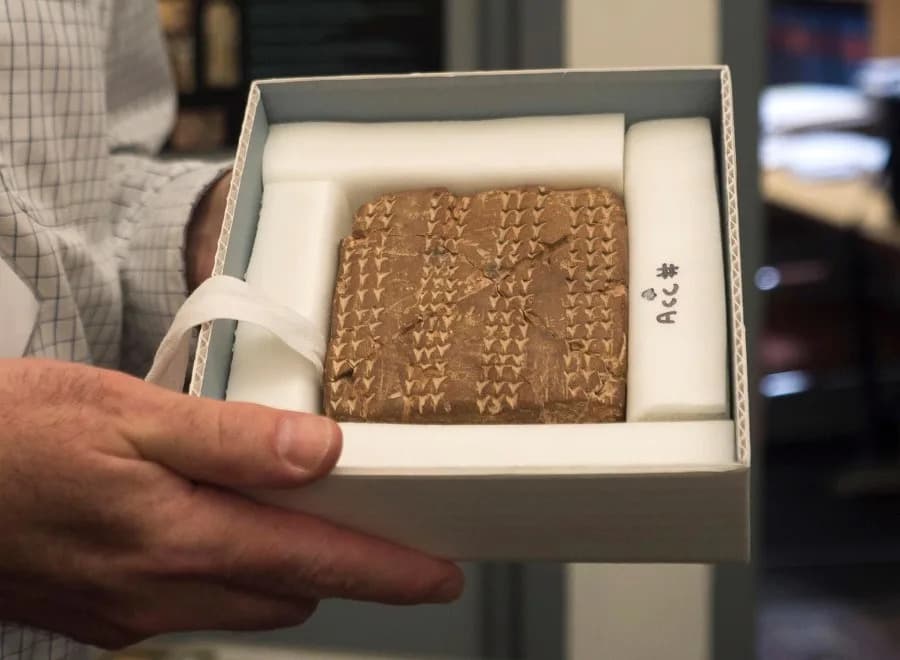
The Luwian stone seal. The second major find is a carved stone seal bearing hieroglyphic Luwian inscriptions. Luwian (also called Luvian or Luish) is an ancient Anatolian language used during the Bronze and Iron Ages. The inscription records a personal name and an official title, suggesting the seal belonged to someone holding a lower‑ranking bureaucratic post within an organized state system.
The name on the seal reads "Kurunti‑ziti," a name linked to the Hittite stag god and rural guardian deity Kurunta. Archaeologists say this and other administrative objects from the site support the interpretation that Turkmen Karahoyuk functioned as an important regional administrative center in the Bronze Age.
In addition to the gold amulet and the Luwian stone seal, excavators recovered two copper seals and a clay seal impression bearing a different name, further bolstering evidence of organized record‑keeping and administration at the site.
Why it matters
Together, the finds bridge millennia of human activity at Turkmen Karahoyuk: a delicate, personal devotional object from late antiquity and durable bureaucratic material from the Bronze Age. They enrich our understanding of religious practice, childhood devotion, and the administrative structures that shaped ancient Anatolia.
Help us improve.