Fulton County has designated official remembrance days to honor the victims of the 1906 Atlanta Race Massacre, when mobs killed at least 25 Black Atlantans during four days of racial violence. Sensationalist reporting by leading newspapers inflamed fears and helped trigger the attacks, which accelerated disenfranchisement and Jim Crow segregation. Renewed research and civic efforts—including the Fulton County Remembrance Coalition and inclusion in school curricula—aim to restore public awareness of the massacre and its lasting effects.
Atlanta Establishes Official Remembrance Days 120 Years After the 1906 Race Massacre
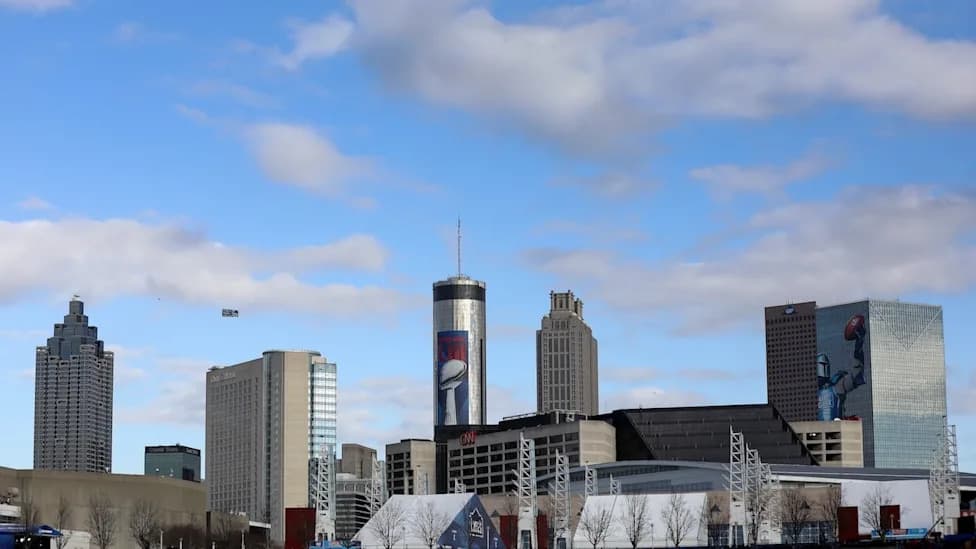
ATLANTA, GEORGIA - FEBRUARY 03: A general view of the skyline is seen prior to the Super Bowl LIII at Mercedes-Benz Stadium on February 03, 2019 in Atlanta, Georgia. (Photo by Streeter Lecka/Getty Images)
Fulton County has moved to formally honor the victims of the 1906 Atlanta Race Massacre by establishing official remembrance days to preserve the memory of the violent attack that targeted Black residents and businesses.
What Happened in September 1906
Between Sept. 22 and Sept. 25, 1906, mobs of white men terrorized Black neighborhoods across Atlanta. The four days of violence left at least 25 Black Atlantans dead, dozens injured, hundreds arrested and entire business districts and homes vandalized or destroyed. In a confrontation in Brownsville—today the area around Clark Atlanta University—Black residents who took up arms in self-defense were involved in a shootout that resulted in the death of one white police officer and the arrest of more than 250 Black men.
How Media and Politics Fueled the Violence
Yellow journalism played a significant role in stoking panic and racial hostility. Prominent papers of the era, including The Atlanta Journal and The Atlanta Constitution, published inflammatory and often false allegations—most notably accusations of sexual assault by Black men against white women—that amplified white fears and helped justify violent reprisals. Local political contests and rhetoric that warned against the rise of a Black middle and upper class further inflamed tensions.
“African-American men had attained the vote during Reconstruction, and now there was a broad consensus in the white community that if the black man sought equality in one sphere, in the political sphere, he would seek equality in other spheres, in particular the so-called social sphere.” — Clifford Kuhn
Aftermath and Long-Term Impact
The massacre accelerated the disenfranchisement of Black Atlantans, contributed to the expansion of Jim Crow segregation, and drove many prosperous Black families and businesses from their communities. Newspapers at the time sought to frame the events as a "riot," while Black press and later historians emphasized that the attacks, lynchings and organized harassment constituted a massacre—terminology that has been used to describe similar racial pogroms across the South in the early 20th century.
Remembrance and Education
Renewed efforts to acknowledge this history led to the founding of the Fulton County Remembrance Coalition and, more recently, the adoption of remembrance days by the Fulton County Commission. On Sept. 16, Commissioner Doug Barrett presented a proclamation to the coalition recognizing the massacre’s victims and its role in shaping the region’s history. The event has also been incorporated into Georgia’s social studies curriculum as part of broader efforts to teach and remember the long-term consequences of racial violence.
The Fulton County Remembrance Coalition has emphasized the importance of careful, accurate language in memorializing the past, reminding the public: "Never underestimate the weight of a word." The county’s new commemoration days aim to keep the memory of the 1906 events—and their consequences for voting rights, segregation and economic displacement—alive for future generations.
Help us improve.