Alan Wolff, who drafted Section 301, says the Trump administration is abusing that law by imposing broad tariffs on many countries rather than pursuing the country-by-country remedy Congress intended. The Liberty Justice Center will ask the U.S. Court of International Trade on September 30 to block the administration’s Section 301 tariffs, following a prior Supreme Court ruling that limited emergency tariff authority. Former senior trade officials filed an amicus brief arguing the forced-labor findings and remedies are legally deficient and arbitrary.
Architect of Section 301 Says Trump’s Broad Tariffs Violate The Law — Court To Weigh Challenge
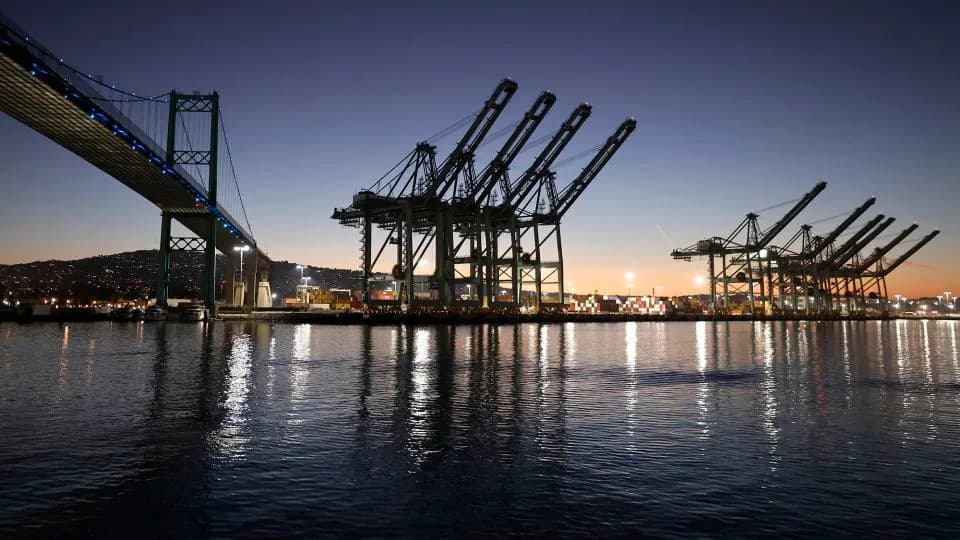
Shipping cranes stand near the Vincent Thomas Bridge at the Port of Los Angeles on August 19, 2026 in Los Angeles. - Mario Tama/Getty Images
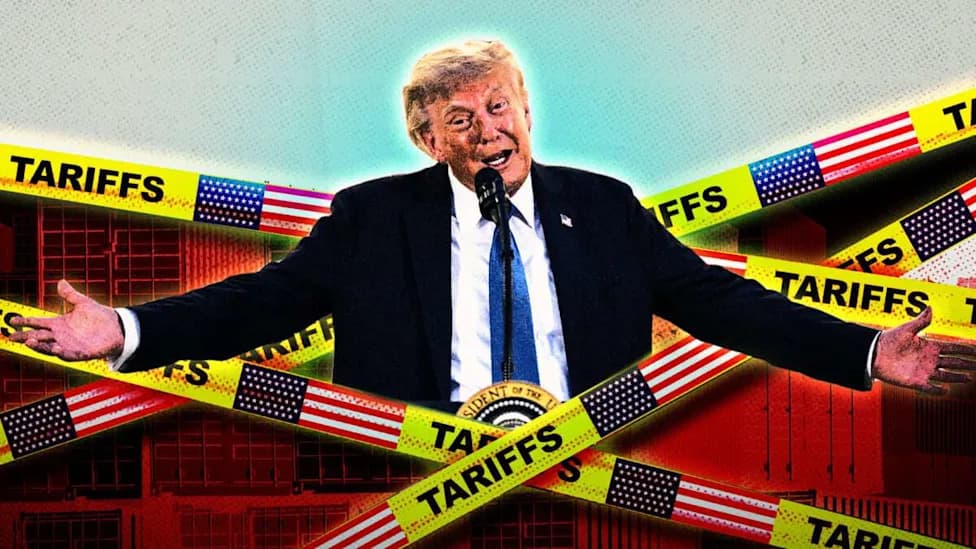
Alan Wolff, the trade lawyer who drafted what became Section 301 of the 1974 Trade Act, says the Trump administration is misusing that authority by imposing broad, multilateral tariffs rather than targeting a single offending country as Congress intended.
Wolff, who served as the Nixon administration’s lead international trade lawyer, told reporters he has "a sense of ownership of the statute" and that its current application departs sharply from the focused, country-by-country remedy he and lawmakers designed.
Background: Why Section 301 Was Created
In the late 1960s and early 1970s, U.S. officials were frustrated by rising competition from Japan in sectors such as electronics and by obstacles U.S. exporters faced in that market. Existing retaliation authority was narrow and largely limited to agricultural products. To give the president a more precise tool to respond to specific unfair practices, Congress and the Nixon administration crafted what became Section 301: a mechanism to investigate a particular foreign country’s anticompetitive conduct and take reciprocal measures to bring that country back to the negotiating table.
Wolff emphasizes that Section 301 was intended as a targeted remedy — the statute even refers to a "foreign country" in the singular — and was designed to force bilateral agreements rather than to support universal, open-ended tariffs.
The Current Legal Fight
On September 30 the U.S. Court of International Trade will hear a challenge brought by the Liberty Justice Center. The group previously prevailed in the U.S. Supreme Court in February, when the justices ruled the president lacked authority to impose tariffs under emergency powers. The Liberty Justice Center now argues the administration is again exceeding the statute’s limits by using Section 301 to justify broad tariffs across many trading partners.
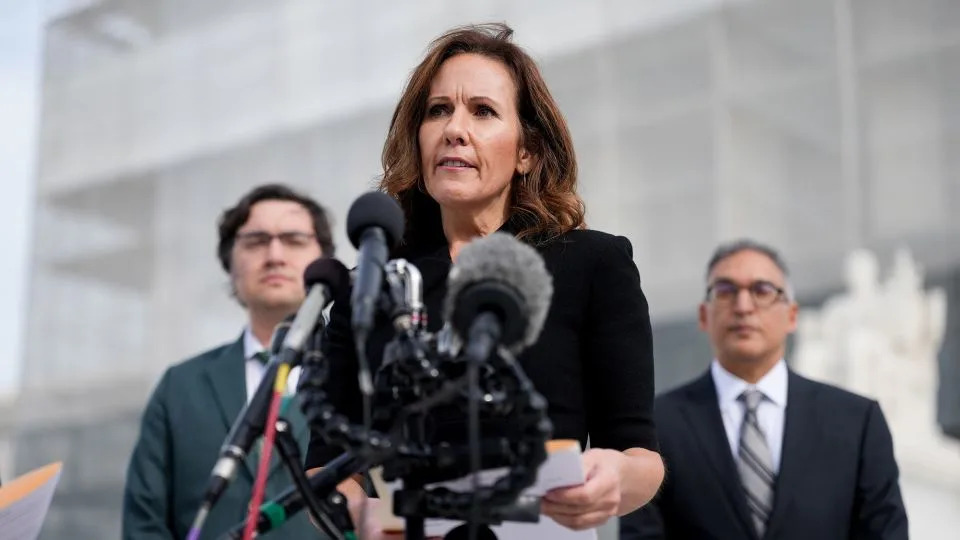
Sara Albrecht, chair of the Liberty Justice Center. - Eric Lee/Bloomberg/Getty Images
The administration’s recent approach began with a months-long review by the U.S. Trade Representative’s (USTR) office of trading partners’ policies related to forced labor. After publishing a lengthy report and soliciting public comments, the USTR concluded that dozens of countries directly or indirectly supported forced labor and imposed tariffs — generally ranging from 10% to 12.5% — on more than 60 countries.
"The notion that you can write your own tariff against anyone and anybody is offensive. This isn't what we intended," Wolff said.
Legal Arguments And Amicus Support
Critics including Wolff and a coalition of experienced former trade officials argue the administration’s use of Section 301 is pretextual and legally flawed: the investigation standards were novel or inadequately applied, the USTR effectively bundled dozens of countries under one sweeping finding, and the remedies were not structured to facilitate negotiations or permit countries to seek relief by demonstrating reforms.
Three former senior trade lawyers — Alan Wolff, Carla Hills (USTR under President George H.W. Bush), and Warren Maruyama (USTR general counsel under President Reagan) — filed a friend-of-the-court brief supporting the Liberty Justice Center. They urged the court to set aside the tariffs as unlawful and arbitrary.
Other Recent Moves And What’s At Stake
The administration has not relied solely on Section 301. It briefly used Section 122 of the Trade Act to impose a universal 10% tariff after the Supreme Court’s emergency-rules decision, then moved to Section 301 when those measures expired. It has also raised certain Brazilian tariffs to 37.5% citing human-rights concerns and used Section 338 of the Tariff Act of 1930 to impose duties on select Canadian goods — an application of that authority not previously seen at this scale. USTR is also investigating more than a dozen countries for excess manufacturing capacity.
Wolff warns that a favorable ruling for the Liberty Justice Center could prompt the administration to search for yet another legal basis to impose broad tariffs, but he stressed that the proper response is legal challenge: "The only thing you can do in response? You fight back."
Why it matters: The court’s decision will help define how far the executive branch may go in using trade statutes to impose sweeping, unilateral trade remedies — a question with major implications for U.S. trade policy and international relations.
Help us improve.